The Mojo of Music featuring Sophie Hiroko
Sophie Hiroko’s style doesn’t feel like something she’s decided on after all these years, it feels like something she’s grown into. It carries the same layered, emotional quality and intention as her music that is built from memory, environment, relationships, and instinct rather than trends. Instead, it shifts, evolves, and gathers meaning over time, much like the songs she writes.
Sophie’s relationship with clothing began early, shaped by a childhood where her parents intentionally dressed her in gender neutral clothing. That foundation gave her space to explore style without strict expectations or paths. She gravitated towards earth tones and natural palettes, while still drawn to specific colors that felt grounded and familiar. There are also memories of rejecting clothing, oftentimes being free of clothing as a child. Those foundational remnants, along with graduating from UMD with two degrees (Political Science and Women’s, Gender, and Sexuality Studies) instilled in her an educated view of how empowering an intersectional feminist can be.
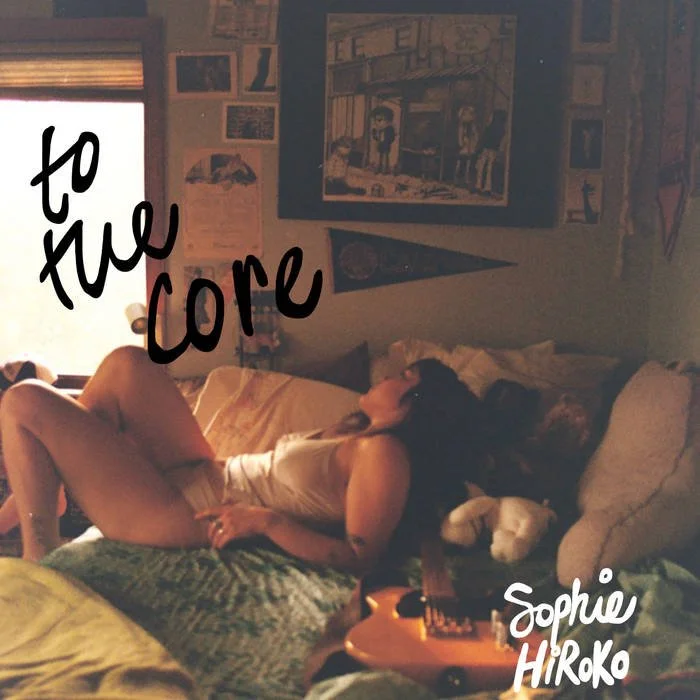
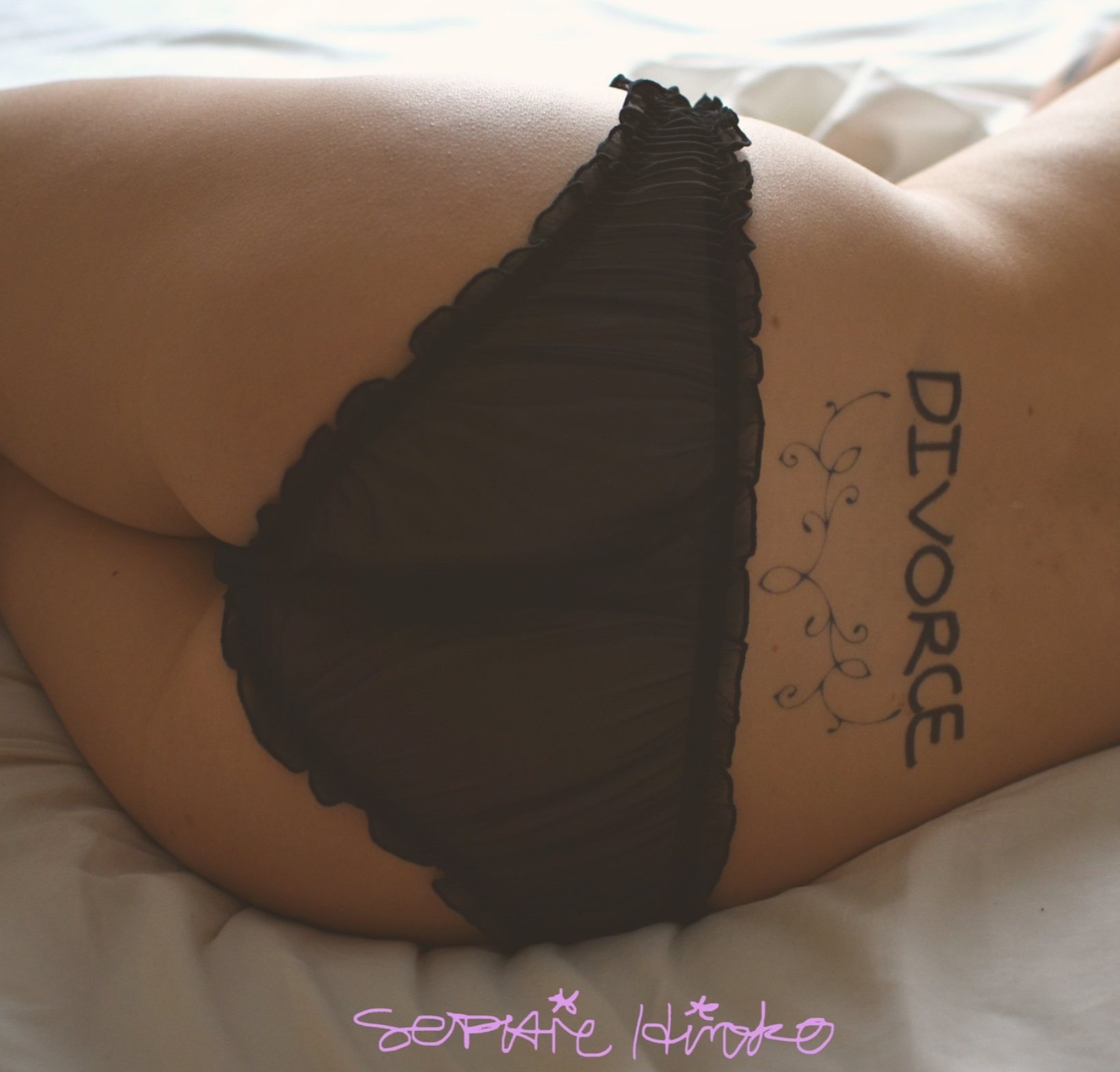
You can witness that strength in her album artwork, channeling the opening shot of Sophia Coppola’s “Lost in Translation” and paintings by John Kacere in her “Divorce” cover art. Her 2025 EP to the core reclaims intimacy as a space of autonomy rather than objectification. The soft, lived-in bedroom scene resists the polished male gaze, instead presenting a body at rest and in control of its own narrative. There’s a quiet assertion here that vulnerability, exhaustion, and stillness are all valid expressions of identity, particularly for women whose bodies are so often politicized. It feels like a refusal to separate softness from strength. It’s an insistence that the private self, in all its complexity, is worthy of being centered, seen, and authored on its own terms.
Growing up in Duluth deepened her connections to nature. Duluth didn’t encourage excess, but more taught practicality, layering, and having intention with your choices. Early influences, like her friend Catherine, was making mood boards and honing in on her aesthetic. Her younger sister Izze carries an extensive knowledge of vintage clothing and even helped in shaping her style. These two figures really awakened her understanding that fashion is an important thing to explore. And that mindset lingers in Sophie’s style. Her outfits don’t feel disposable or trend-driven, but more collected, like each piece has a history.
“I love looking at old family picture books. My mom has deep north shore roots, while my grandma was half Ojibwe. My great-grandpa was from the St. Croix Reservation. So I flip through and see lots of very bright Norwegian reds and creamy whites, with grainy wool, and gray colors.”
-Sophie Hiroko
Sophie grew up on Park Point, literally within 30 seconds away from the water. Being a Pisces, that connection to Lake Superior has grown so strong that she consistently calls the lake her mother. When Sophie thinks of her relationship with nature, she realizes it’s woven through all of her interpersonal relationships. The most God-like force in her life is earth. Traveling back to Lake Superior always feels like a reunion to a special mystical force for Sophie. Her connection to that environment of Minnesota has led to some strong elements of her wardrobe as well, including focusing on wool clothes for warmth, and adding in her favorite Northern red color due to her families heritage.
As a feminist visionary, Sophie has also painted using her menstrual blood, and speaks openly about sexual assault. That desire to push boundaries and engage in conversations about restorative justice is a core framework to her decisions with clothing and how she wants to define herself. This backbone of values are installed guidelines to every choice of apparel and being cognizant in how she approaches femininity.
Moving to the Twin Cities expanded her perspective even more. Minneapolis offered more access, more inspiration, and more freedom to experiment. Where Duluth shaped her sense of texture and restraint, the cities opened up a broader range of references. Her style began to stretch into something more expressive, pulling in elements of grunge, art school aesthetics, and opening up her theatrical influences. Those influences are easy to trace. There’s a looseness and rawness that echoes artists like Nirvana or Patti Smith, balanced by a romantic edge that often feels closer to Courtney Love. At the same time, there’s an appreciation for structure and design that hints at more conceptual fashion influences. What makes it work is that none of these references feel copied. They’re absorbed and reinterpreted, filtered through her own instincts.
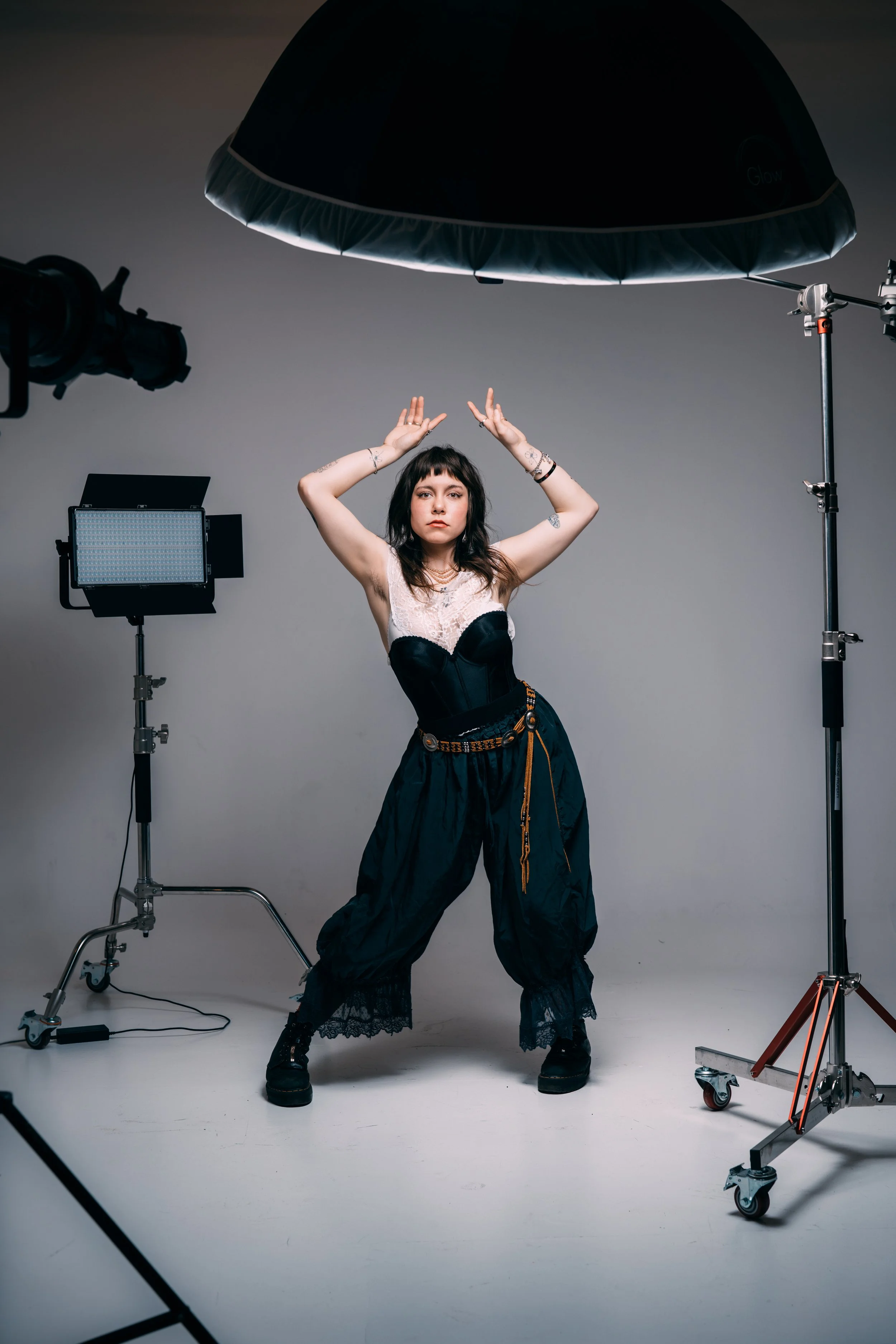
“Currently, I'm really honing into the colorless lace, vintage shapes. I'm looking back to theater, at the 40s, and theater. I grew up as a theater kid for a portion of my life and remember going into the costume room and admiring the history of clothes. I think that's mostly where I get my style and influence from.”
-Sophie Hiroko
Sophie also accredits her Japanese American family as weaving in elements of her look as well. Last winter she visited Japan and took notes and pictures everywhere she went. Every high fashion Japanese designer, specifically Issey Miyake, are very relevant in how she thinks and sees fashion in herself.
When it comes to performance outfits, her intentions are more shape based. If she’s able to present a good shape on stage, not in a serving body kind of way, but more in creating angles and accentuating her shoulders and hips for empowerment, then moments of power stances and pulling out emotions in her music become heightened. Corsets or puffy sleeves can then align with bigger pants to present shapes that enhance the structure of Sophie onstage, giving an aesthetic that matches that feminist strength.
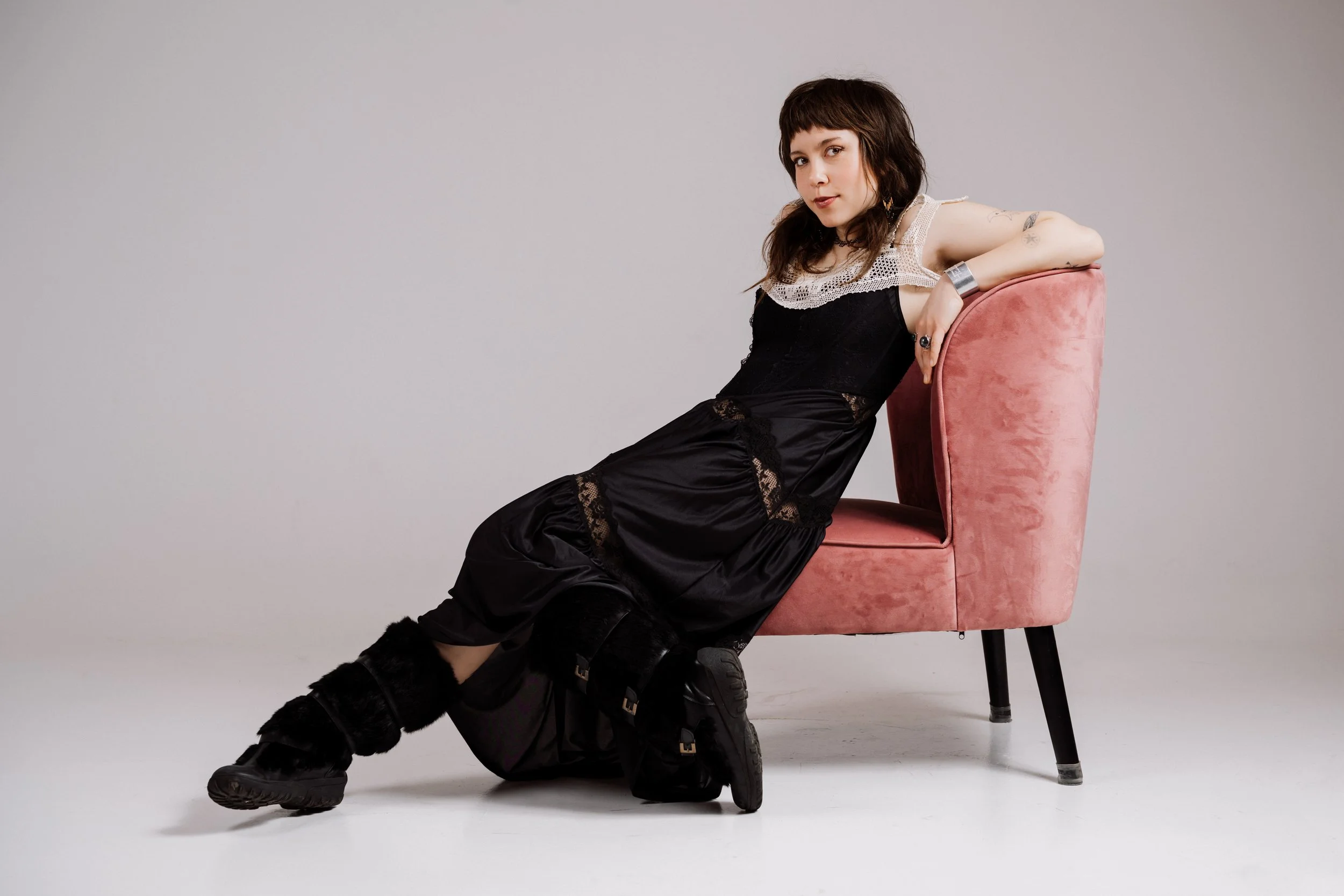
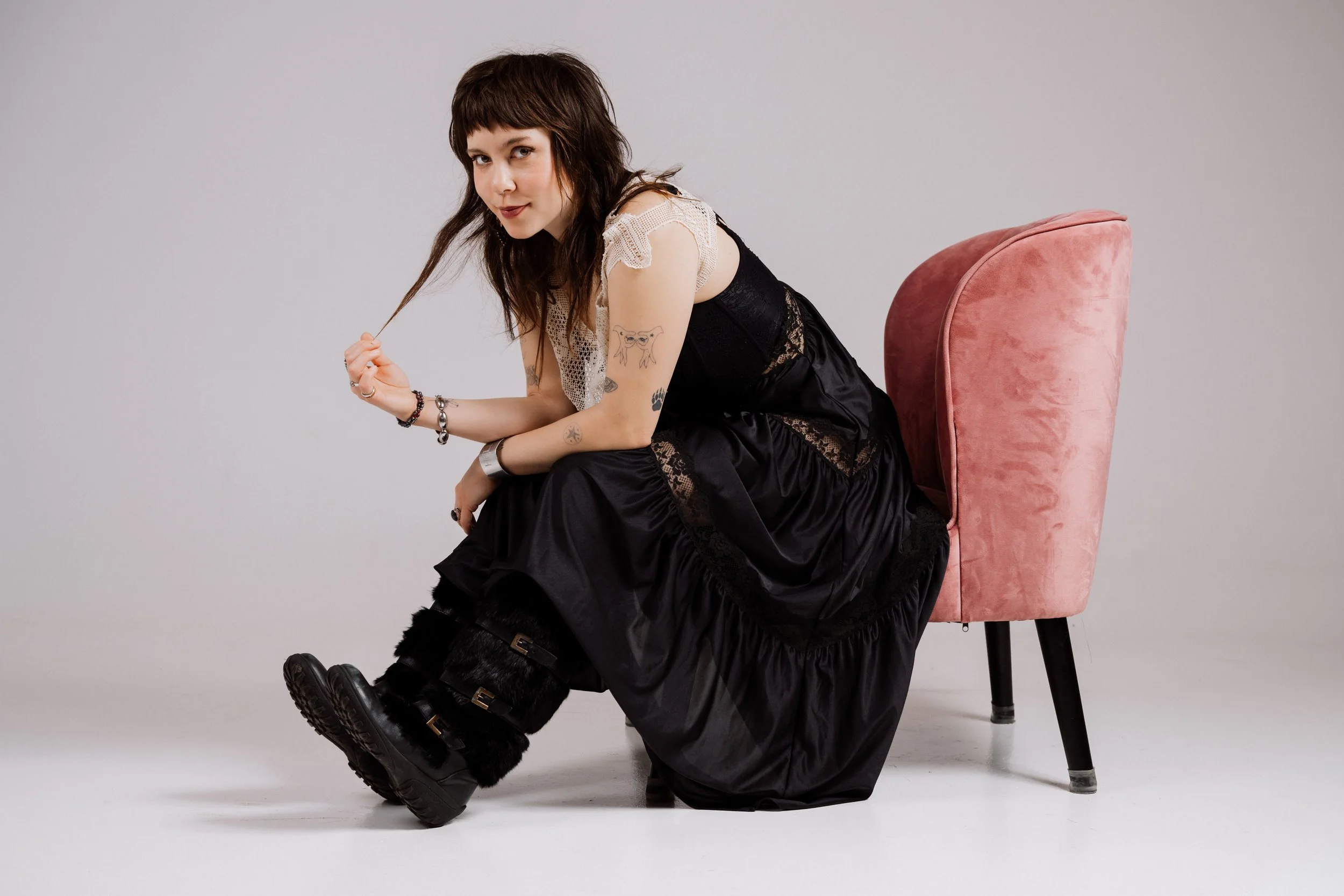
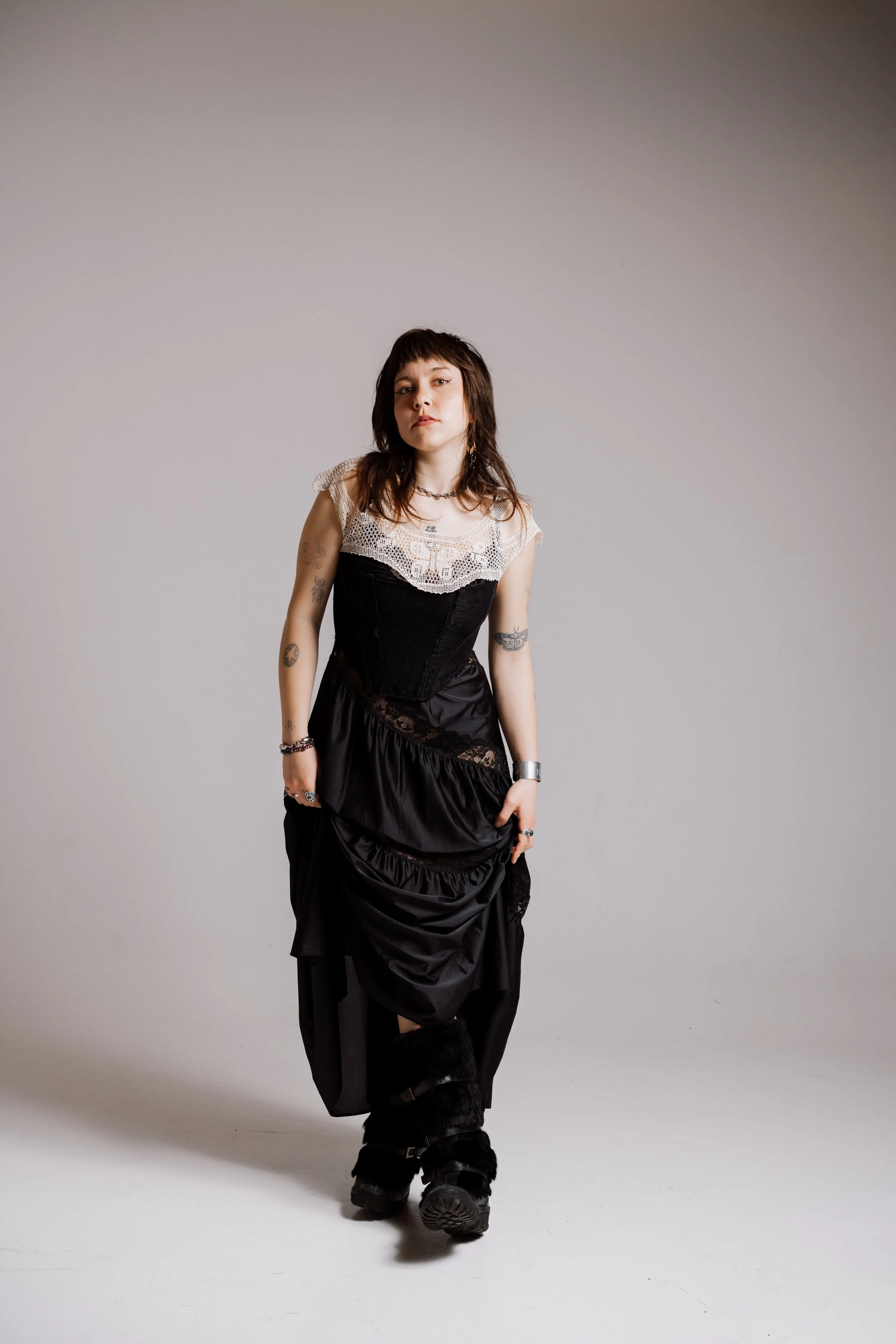
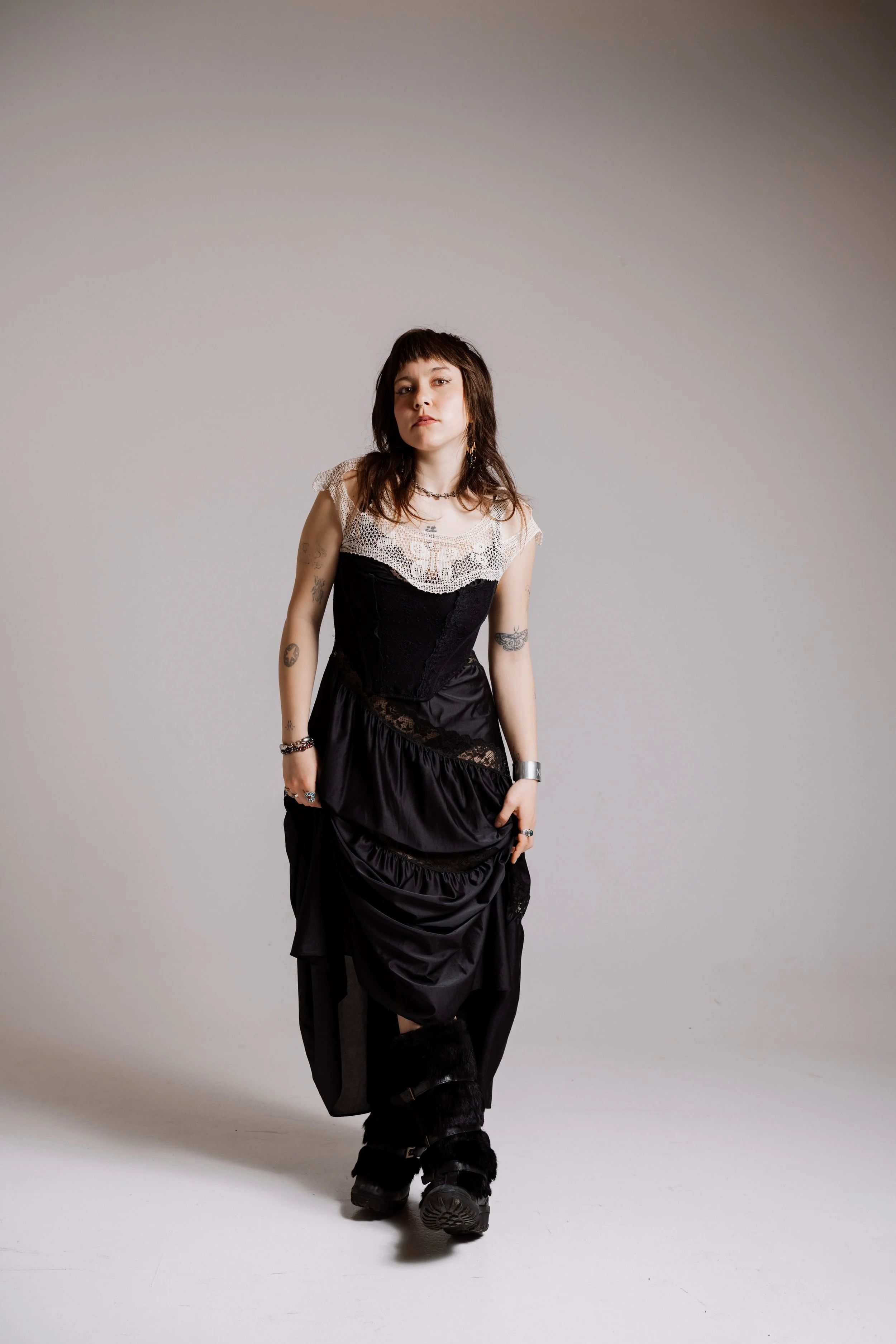
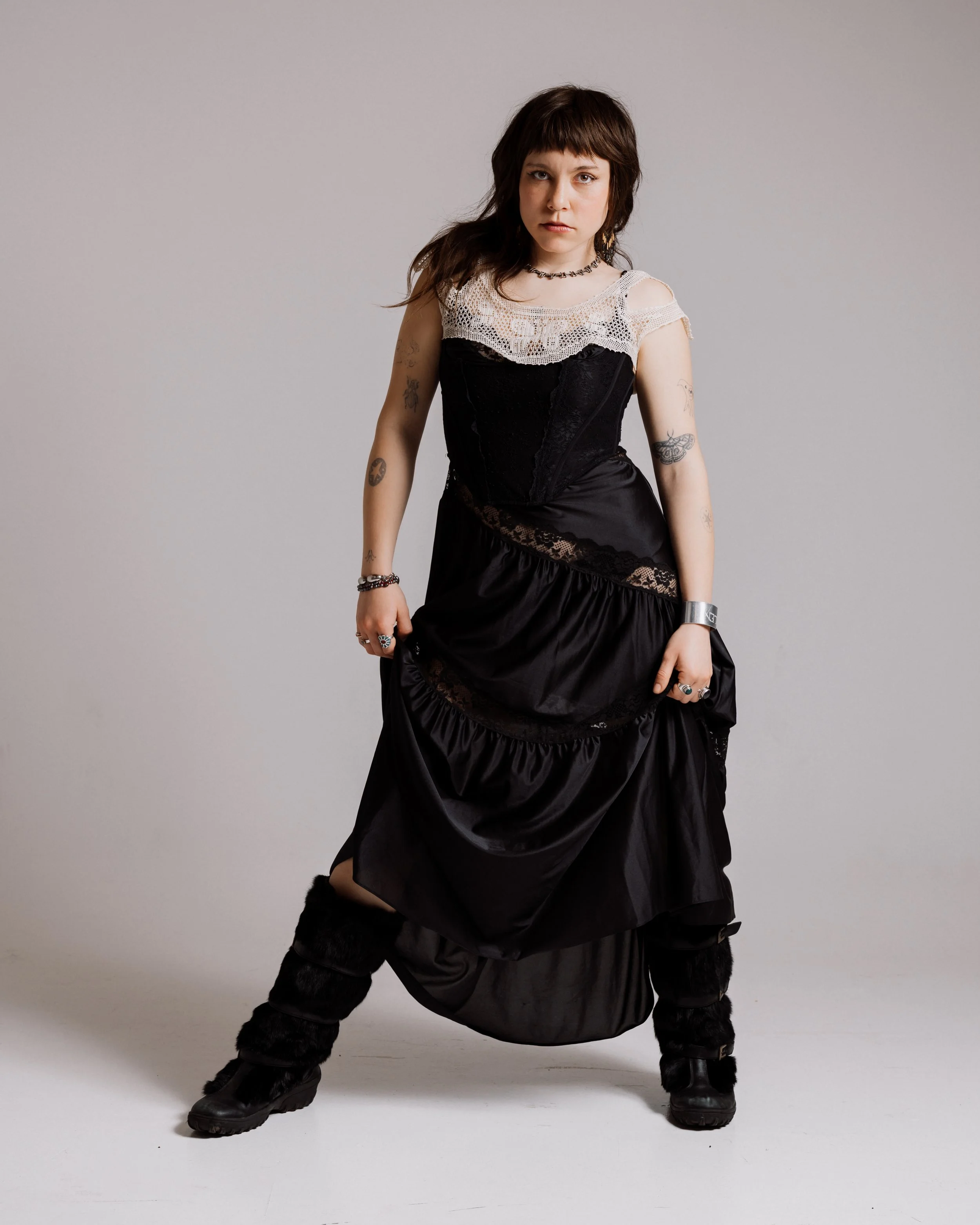
Sophie describes her own authentic style right now as “dream state, night sky, medieval shape, Joan of Arc.” This complete blend of influences comes through clearly in both outfits spotlighted below.
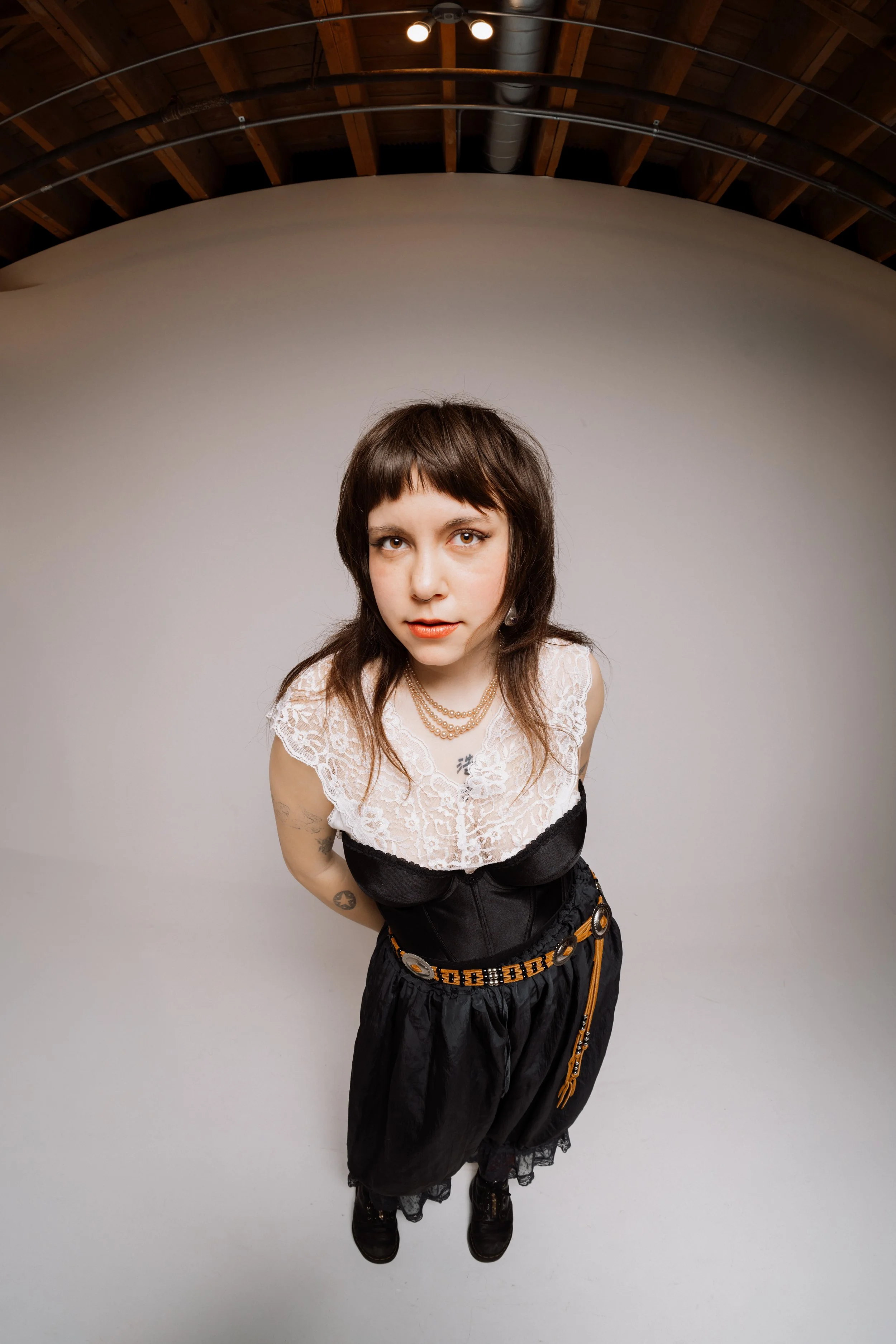
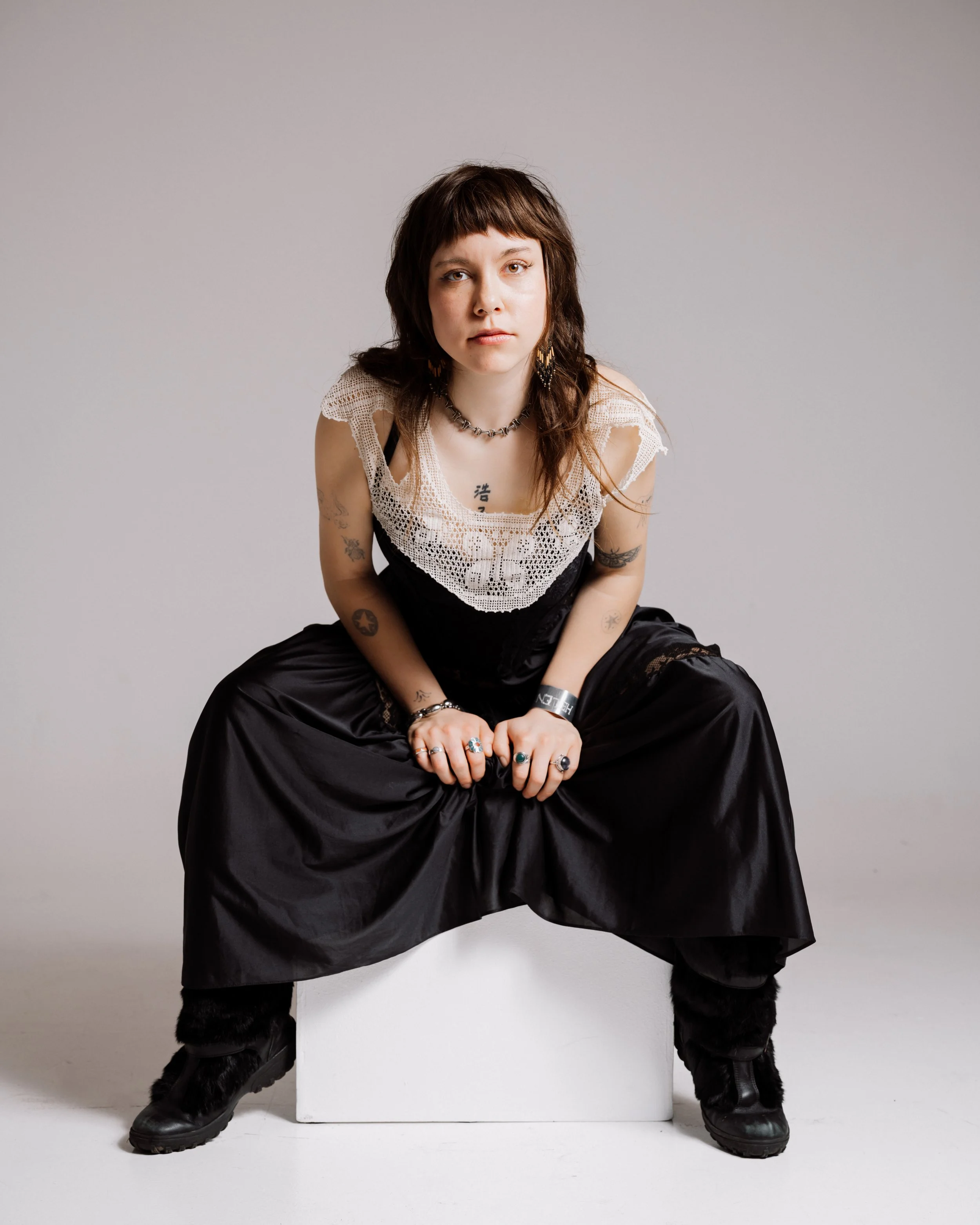

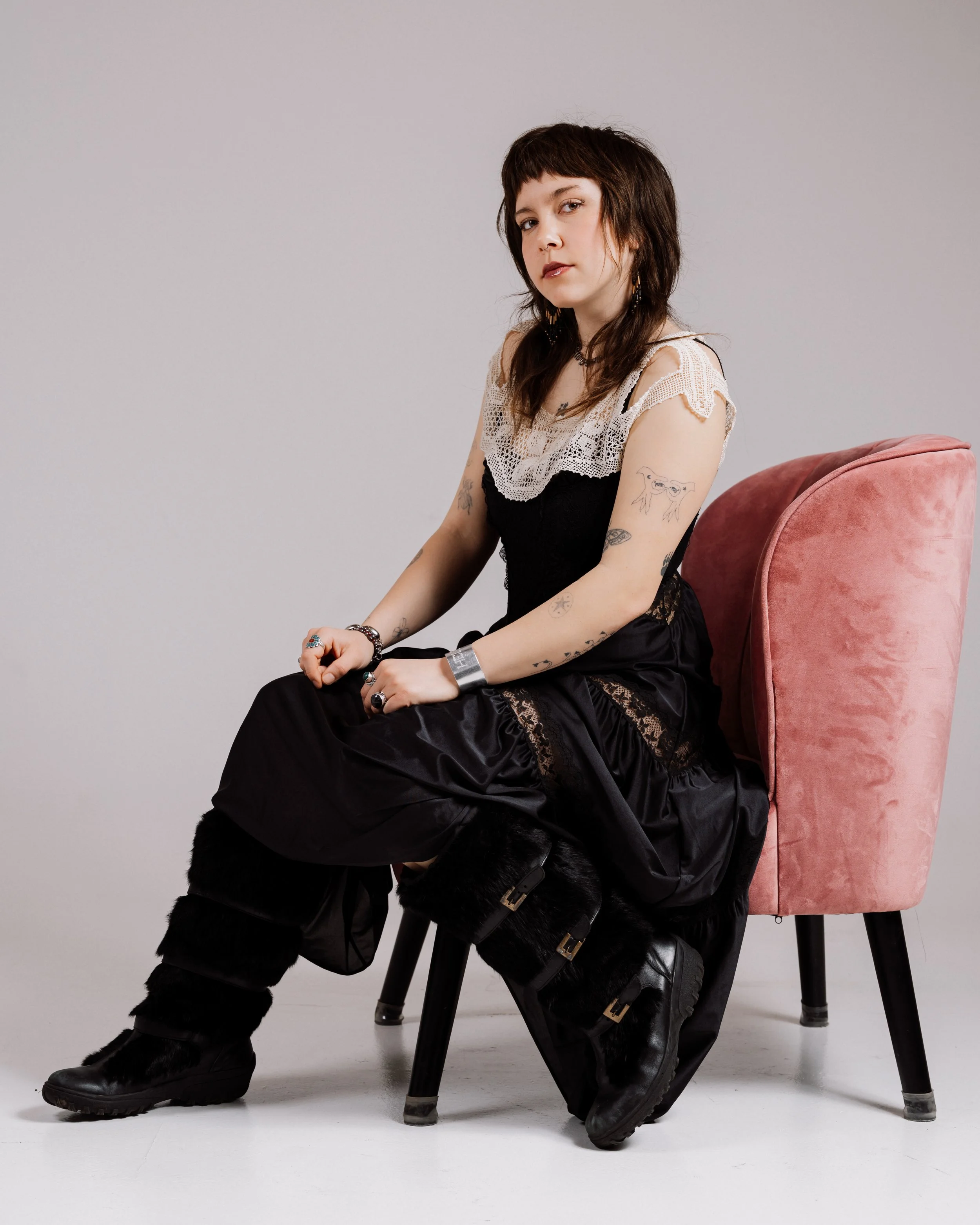
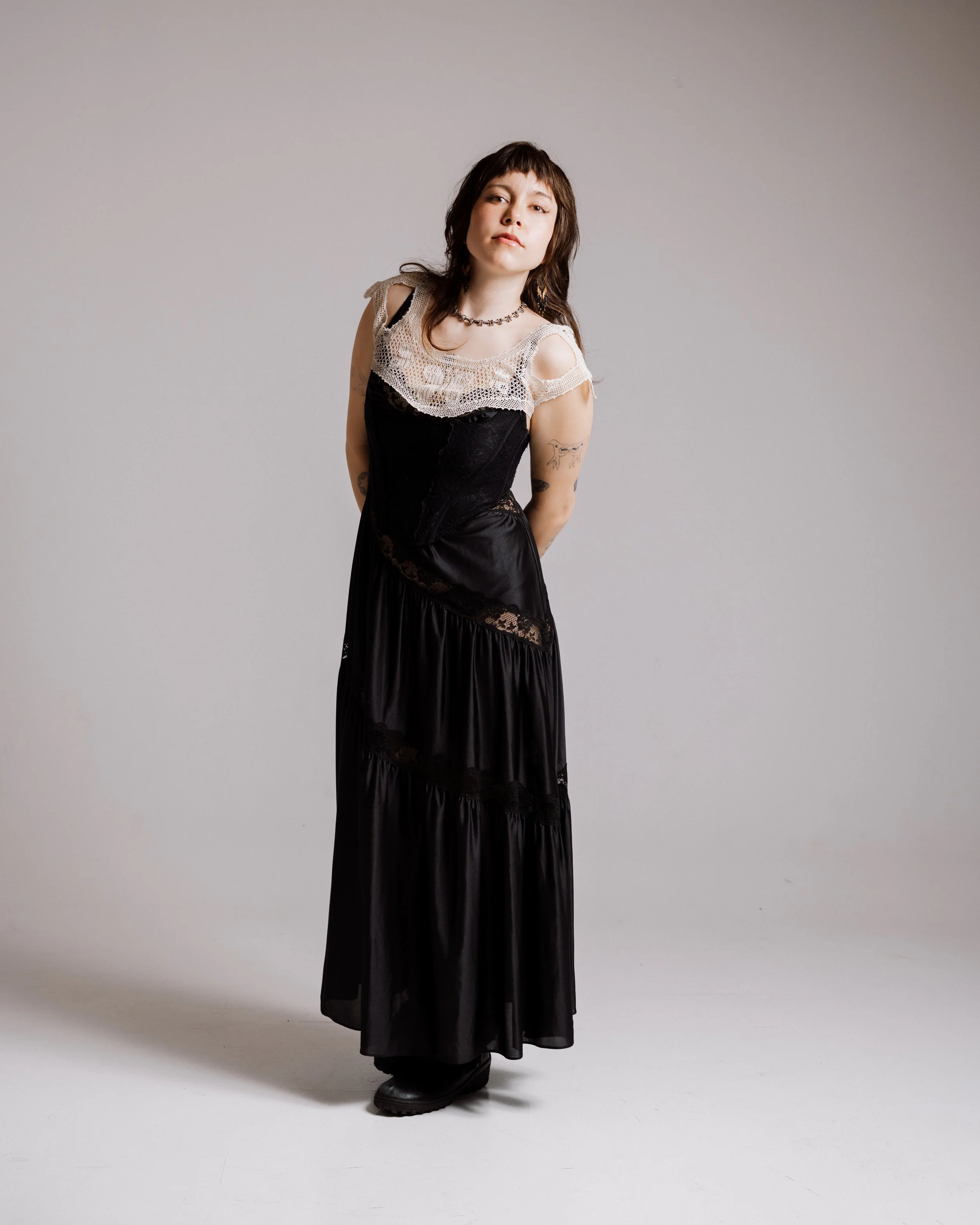
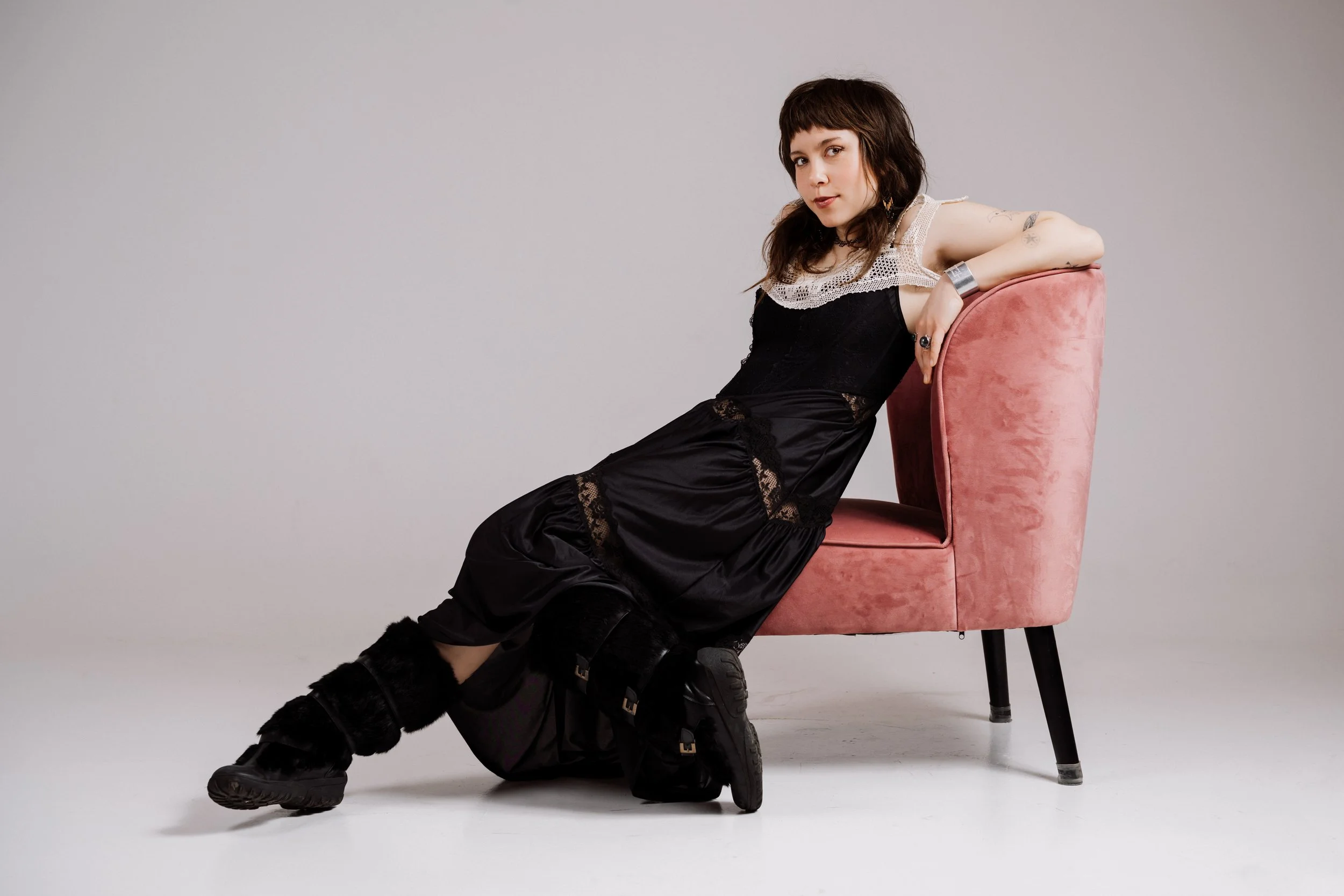
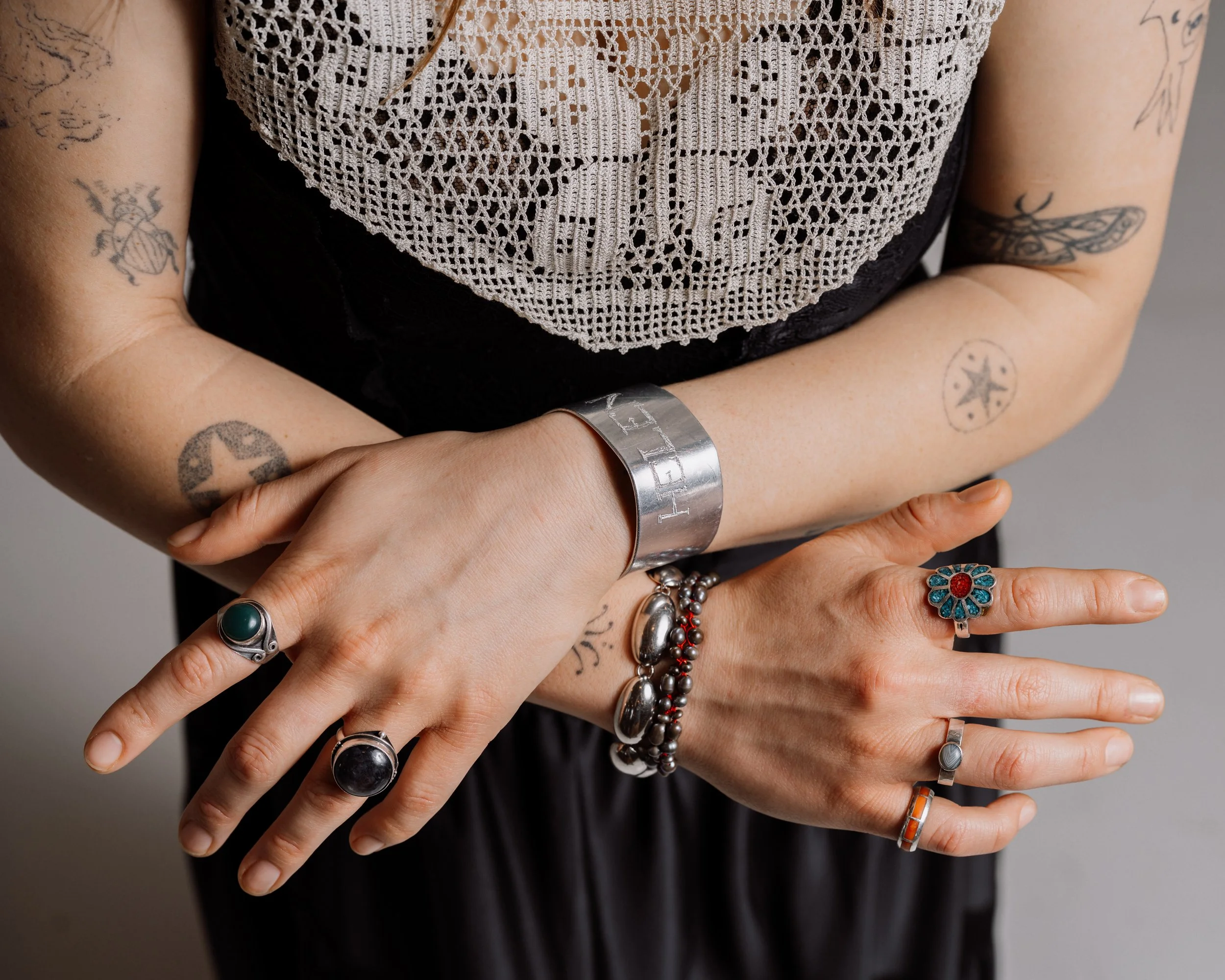
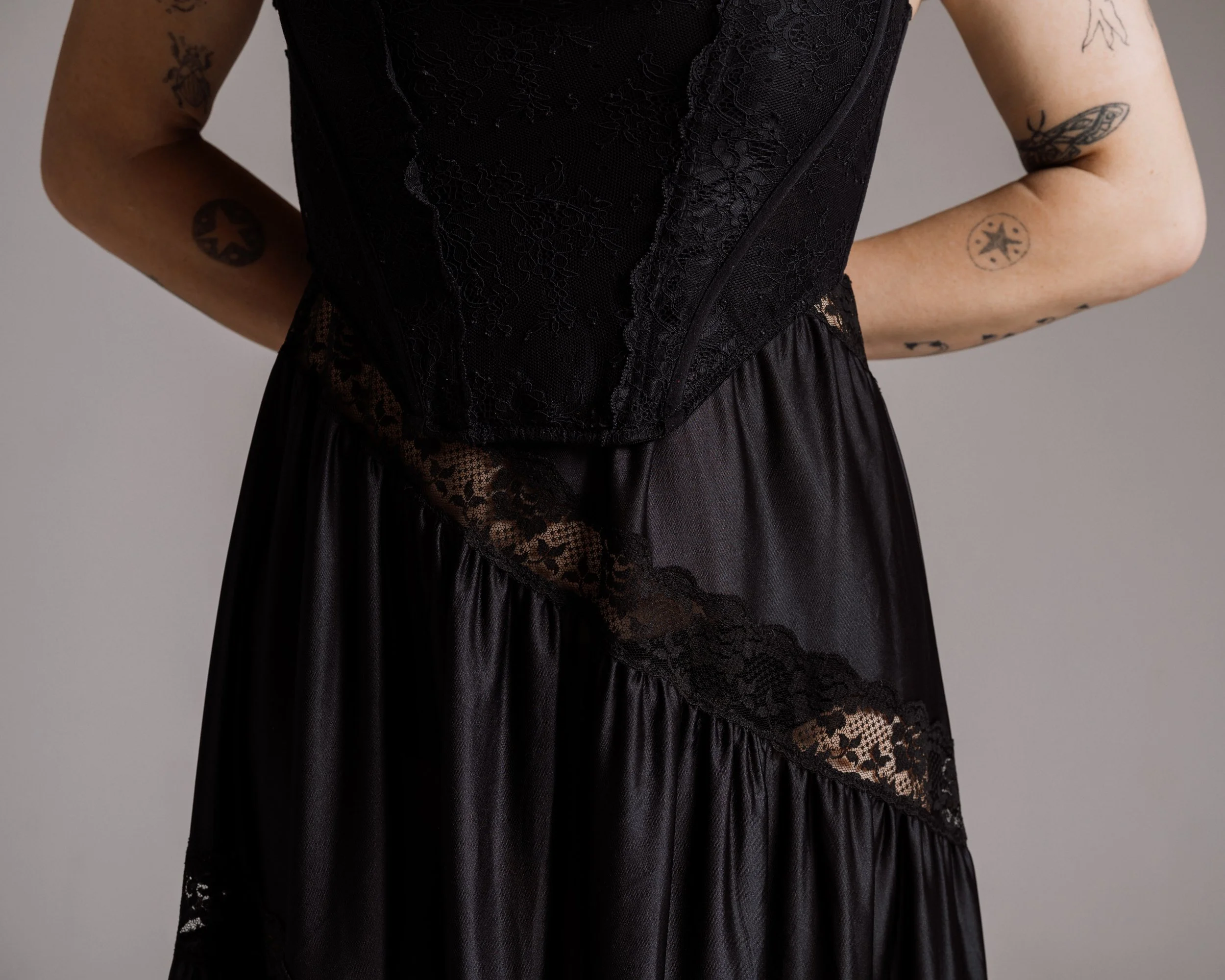
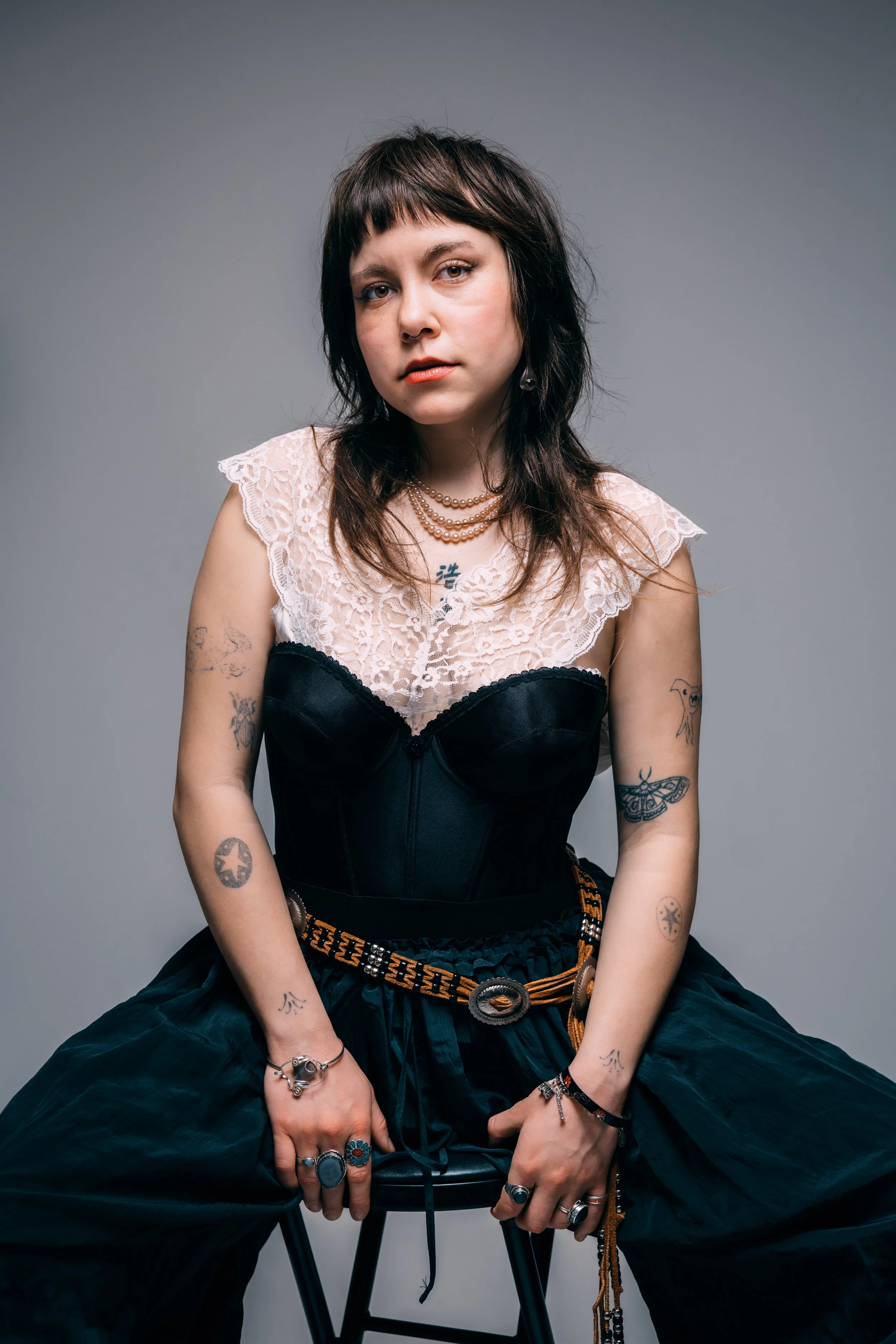
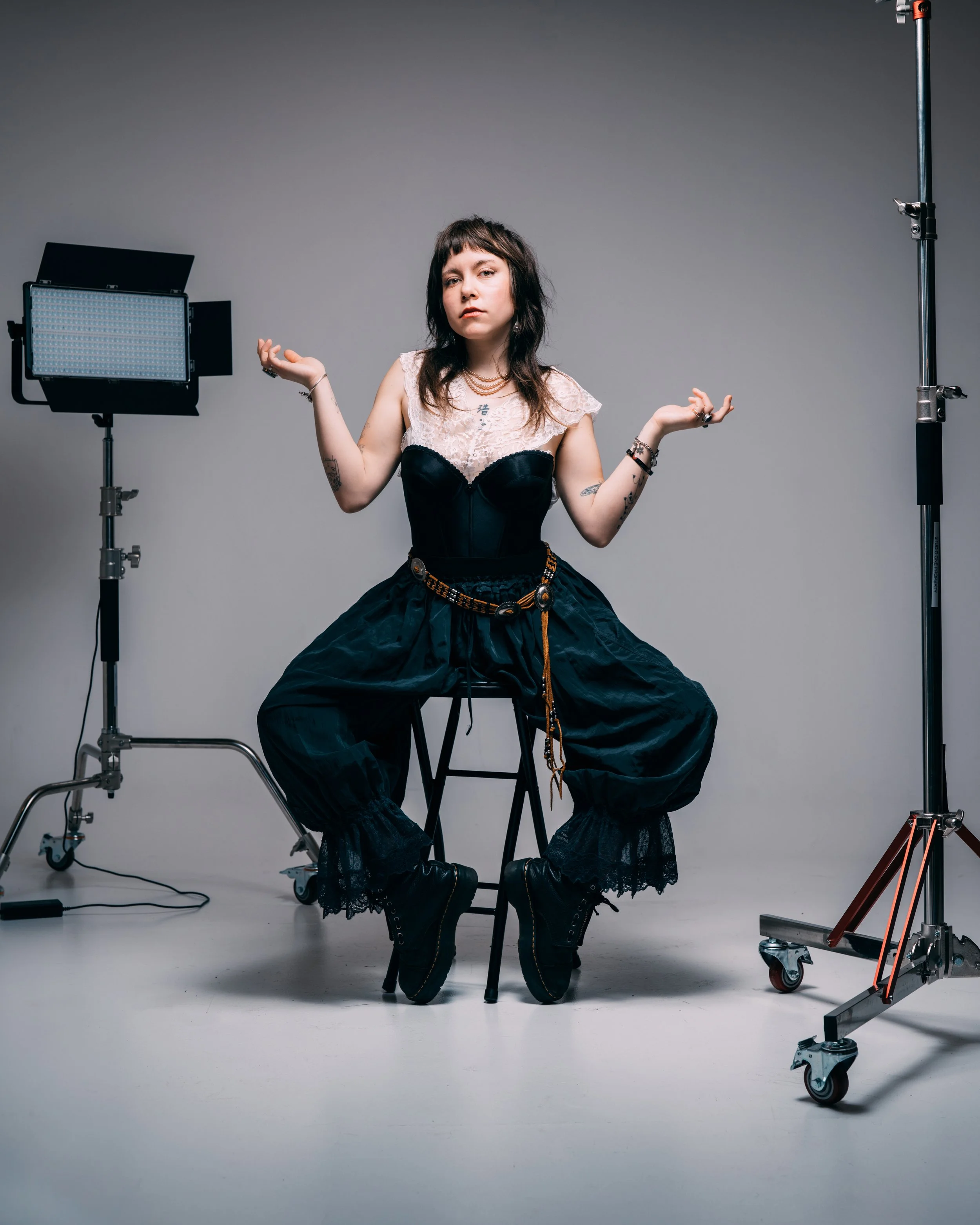
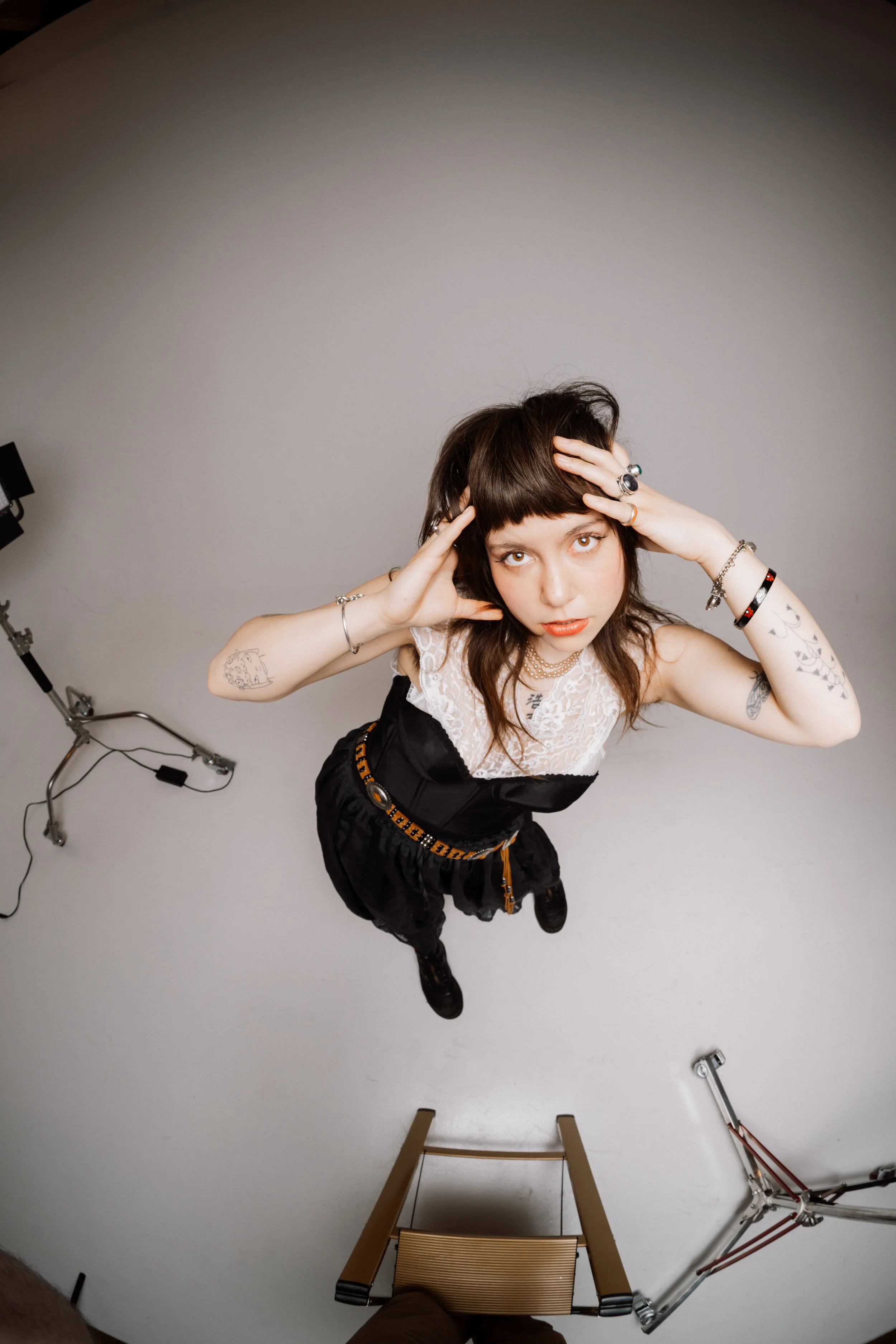
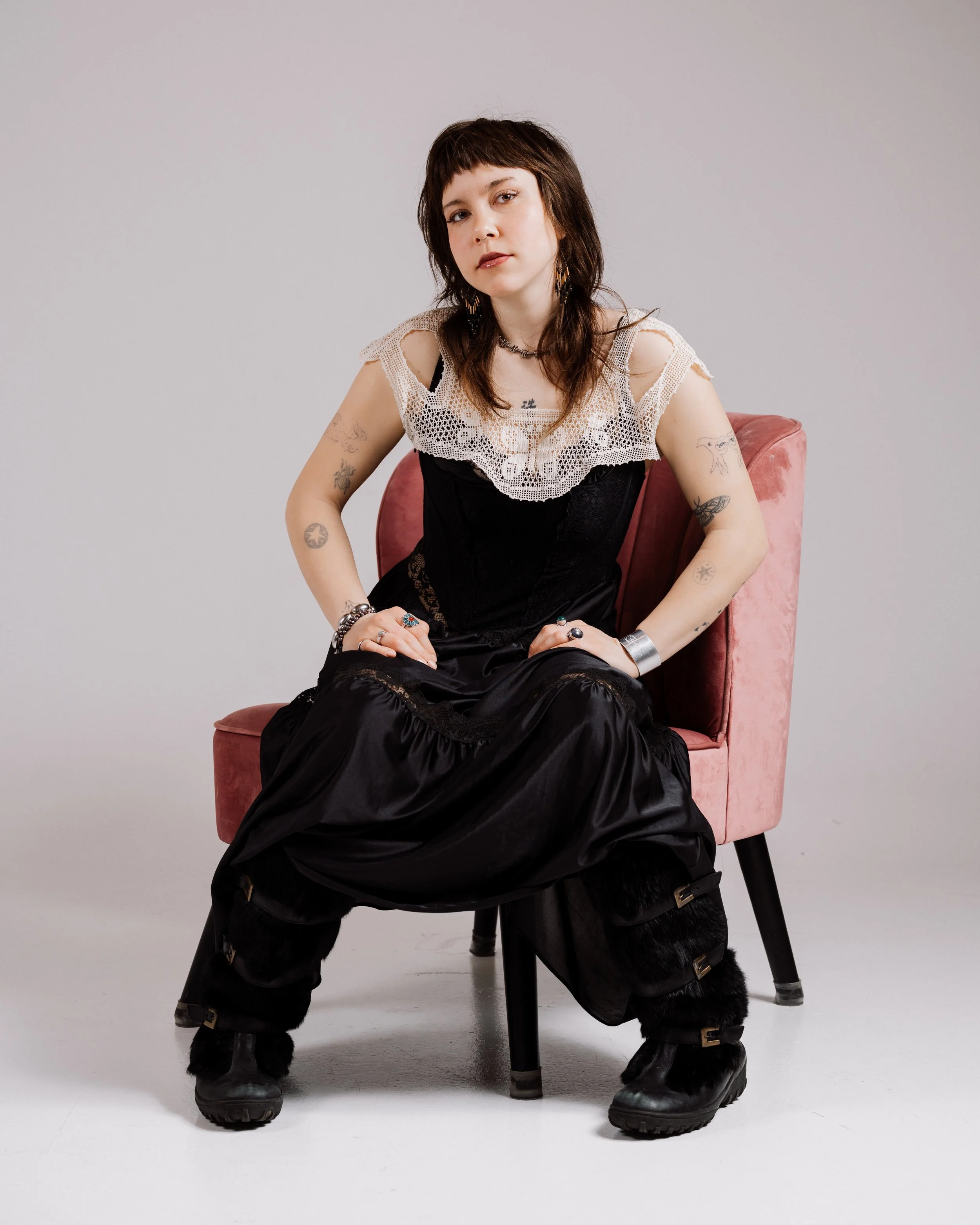
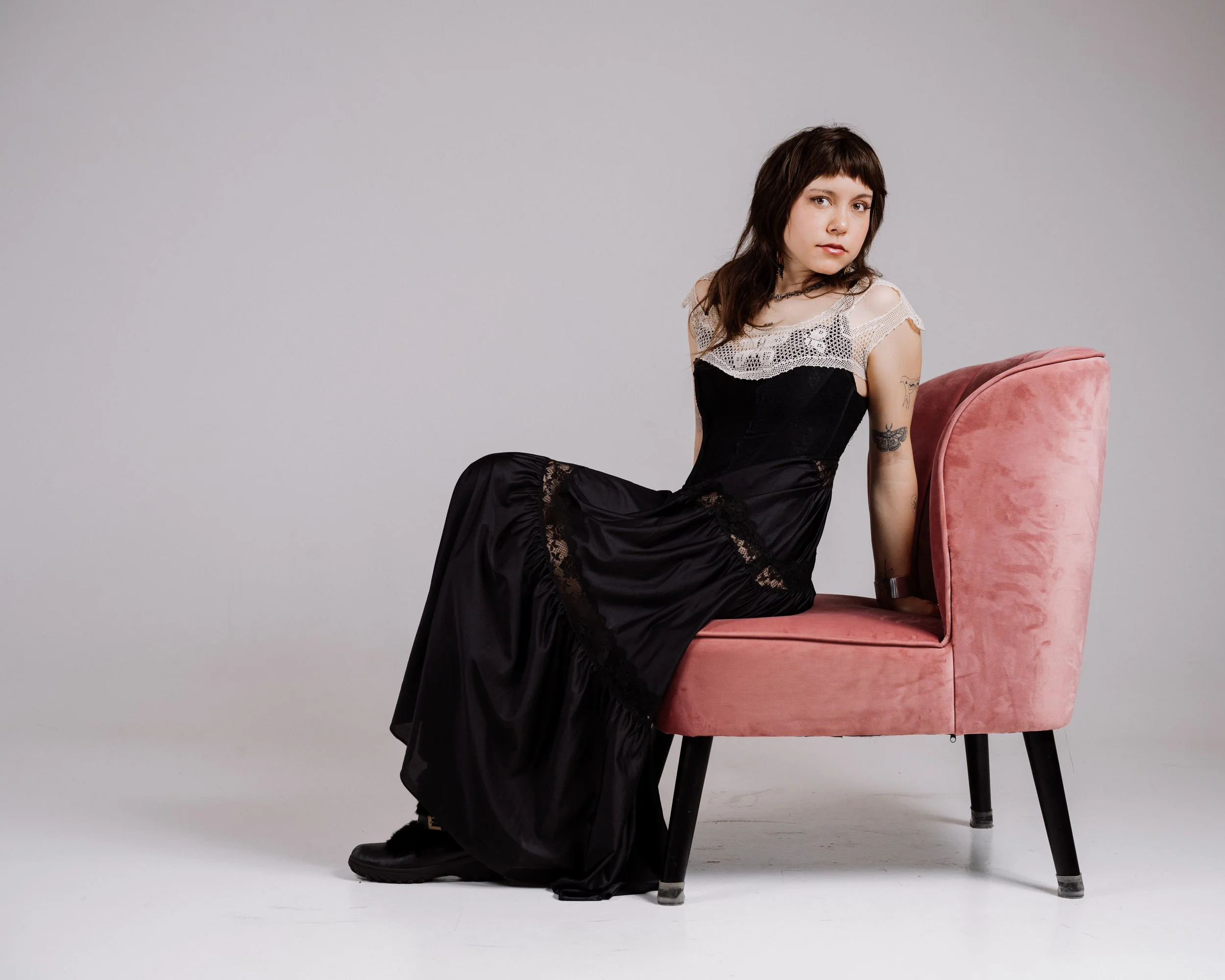
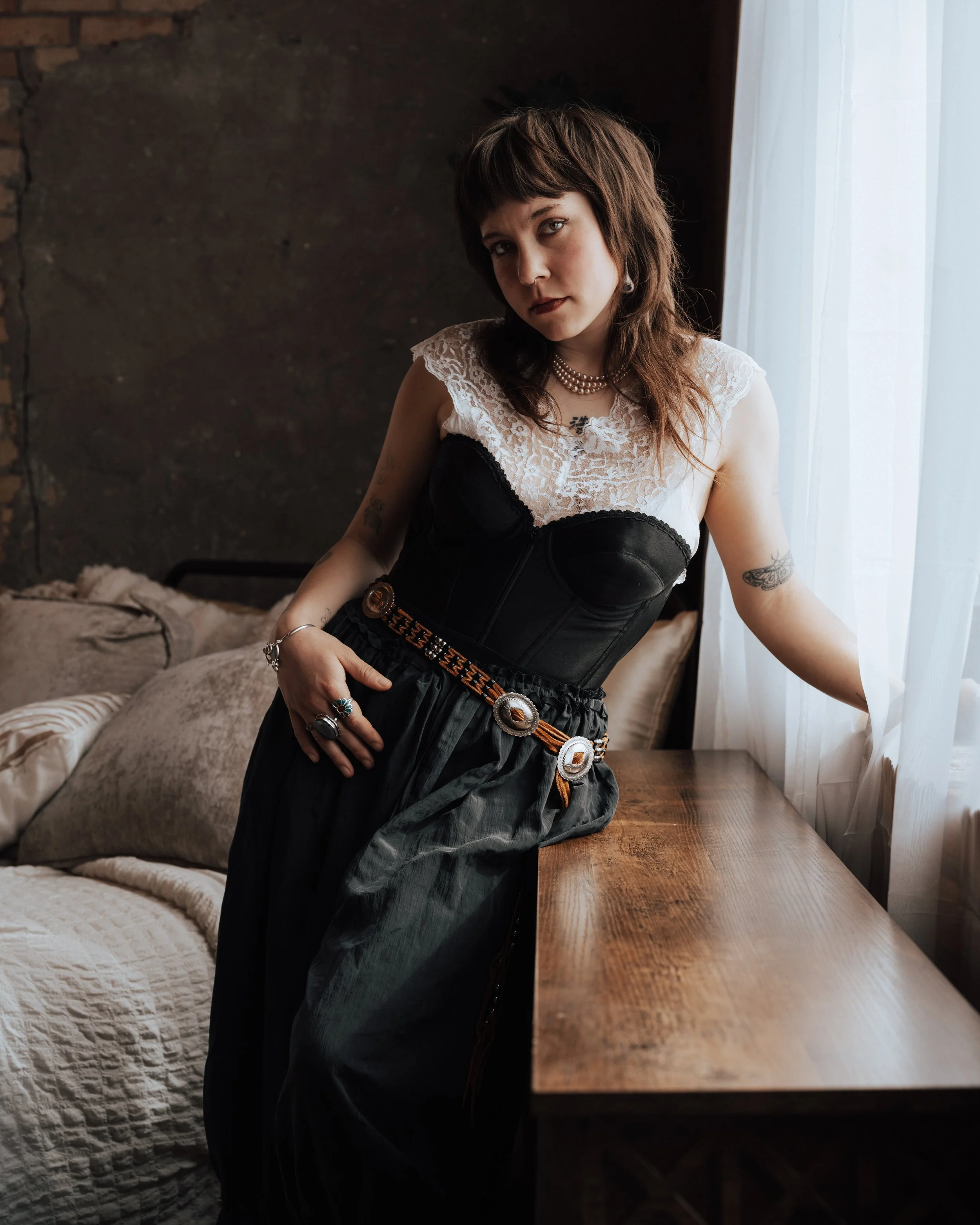
Her first outfit features a black basque corset that shapes the center of the look, structured and strong. A basque corset is sometimes called a “merry widow” and is a piece of lingerie or structured shapewear that functions as a hybrid between a bra and a corset. It’s designed to extend past the natural waistline, covering the stomach and hips. It’s one of Sophie’s favorites as she often uses it for layering.
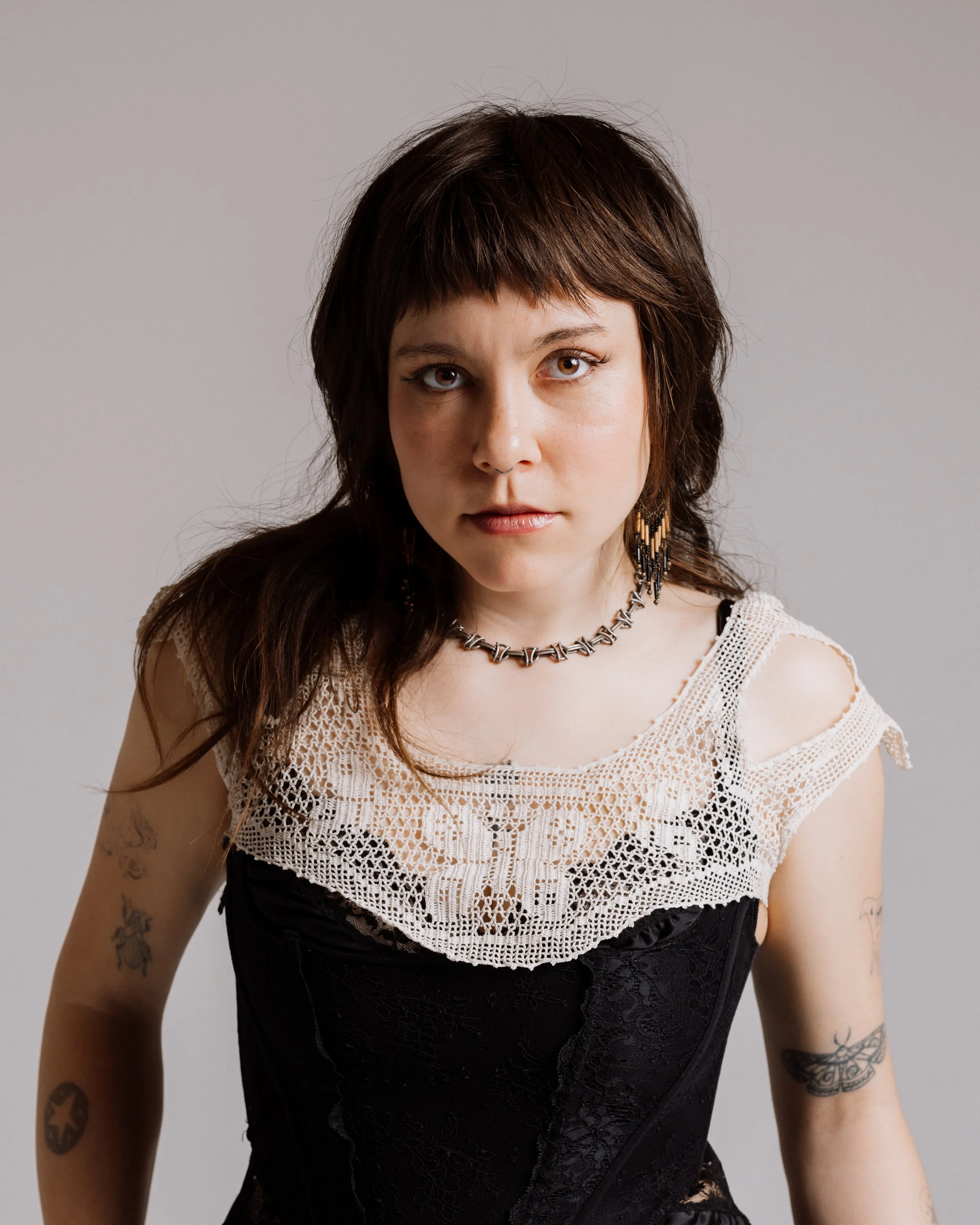
A creamy white antique Edwardian Era corset cover sits on top of her shoulders, adding contrast and detail on top. The corset cover was meant for modesty purposes, but Sophie likes to wear it for the illusion of scandal, with the mesh and butterfly accents. The combination of the corset and cover creates a tension as well, featuring something delicate layered over something firm, an example of pushing boundaries.
The black laces dress has a spiral cutout around it, giving slivers of intricate mesh. Sophie received this from a friend and it makes her think of her early punk band. It feels like it’s something Courtney Love would wear. You can see that mojo embodied into her posing and stances, owning the space and carrying that air of empowerment.
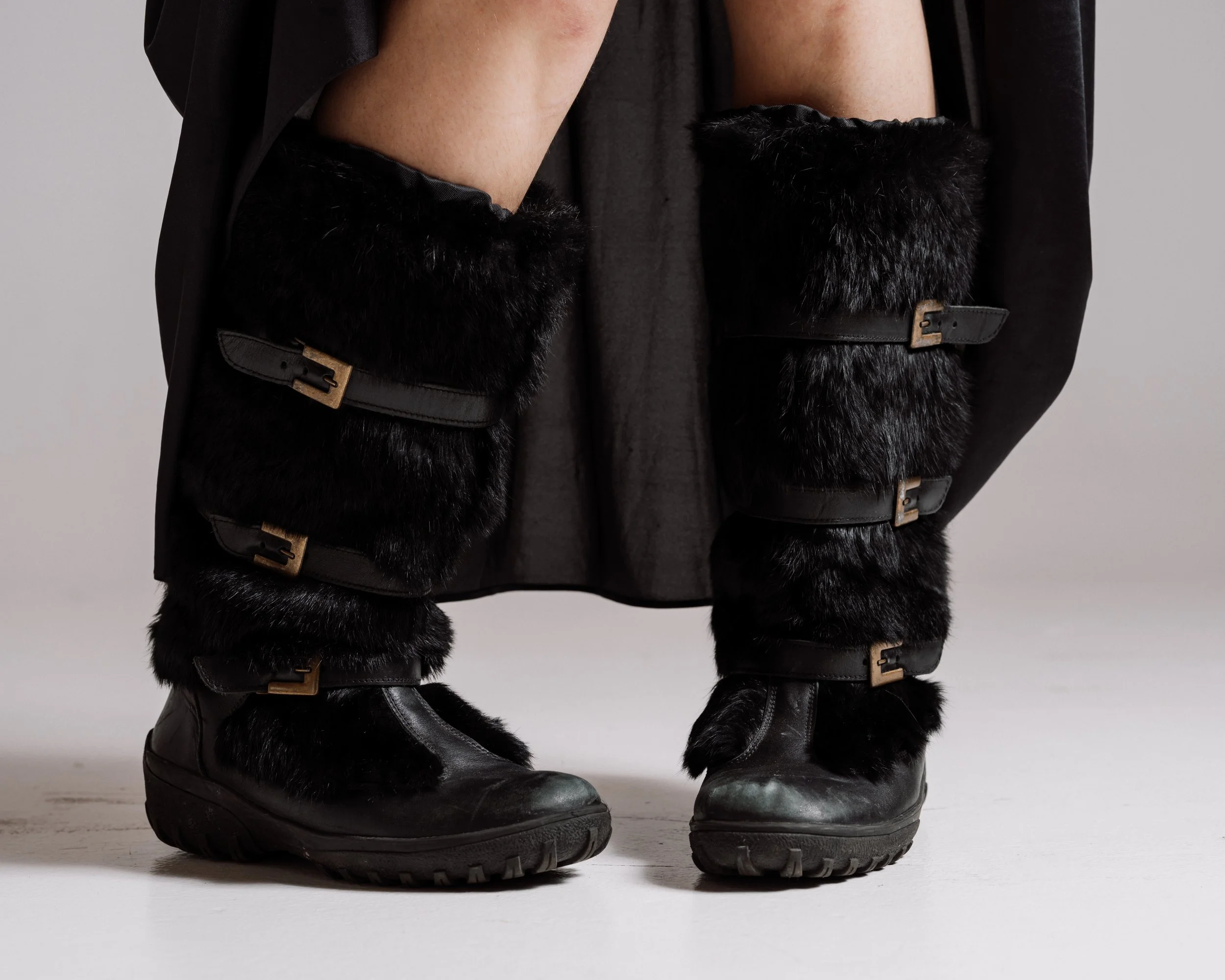
Grounding the entire look are heavy black fur boots, practical and slightly worn, anchoring the outfit in something real and natural based. She found them at the Duluth Savers and realized they were made in Italy with real rabbit fur. She even has a hunch they could be Prada.
Her necklace was acquired outside the usual channels, and she was drawn to it because it looked like barbed wire. It’s another cohesive piece that adds an edge and punk aesthetic to the look.
Sophie started wearing rings in fifth grade because of Ringo, her favorite Beatle. Ringo is a bit goofy and bubbly, so the circular orbs and bracelets make her think of the peaceful, serendipitous vision of lying back on Lake Superior and breaking in the bubbles from the waves. The Helen bracelet was found in a Goodwill bin and is a curveball to the outfit. You can tell that it’s hand engraved, and janky, but it’s a subtle nod to punk.
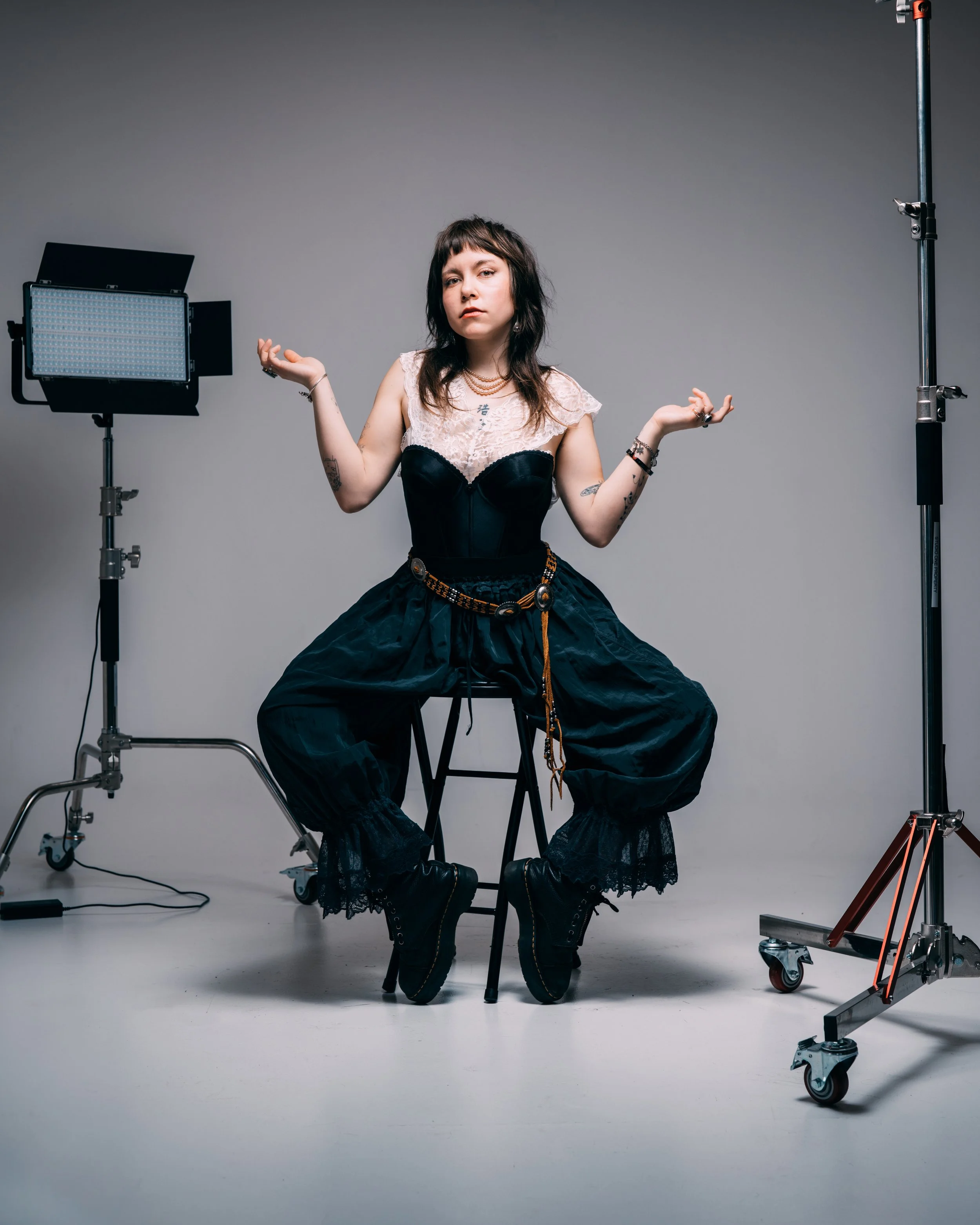
What stands out most in these images isn’t just the clothing, but the way Sophie carries it. There’s a quiet confidence and a kind of shrugging posture that suggests she’s not trying to explain the look. It exists on its own terms. And that attitude is part of what makes the outfit feel authentic rather than performative.
“I love harvesting things. Goodwill bins all the way. I’m just in there picking and digging, looking for texture and shape and difference. I’m essentially looking for an agate amongst the piles of common clothes.”
-Sophie Hiroko
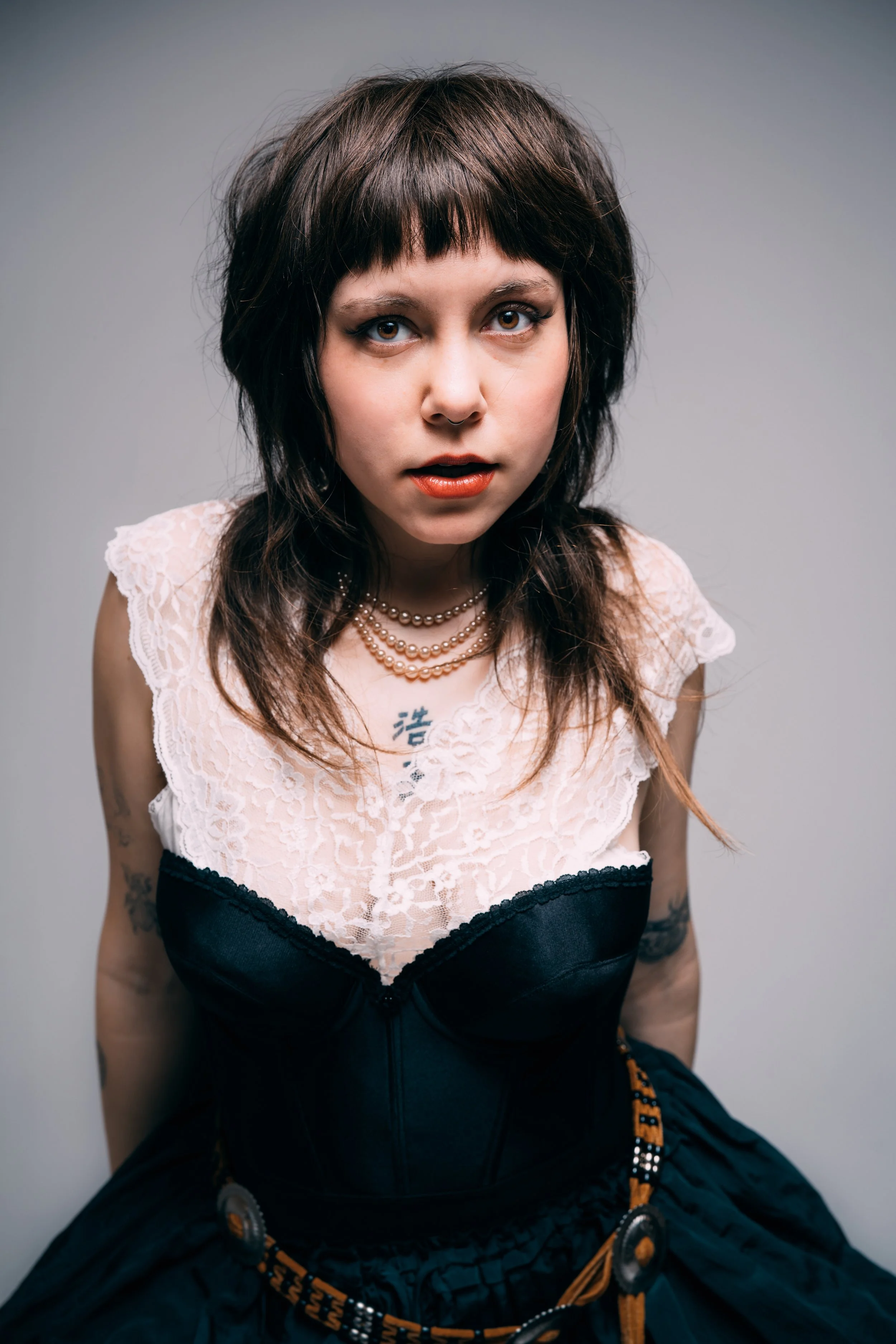
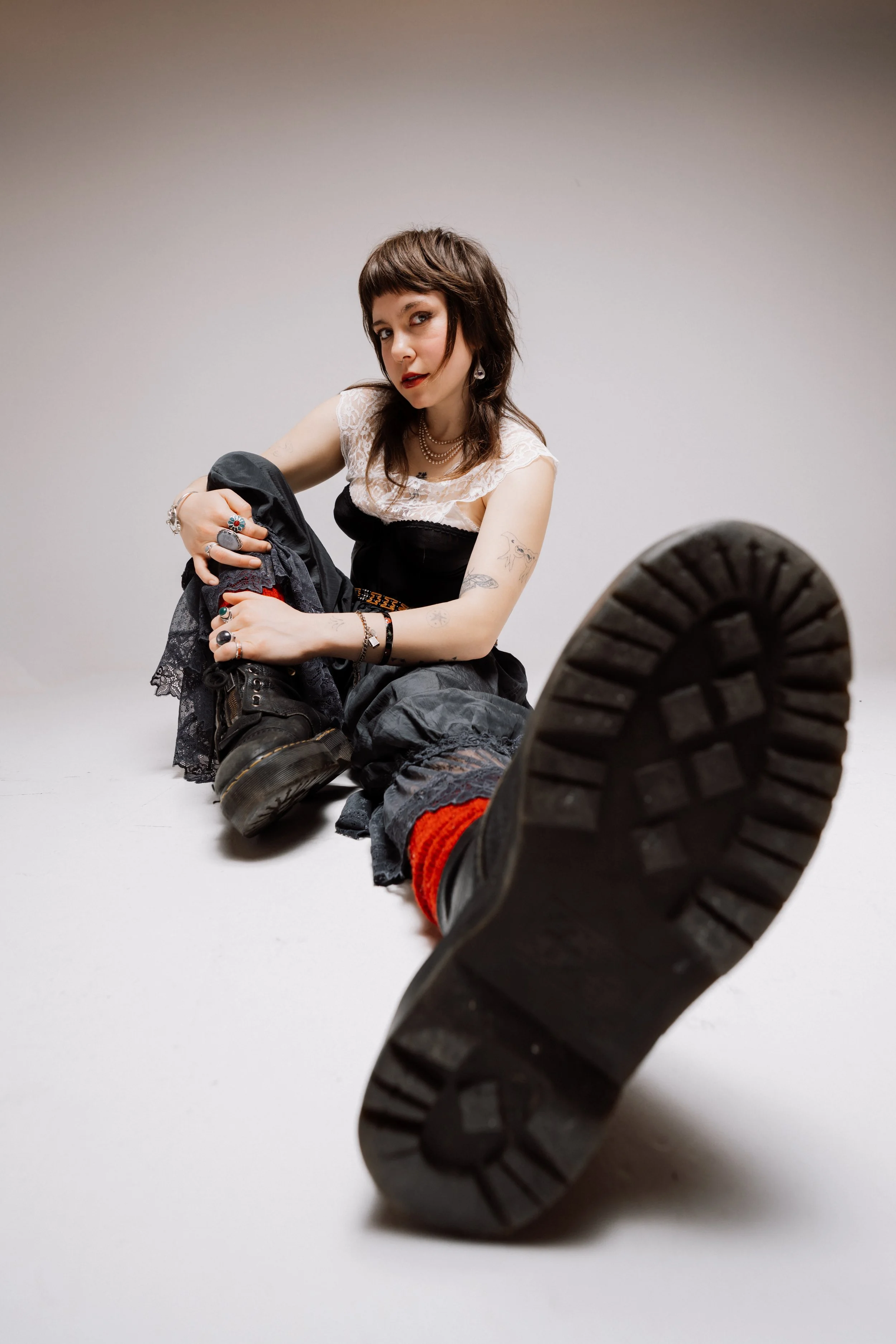
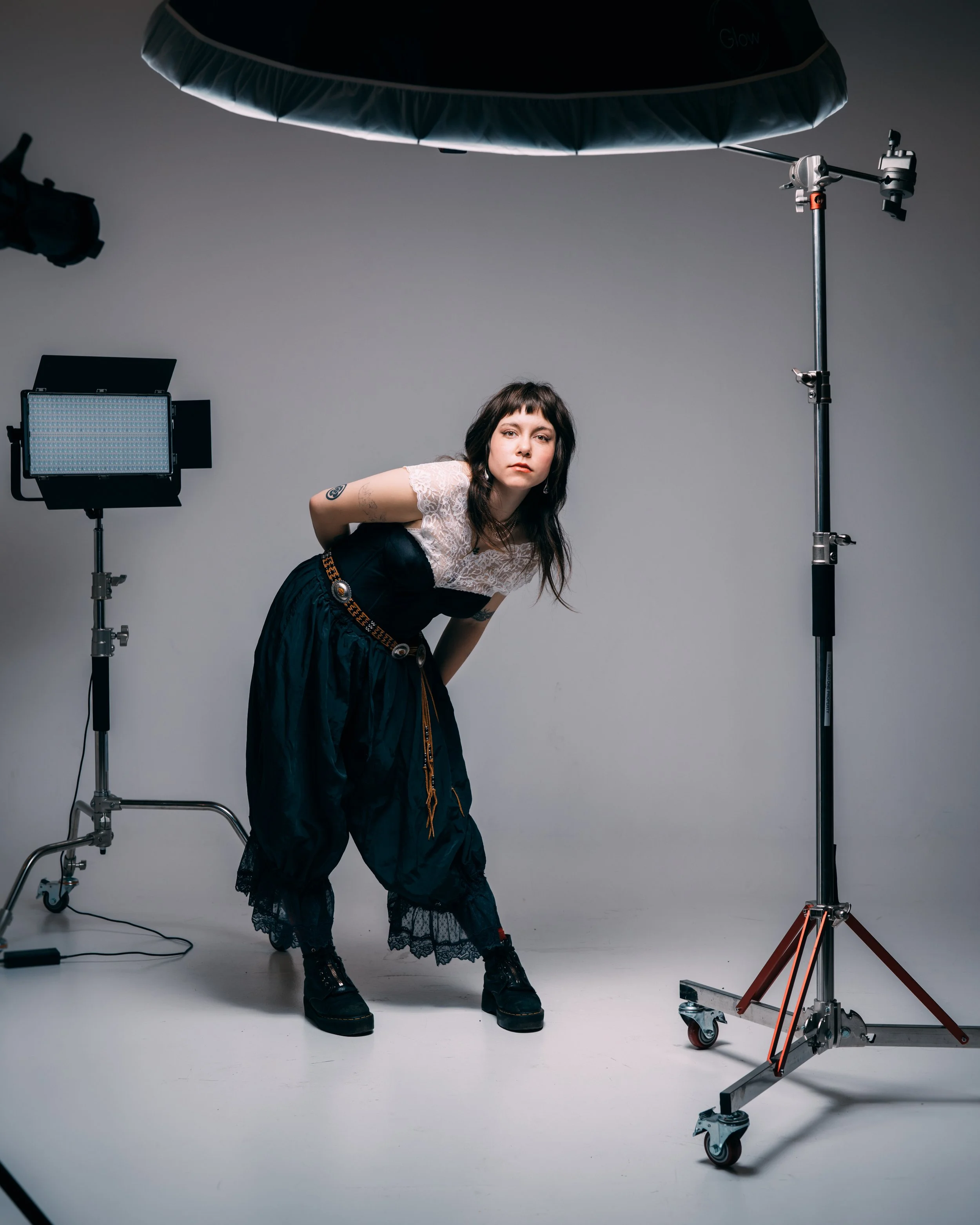
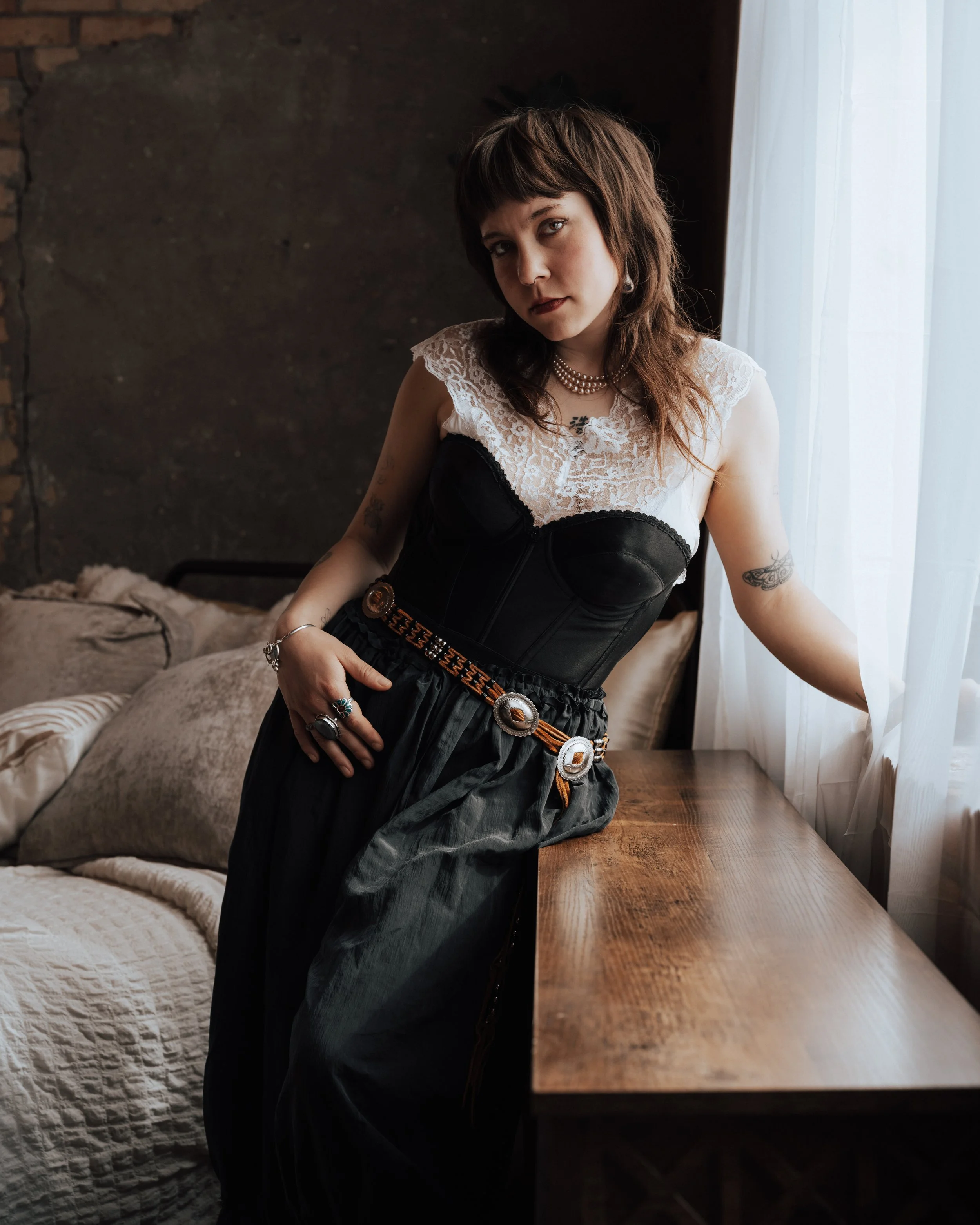
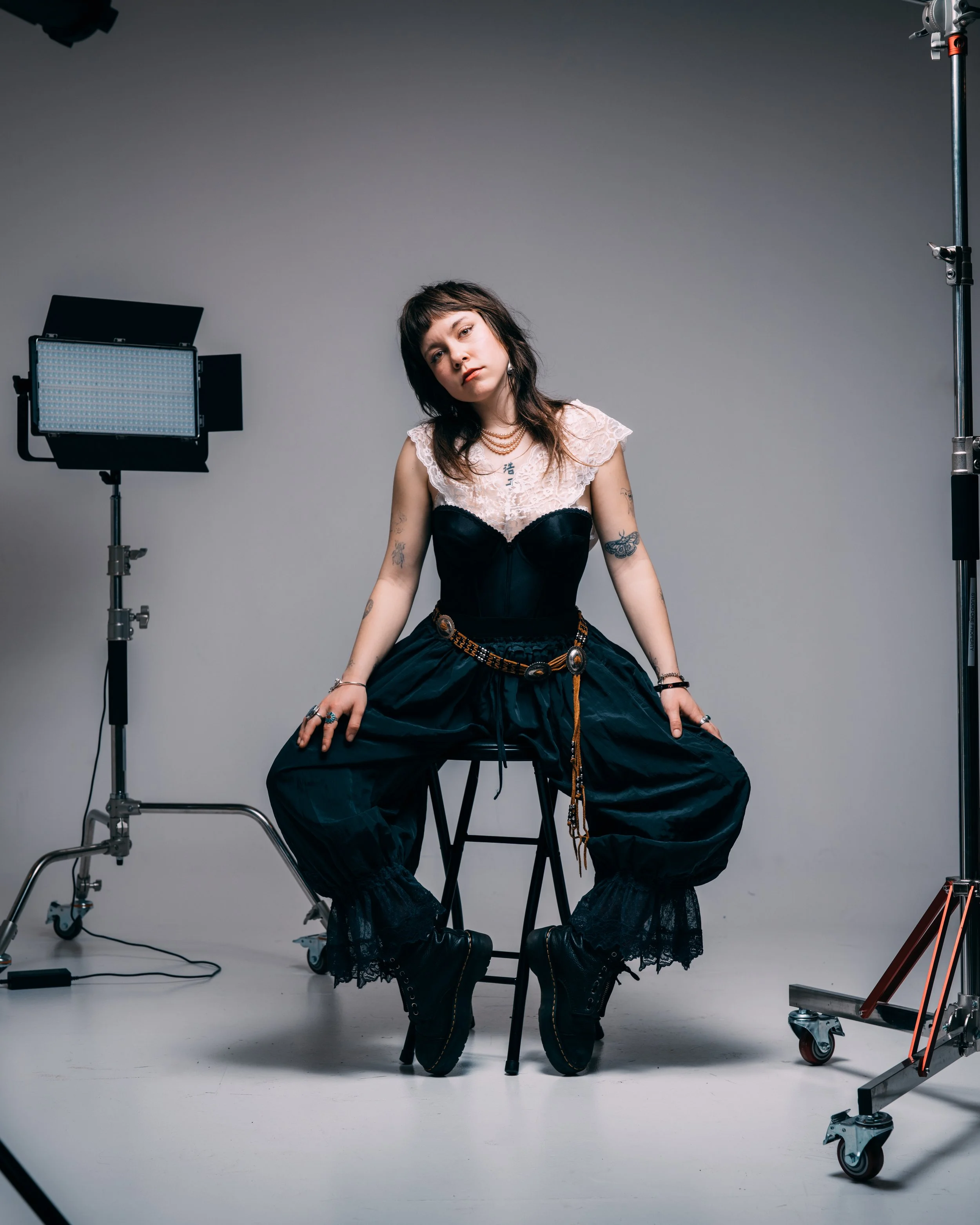
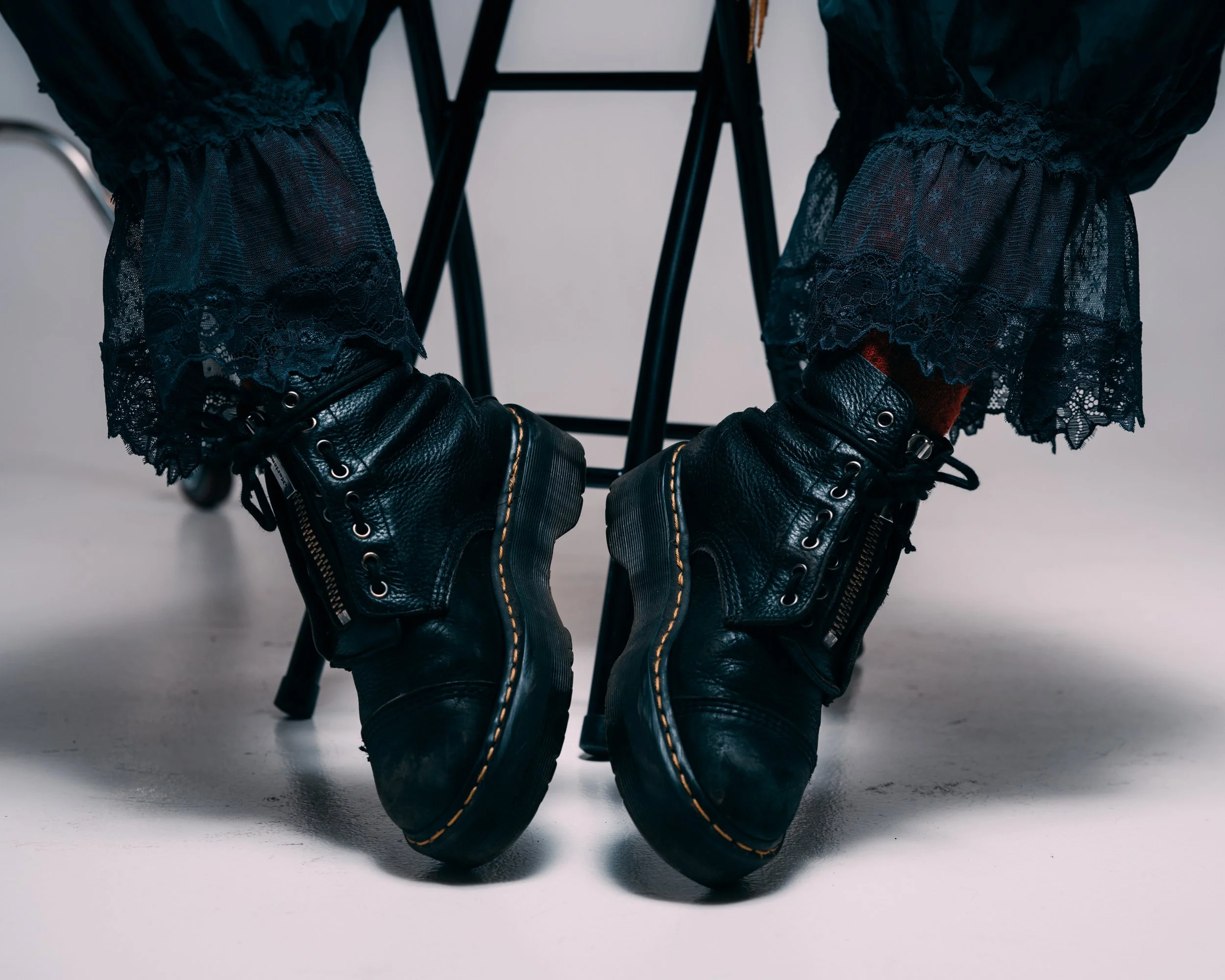
Her second outfit shifts the tone but keeps the same foundation. The silhouette leans more romantic, almost gothic, but it avoids feeling overly polished. Anchored by Doc Marten boots that she’s worn every single day since she was 15, Sophie ties the laces around the ankle. This is a tribute to Patti Smith who did that all the time. The pop of red textured wool socks adds warmth and weight to the look.
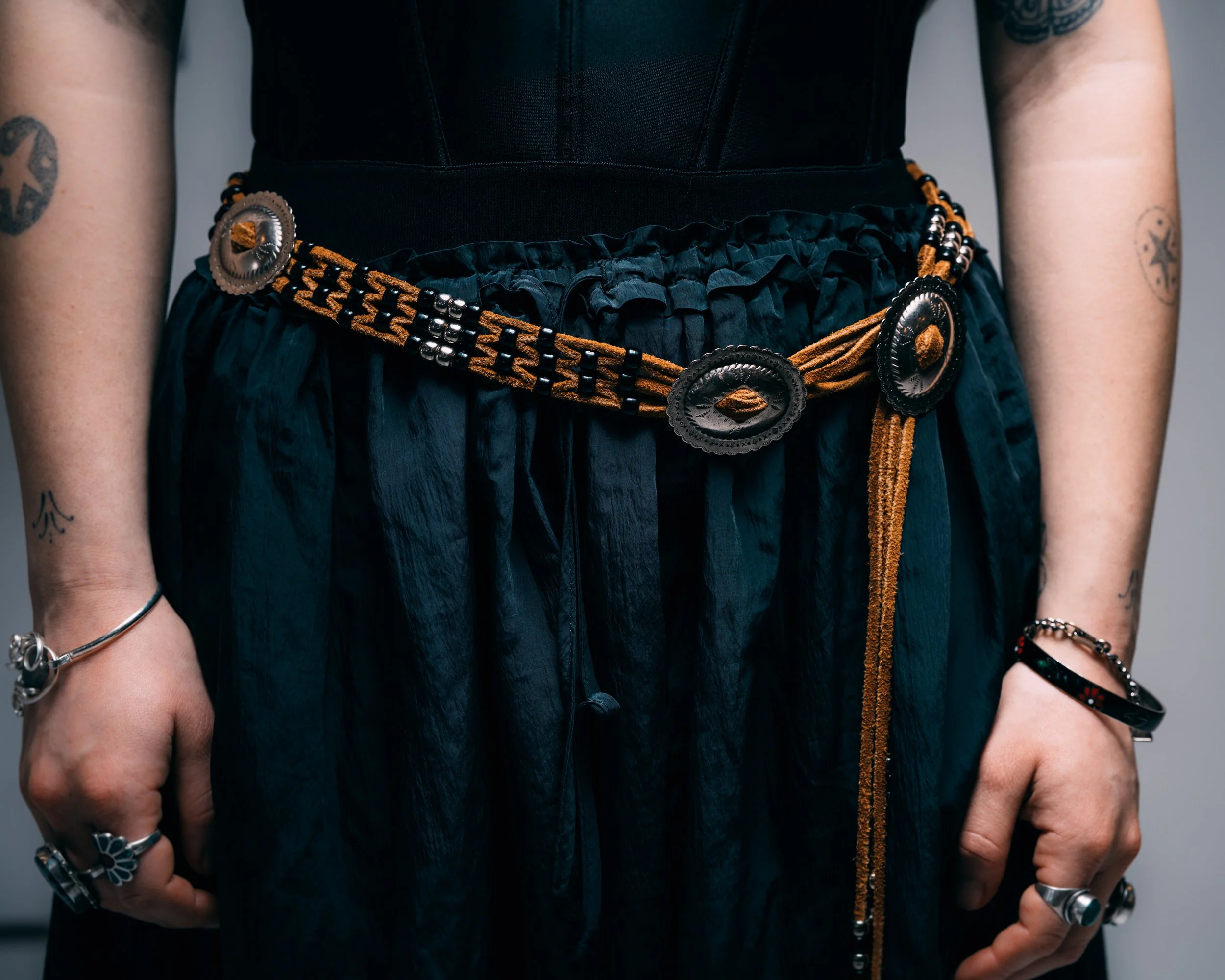
The bloomer pants were bought from Free People. The lace around the legs and overall shape of the pants are very reminiscent of Japanese elements. Her belt was stolen from her sister and is a reference to her ancestry.
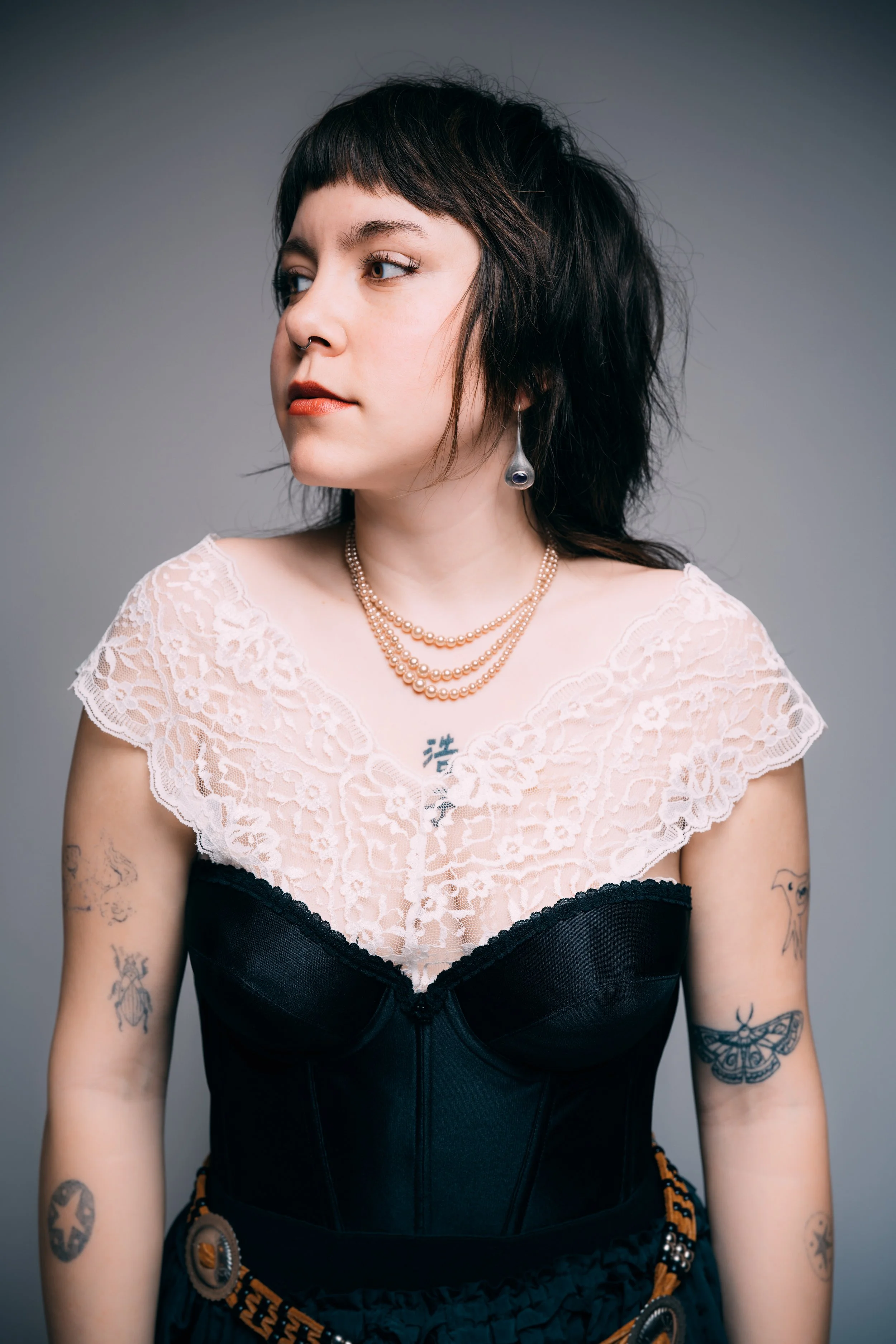
This corset was also found at Savers, which she doesn’t ever buy anything that’s strapless. But she figured out a way to make it work by layering in a lace shirt underneath it. The lace once again introduces a sense of history, almost like something inherited or rediscovered.
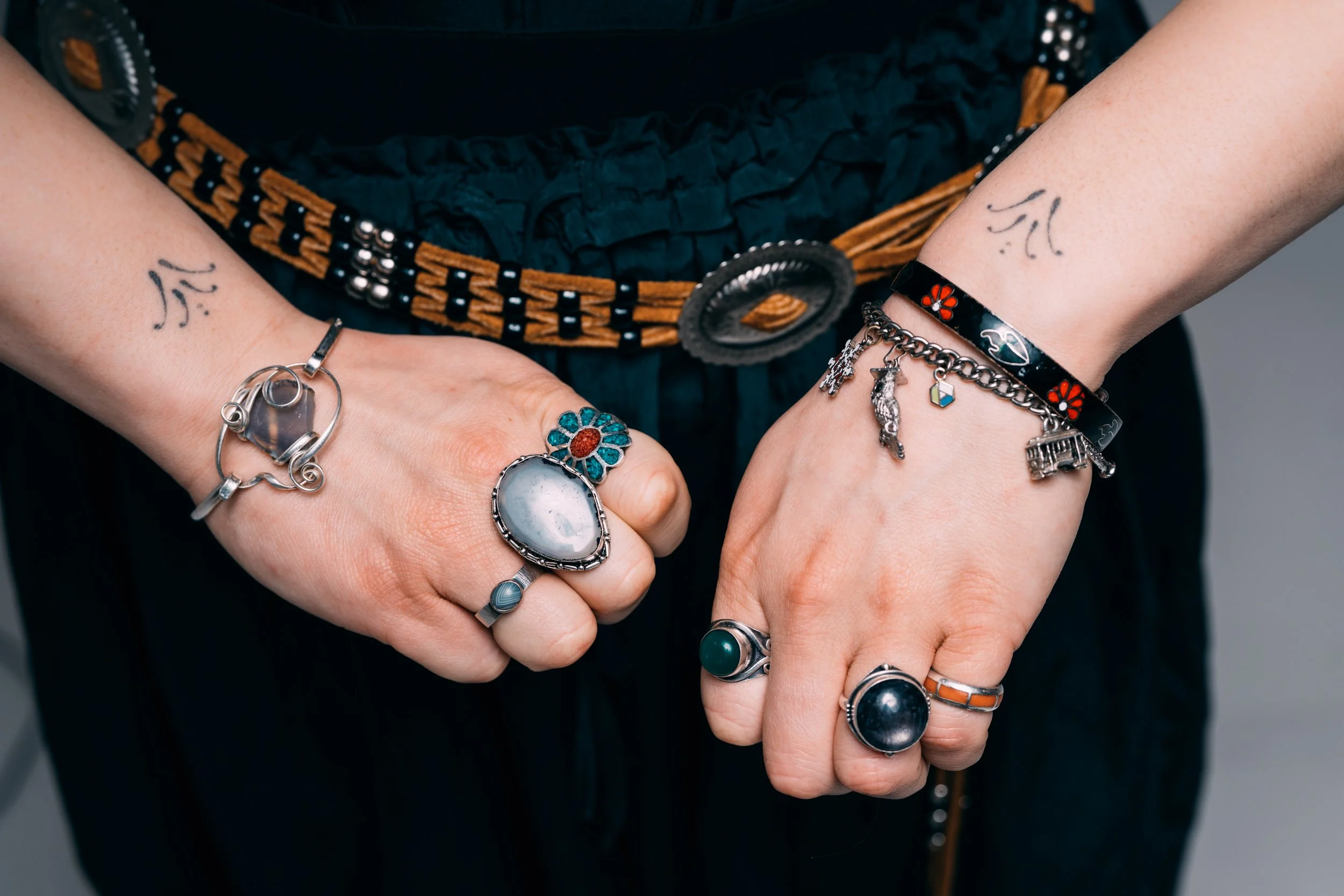
The pearl necklace, another reference to water, finds a perfect frame around her neck, elevating the look. She added in a vintage charm bracelet, which makes her imagine all the different places somebody went to collect the charms and then where do they all go. It’s a hint into a larger theme that’s intertwined into her music, the thought of death and mortality. Once again we also see that pop of red that Sophie is eternally tied to.
Nestled between agate rings is her wedding ring, which she still wears on her right hand. Even though she’s divorced, they continue to be best friends and remain connected. She found the stone in Lake Superior, which means she always has a piece of the lake with her.

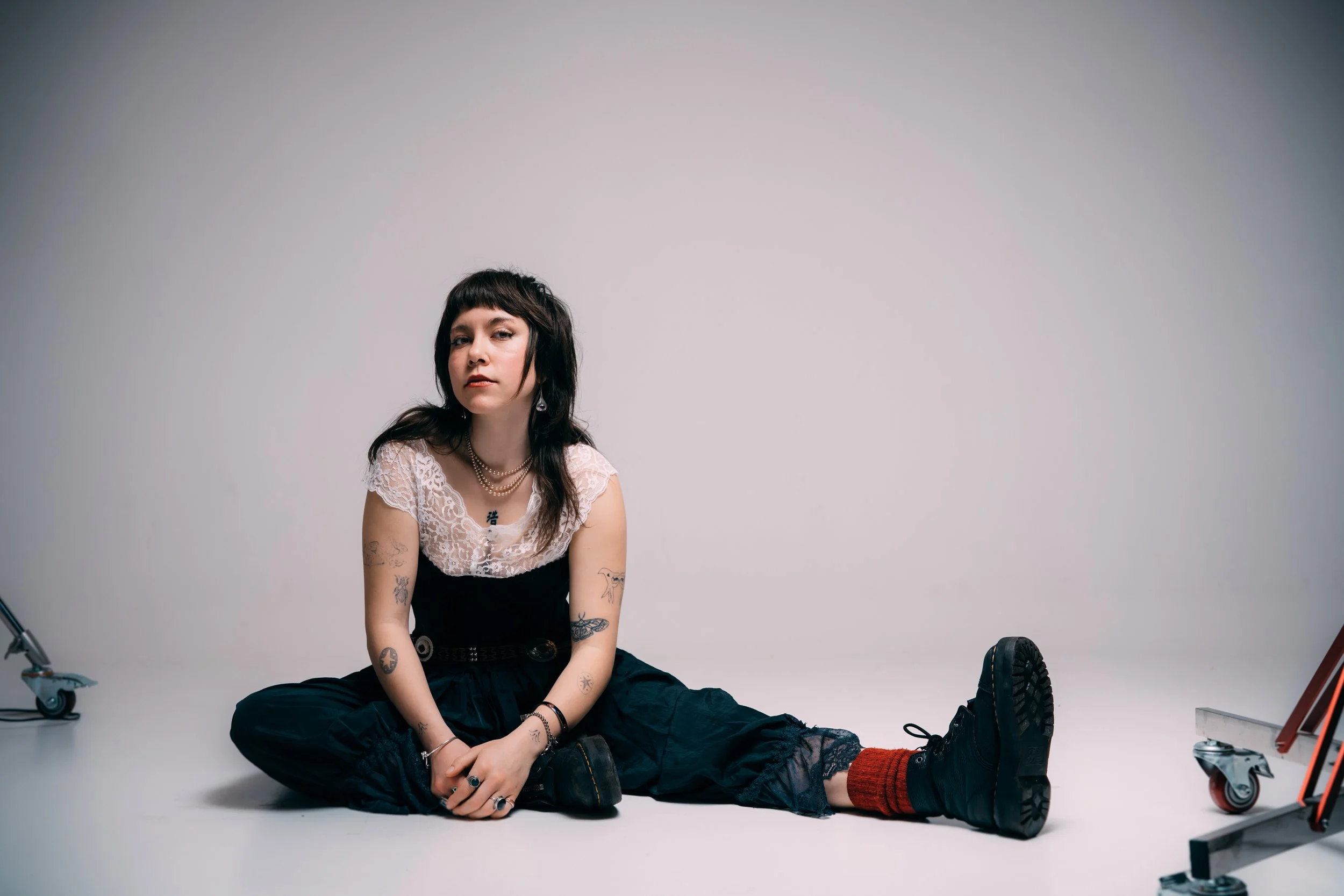
“I think part of the reason that I wear black all the time is because I am very inspired by Victorian mourning outfits. Morning in general is a theme in my music and my art. Death, rebirth, and grief are huge in my presence.”
-Sophie Hiroko
Just as her outfits combine softness and structure, her songs blend vulnerability with strength. There’s an emotional depth that doesn’t rely on a single tone. Instead, it moves between feelings, allowing tension and contradiction to remain present. This is what makes her style feel so connected to her artistry. It’s not an accessory to the music but another form of expression. It gives context, suggests mood, and invites the listener into a specific world.
It’s easy to see the tie-ins between music and style. Watching her music video for “Ashes”, Sophie crawls, splashes, and smears Lake Superior on over herself, towing that line again on boundaries and metaphors of returning to earth. The lyrics suggest death, disappointment, and knowing there’s an end to everything, ashes to ashes.
There’s also something distinctly Midwestern about the way she builds her songs. It’s not overly polished or distant, but feels accessible, grounded, and real. Even at its most expressive, there’s a sense that these her songs (and clothes) are meant to be worn, not just displayed.
Sophie’s 2025 EP to the core introduced us to the grizzle and rock that she aptly calls “tender bubble grunge”. Which, looking at her two outfits, can easily be described that way as well. There’s a bit of edge, mystery, and tenderness in Sophie that reflects in her music.
Her newest single “Divorce” lays out the distance in relationships and how things come apart. The tender song showcases her vulnerabilities and commitment to using music as a way to understand our lives. “Divorce” grabs a heavy truth by the collar and lays it bare, raw, unfiltered, and achingly familiar to anyone who’s ever felt love unravel.
When Sophie steps on stage, there are huge clues for the audience to draw from on what to expect next.
“Part of my visual is also how low my guitar hangs. Inspired by Courtney Love and other grunge rockers that rock that guitar super low. My hope is that if you pick up on that, my haircut, which is now more of a shaggy little rocker thing, then I want them to think and know this is going to rock. That's what I would want people to hope to feel.”
Sophie’s fashion journey isn’t about arriving at a final version of herself. It’s about continuing to evolve, to collect, and to refine. From her early experiences with neutral dressing, to her core values in intersectional feminism, to the influence of Duluth’s environment, to the expanded creative space of the Twin Cities, each stage has added something new without replacing what came before.
What emerges is a style that feels deeply personal and constantly in motion. It reflects where she’s been, where she is, and where she’s going, all at once. And like her music, it leaves room for change.
Check out the links below for ways to follow Sophie Hiroko and all the things we mentioned above.
Sophie Hiroko Instagram - Website - Bandcamp - Spotify - Issey Miyake - Intersectional Feminism - John Kacere - Park Point - Courtney Love