The Mojo of Music featuring Overman Guitars
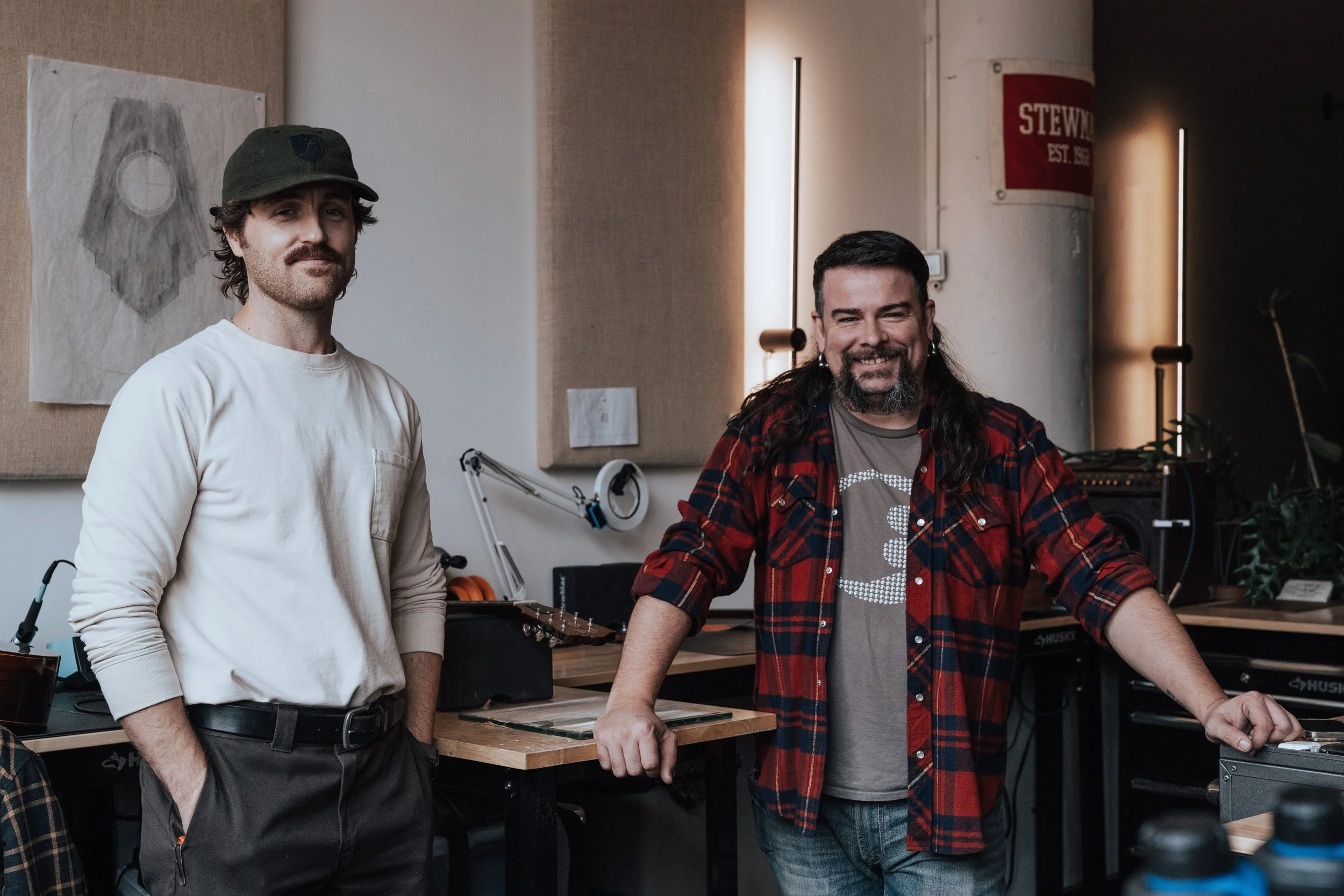
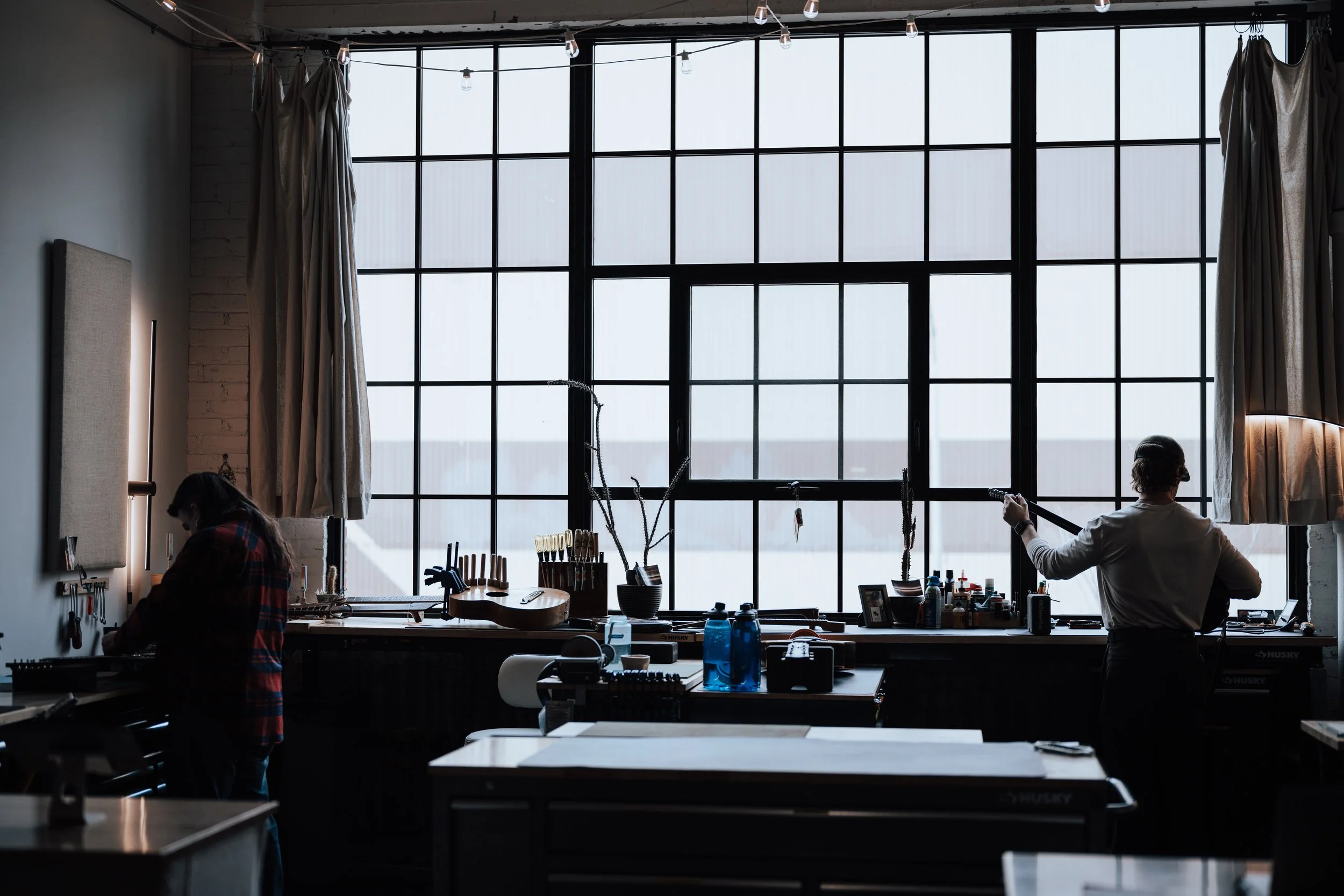
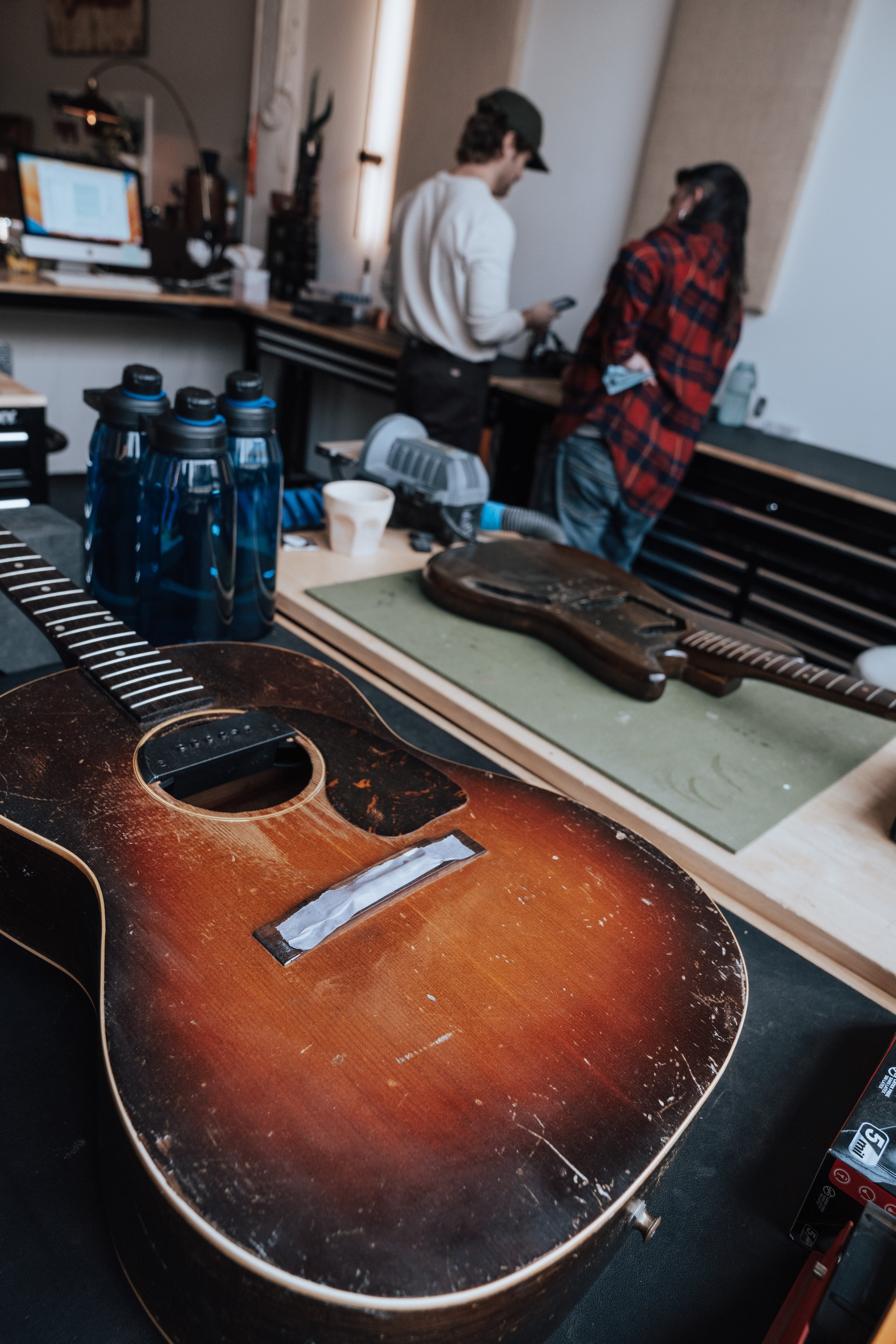
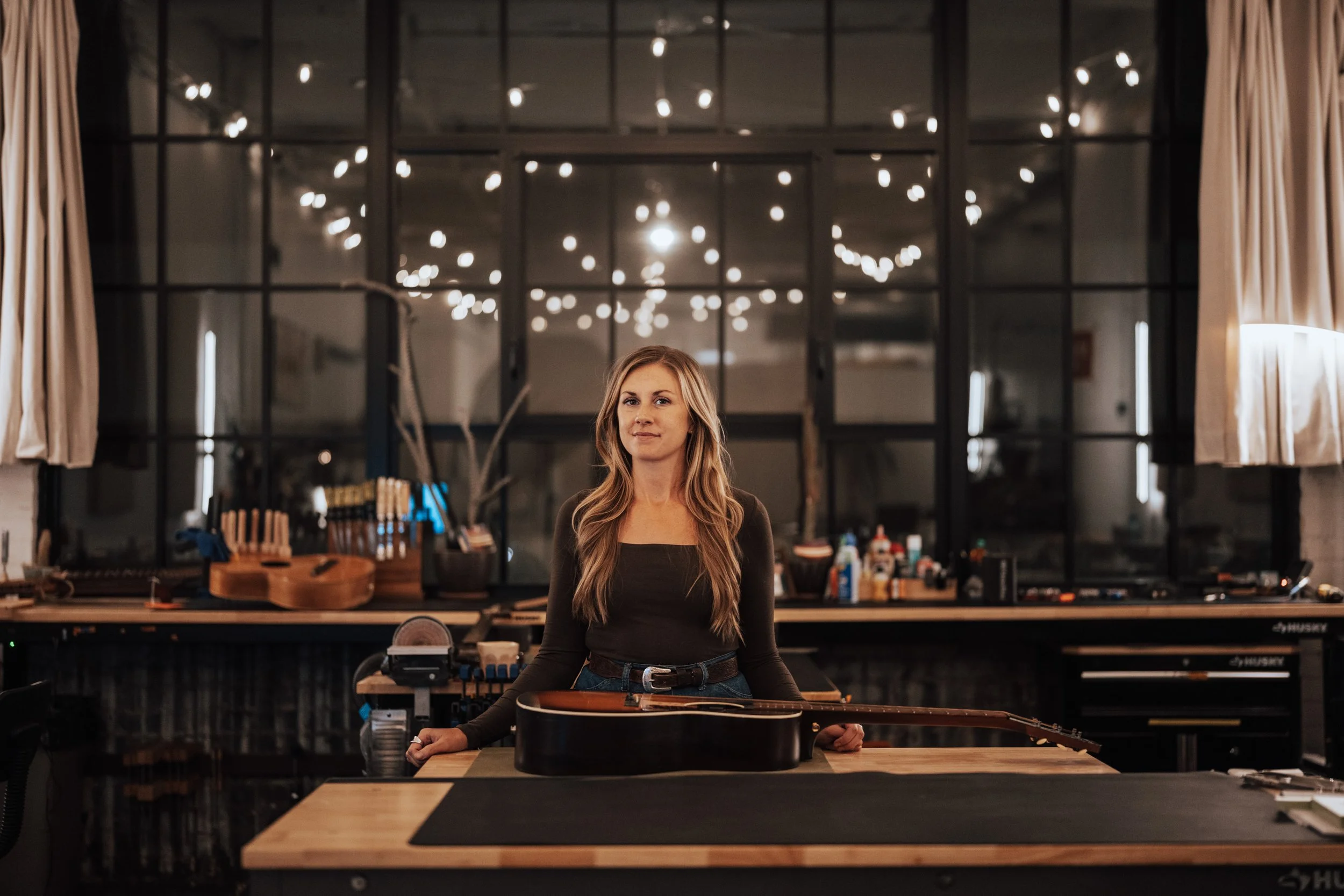
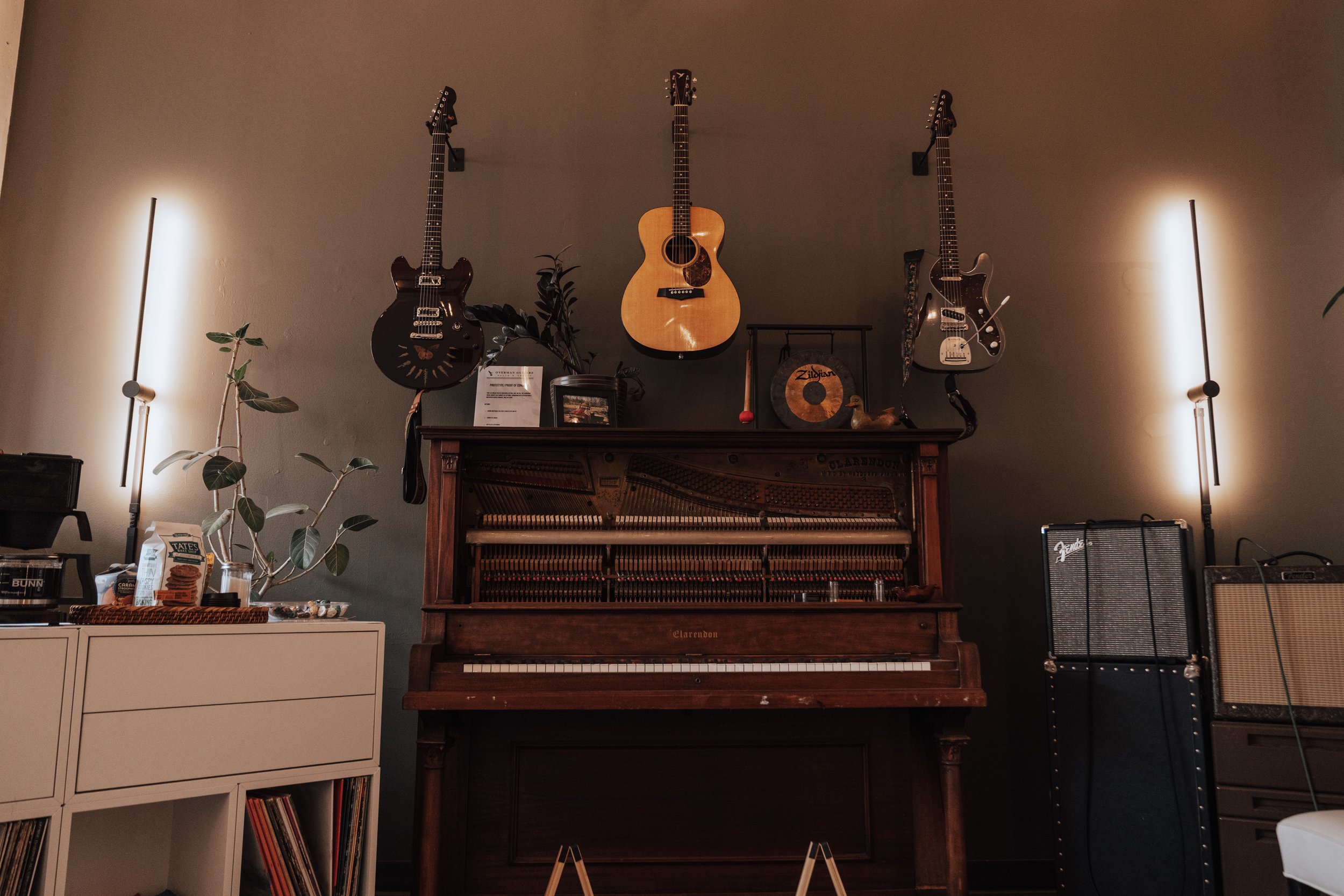
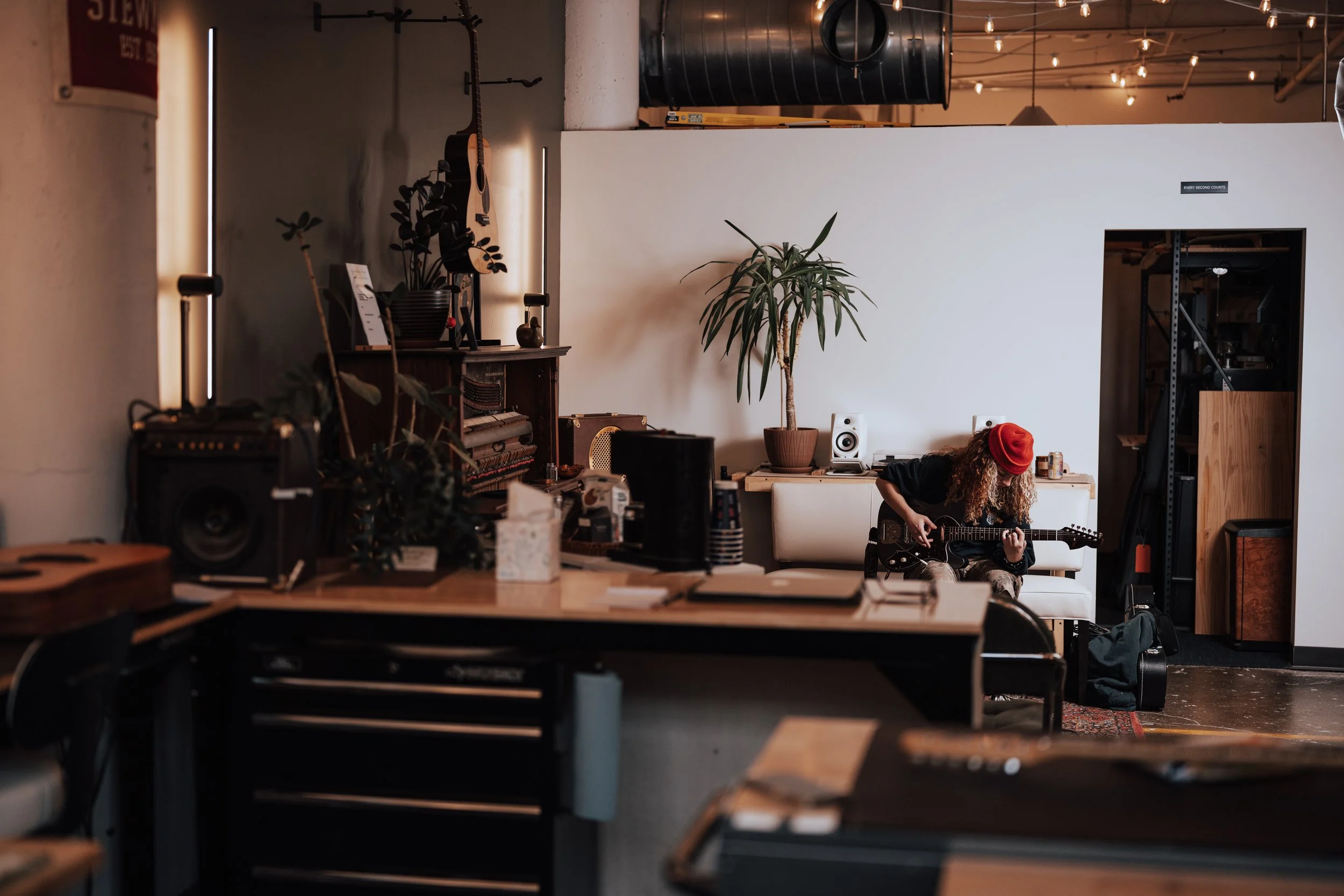
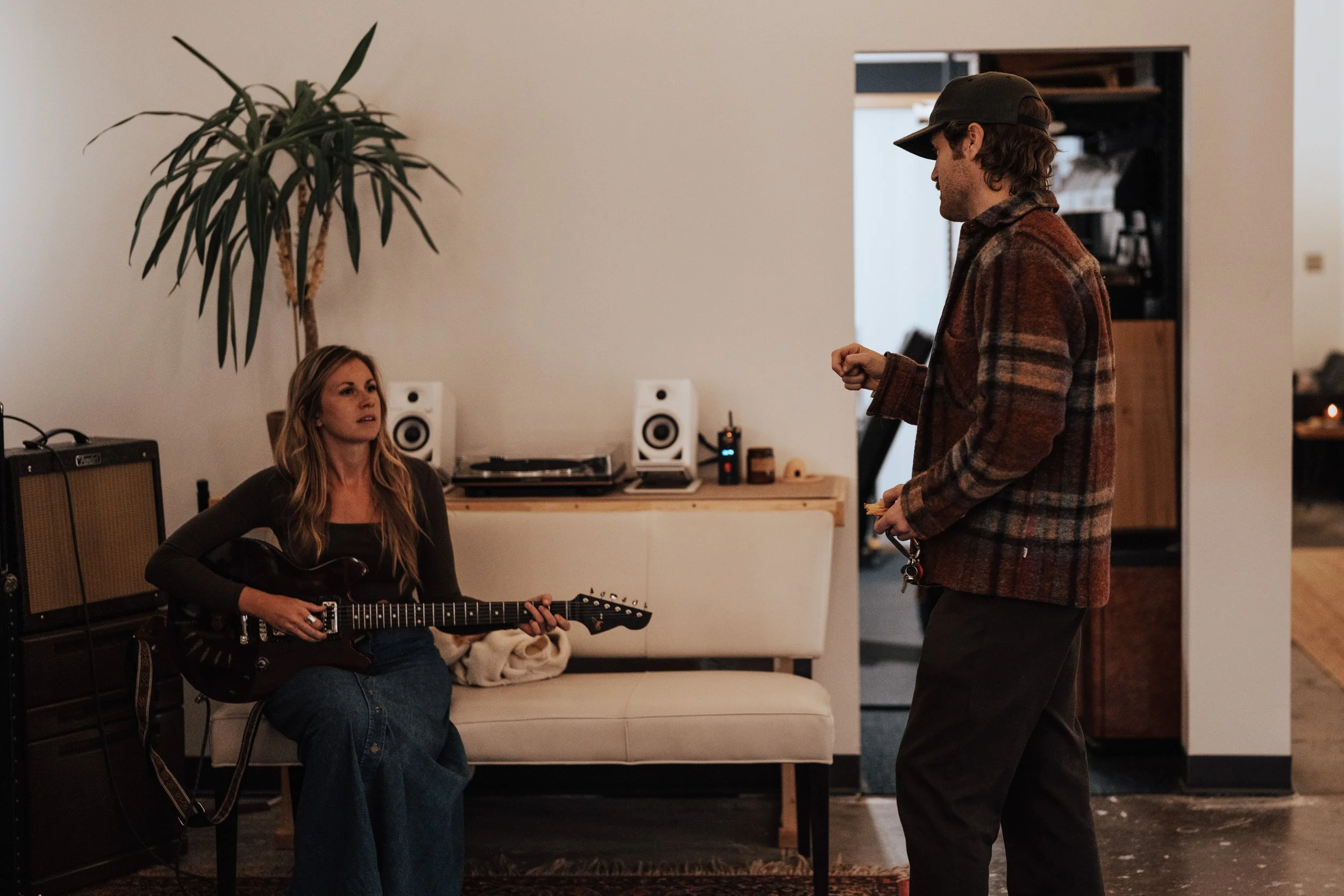
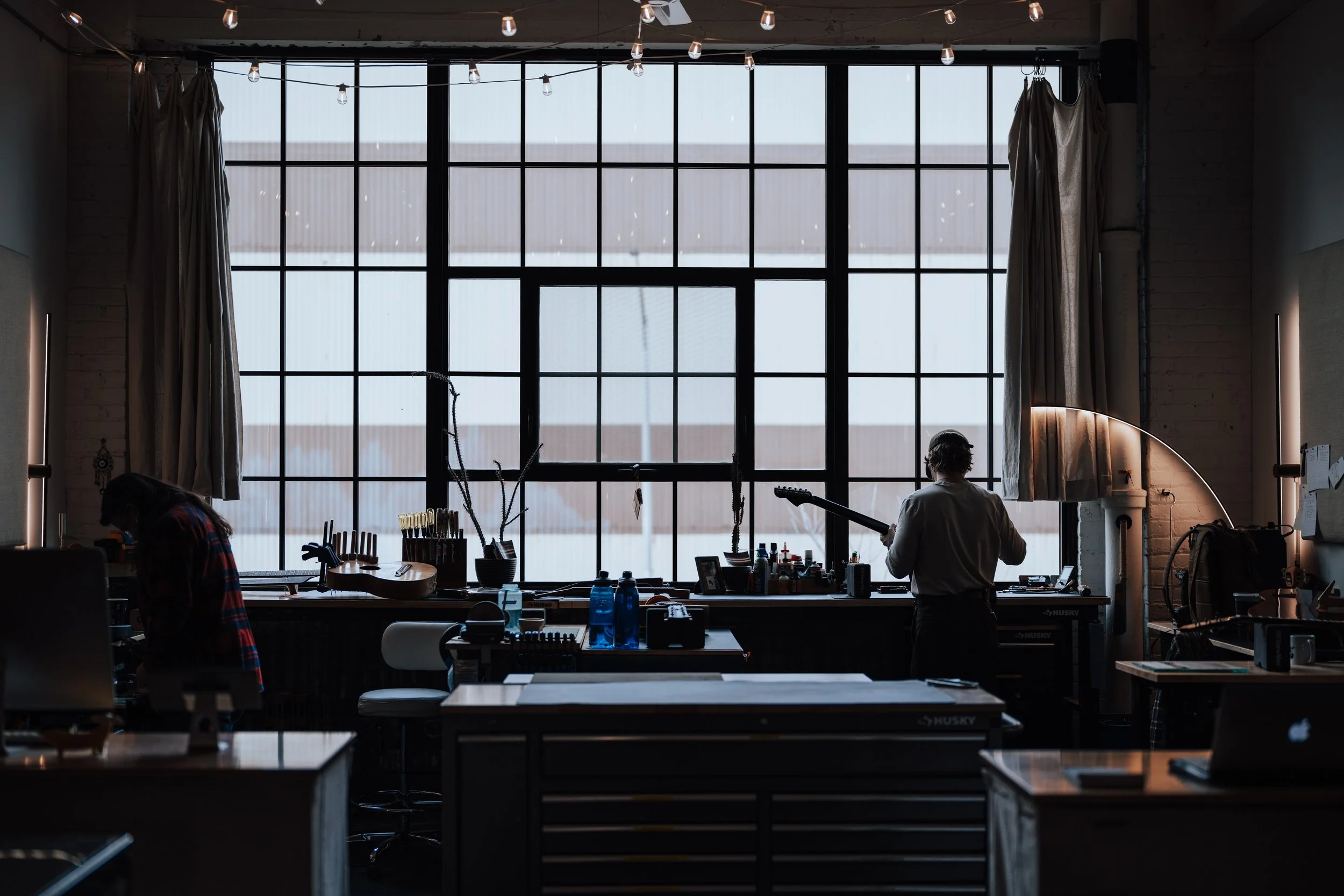
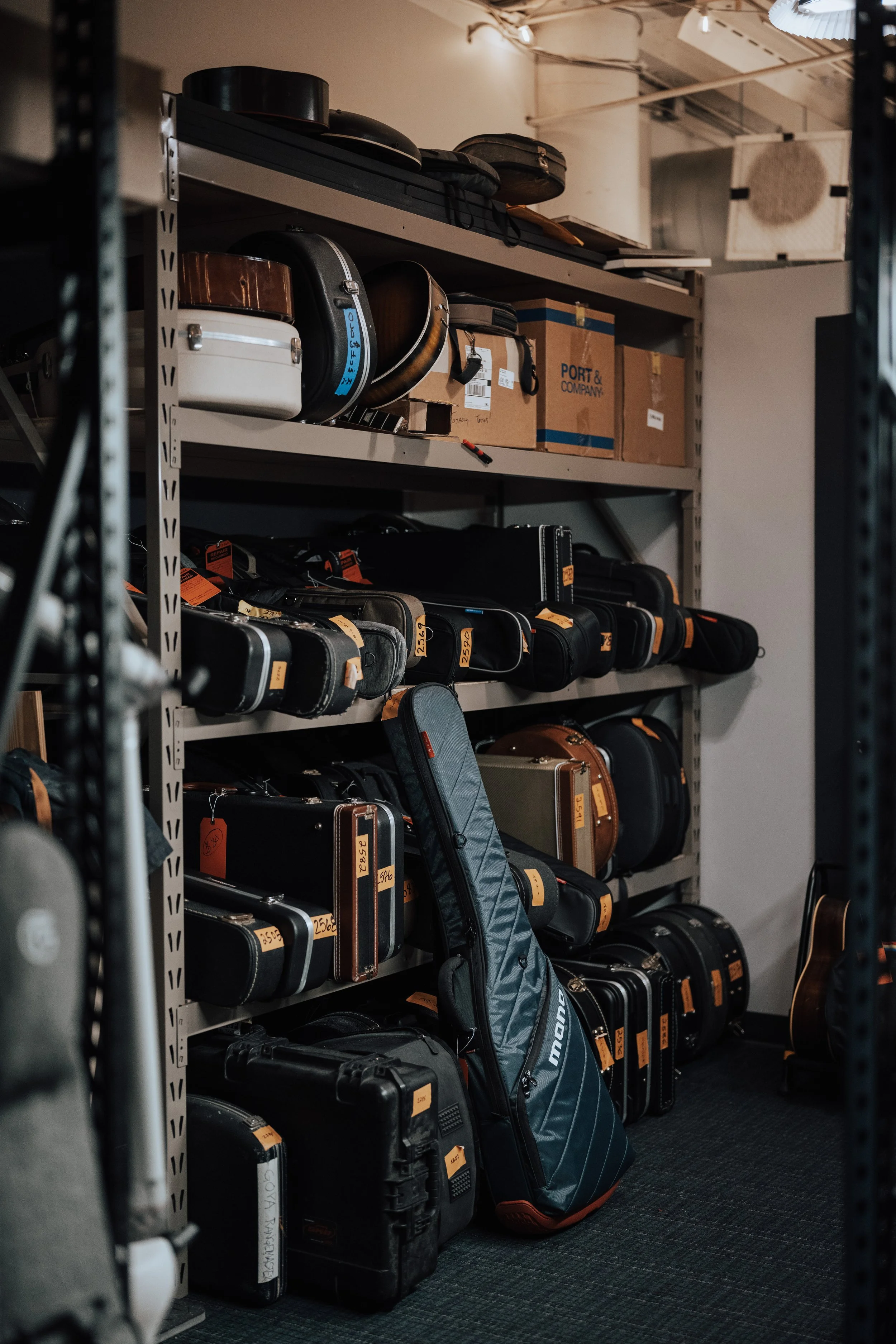
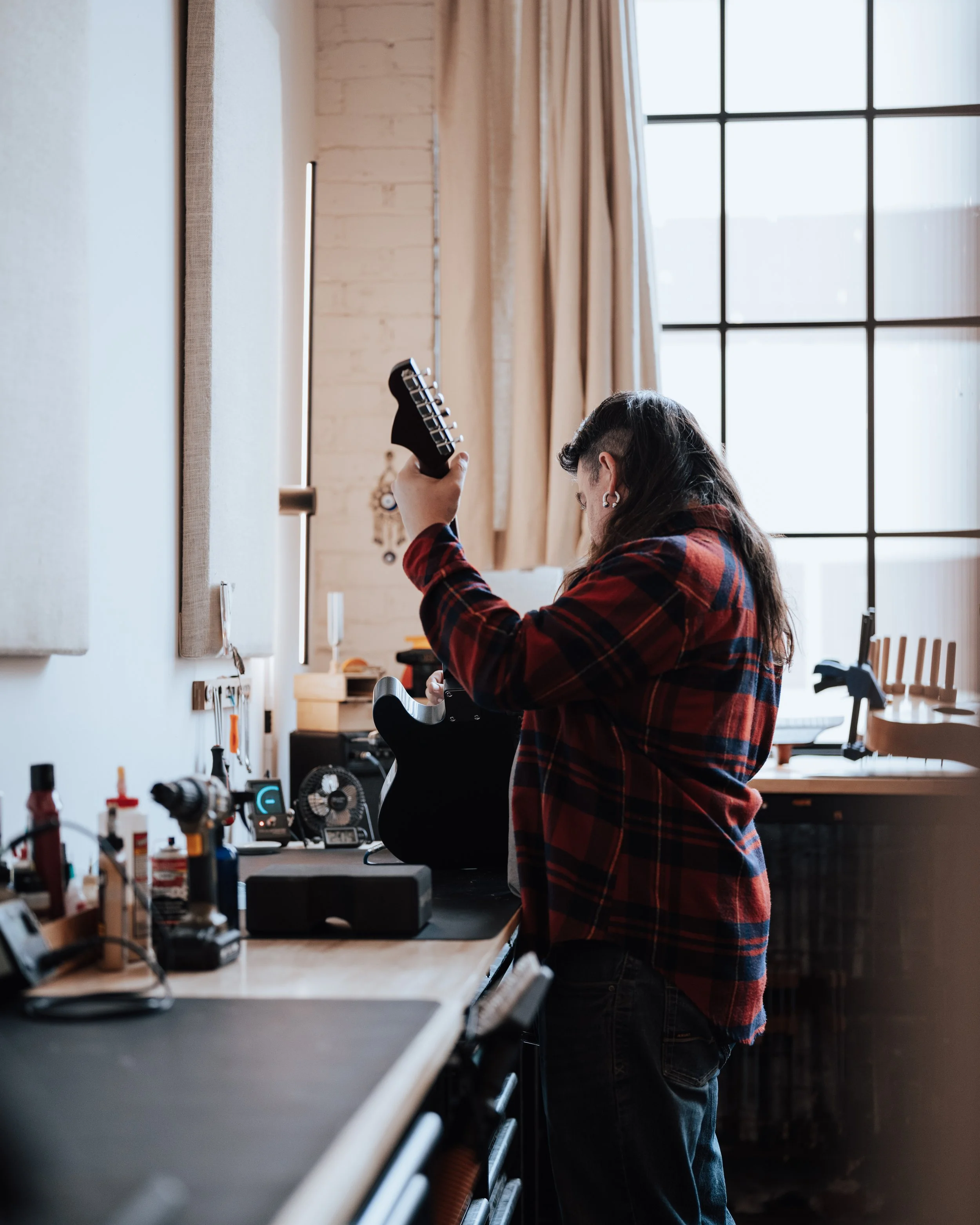
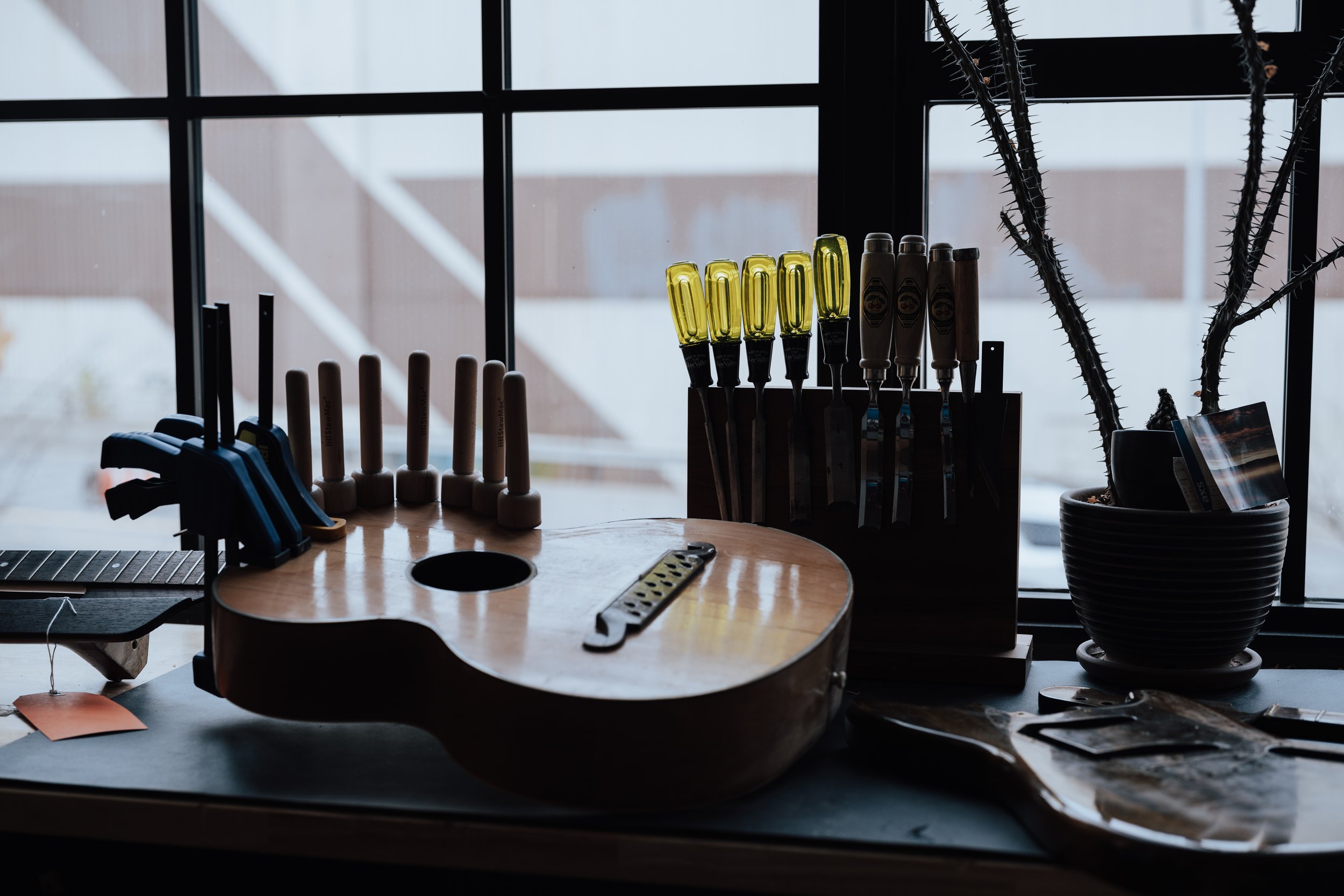
Tucked on the corner of Vandalia Street and Wabash Avenue in St. Paul, and next to a crescent moon water tower is an oasis for local guitarists. The first thing you notice when you walk into Overman Guitars isn’t a wall of instruments begging to be shredded through. Instead it’s a quiet intentionality of workmanship setup in little nests of guitar parts and stations where guitars are being fixed and built in various stages. The walls display hand-drawn designs while tools are lined up on the edges.
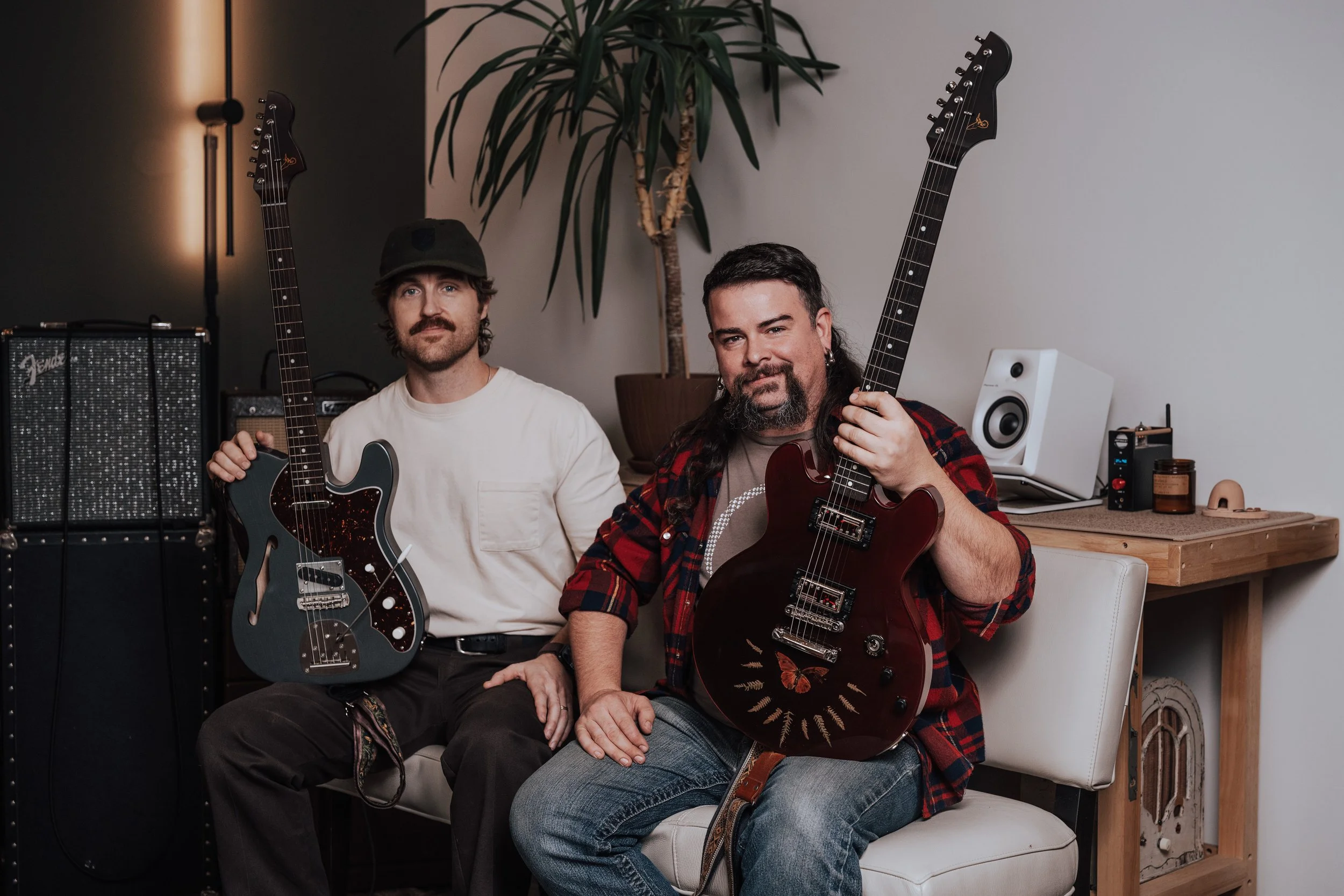
Owner Wyatt Overman and guitar tech Jonny Forsythe don’t talk about guitars like products. They talk about them like organisms and things that respond to touch, age with time, and develop personalities that even their makers can’t fully predict. Each living undertaking is its own priceless reward for Overman.
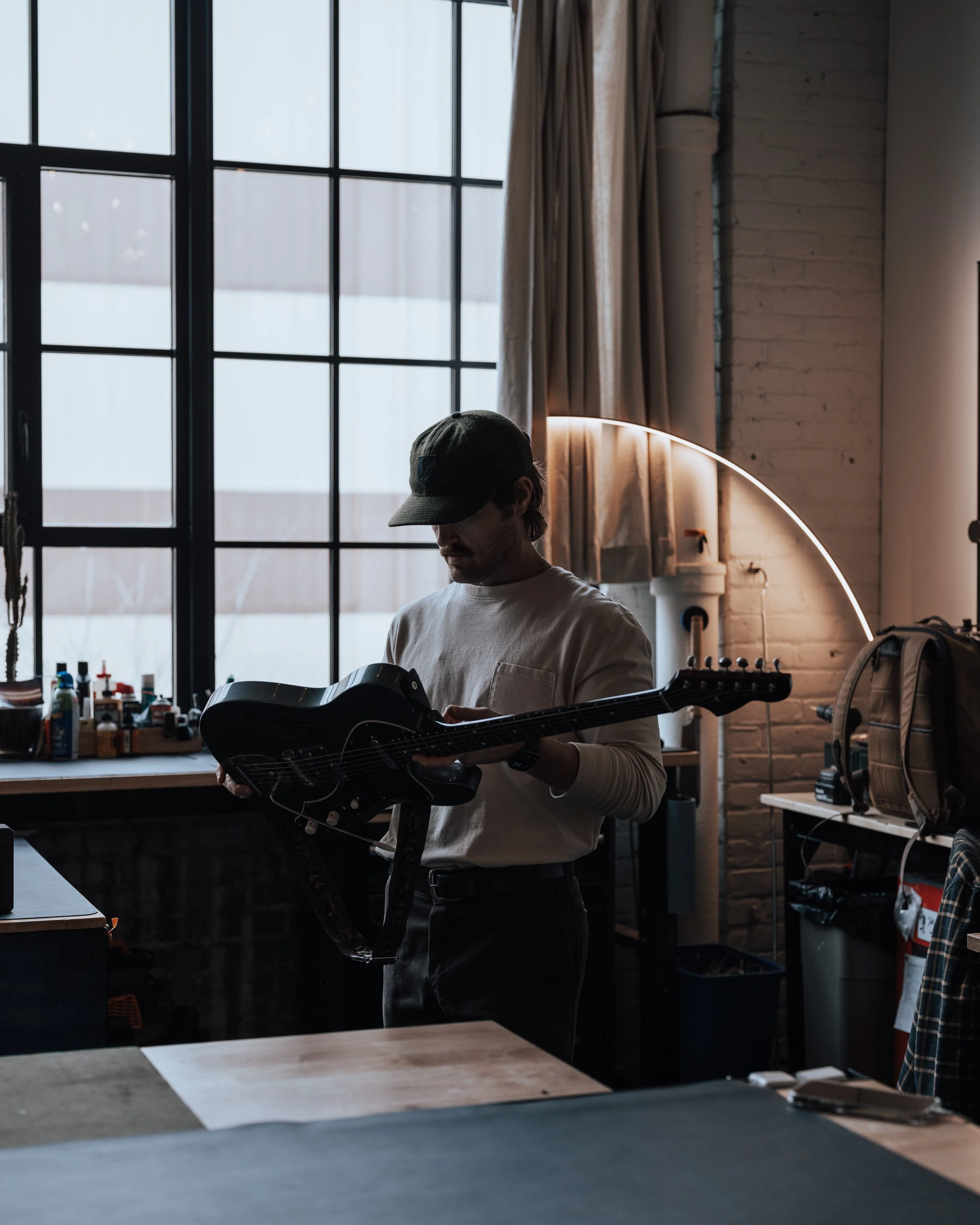
“The most rewarding part is knowing that it helped somebody make music, to inspire them. Just knowing that a repair helps somebody put more music out into the world is key. Creating is the highest honor for us.”
-Wyatt Overman
The Overman approach is rooted in reverence for classic guitar design like Fender, Gibson, and the shapes that history already got right, while at the same time quietly bending expectations in their own creations.
“We get a little mystical about guitars,” Jonny admits, smiling. Music itself is a mystery, after all. Where does a song come from? What actually causes the inspiration? Why does one instrument feel like home while another, equally well-made, never quite fits? Overman believes there are some remedies for opening up more inspiration for music that lies in the actual physical nature of the instrument. When you have a guitar in your hands that becomes invisible, whereas it’s not causing you to stumble over the frets or strings, or you try to bend a note and it chokes up, the key is to eliminate all those issues. The guitar then disappears and you’re able to focus on the sound, the music, and the lyrics. The goal for Overman is to turn the guitar into your magic wand, so you can let that inspiration flow and not be distracted by how the guitar is playing.
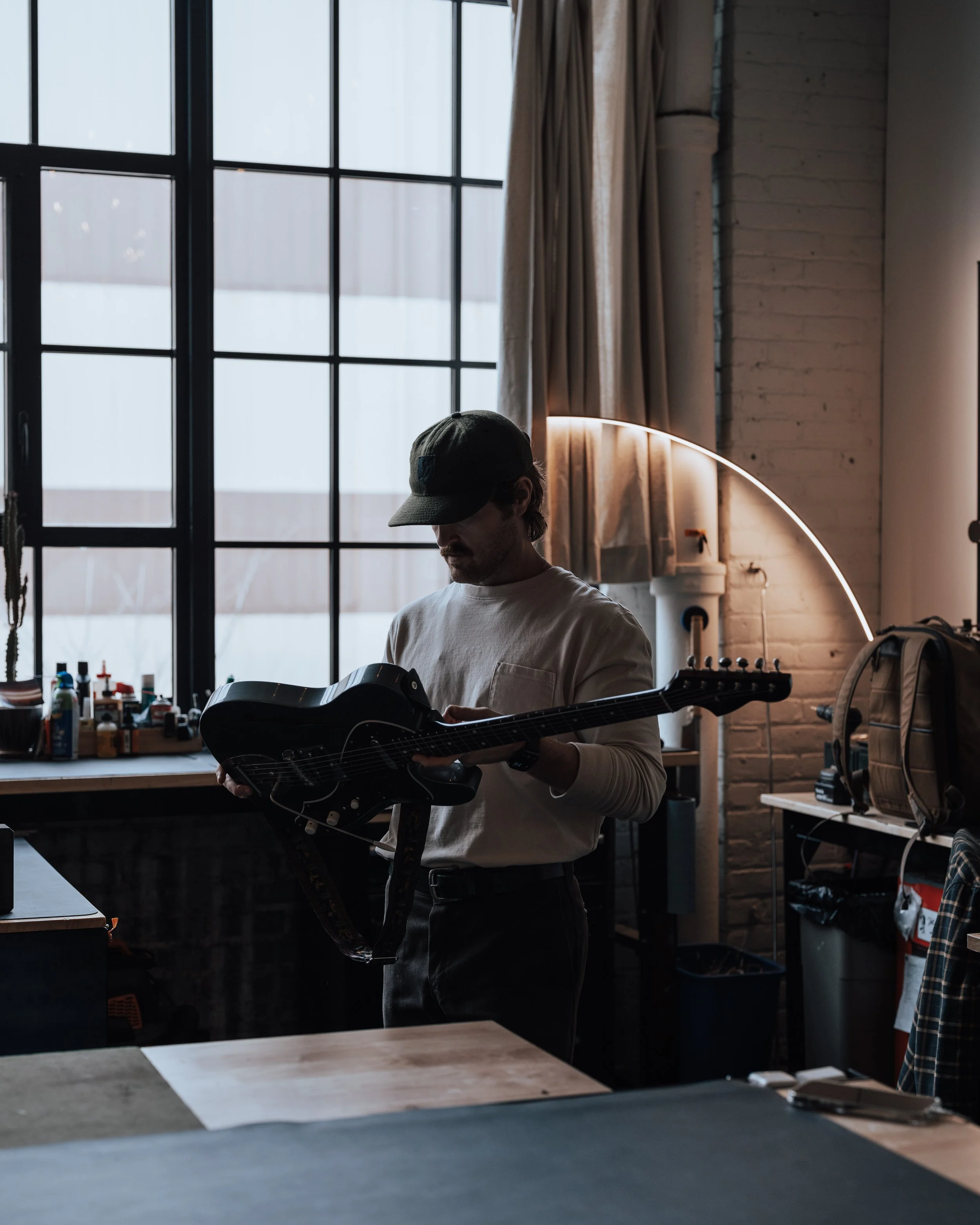
When asking Wyatt how much the choices in wood, finish, and hardware affect the sound of a guitar, he doesn’t hesitate. Everything matters, but not always how people expect.
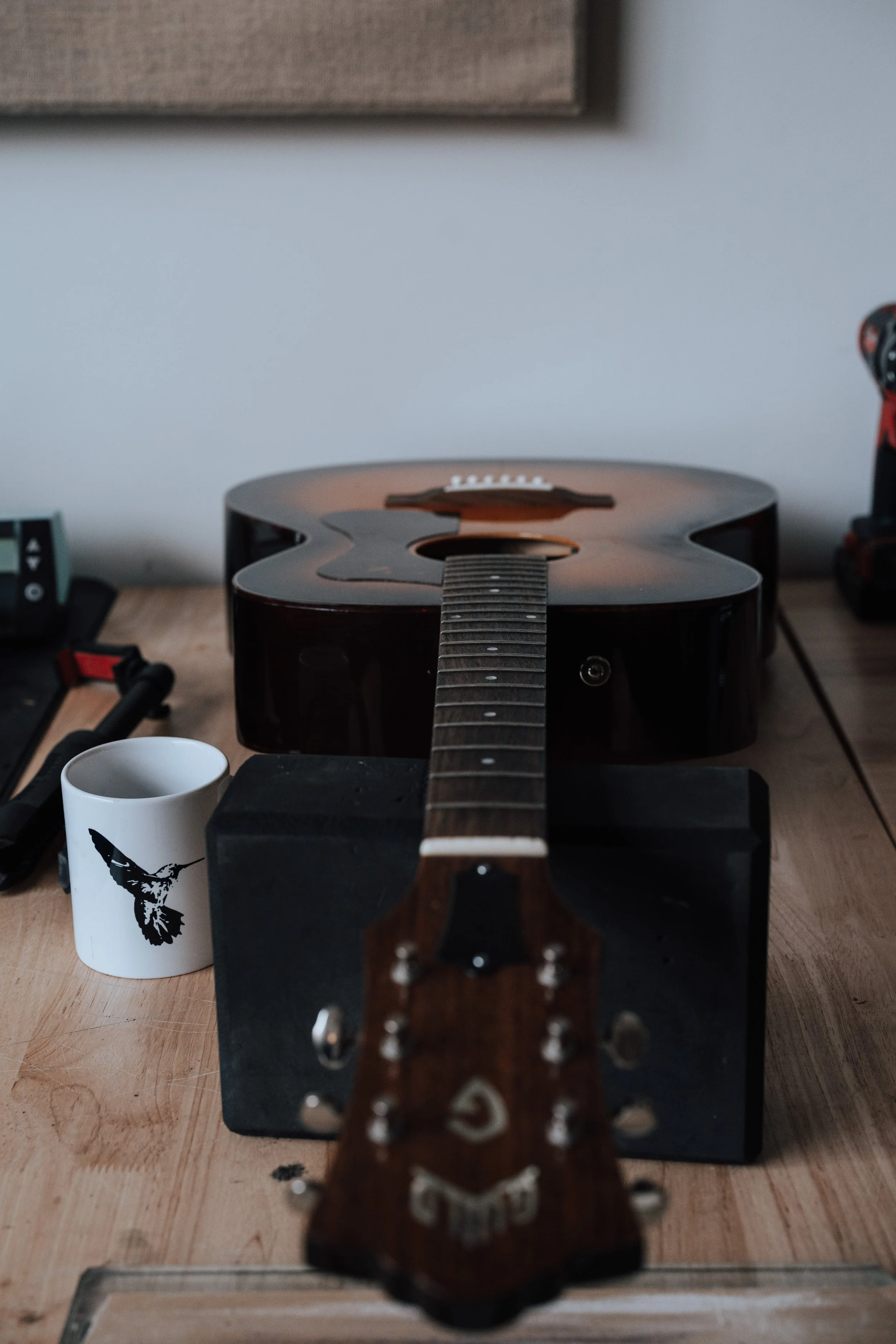
He starts with the Paper Route model, finished in nitrocellulose lacquer, an old-school, thin finish that has mostly fallen out of favor due to its toxicity and regulations. “It opens up the body,” Wyatt explains. “There’s more resonance. It’s lighter. It ages. We like that.” That aging is part of the point. A guitar isn’t meant to remain frozen in its first form, it’s meant to absorb years of humidity, sweat, hands, and rooms to influence the sound and have more resonance.
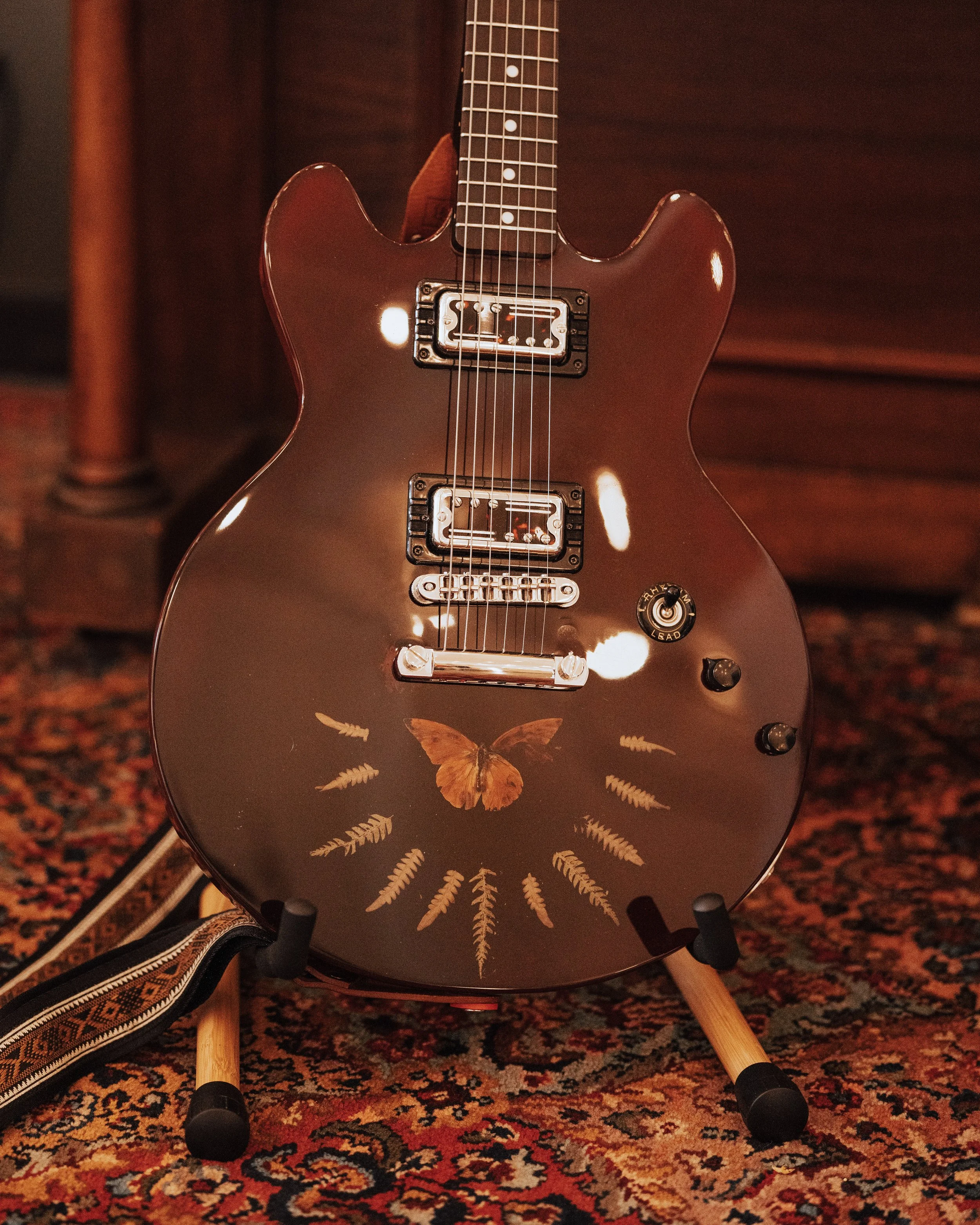
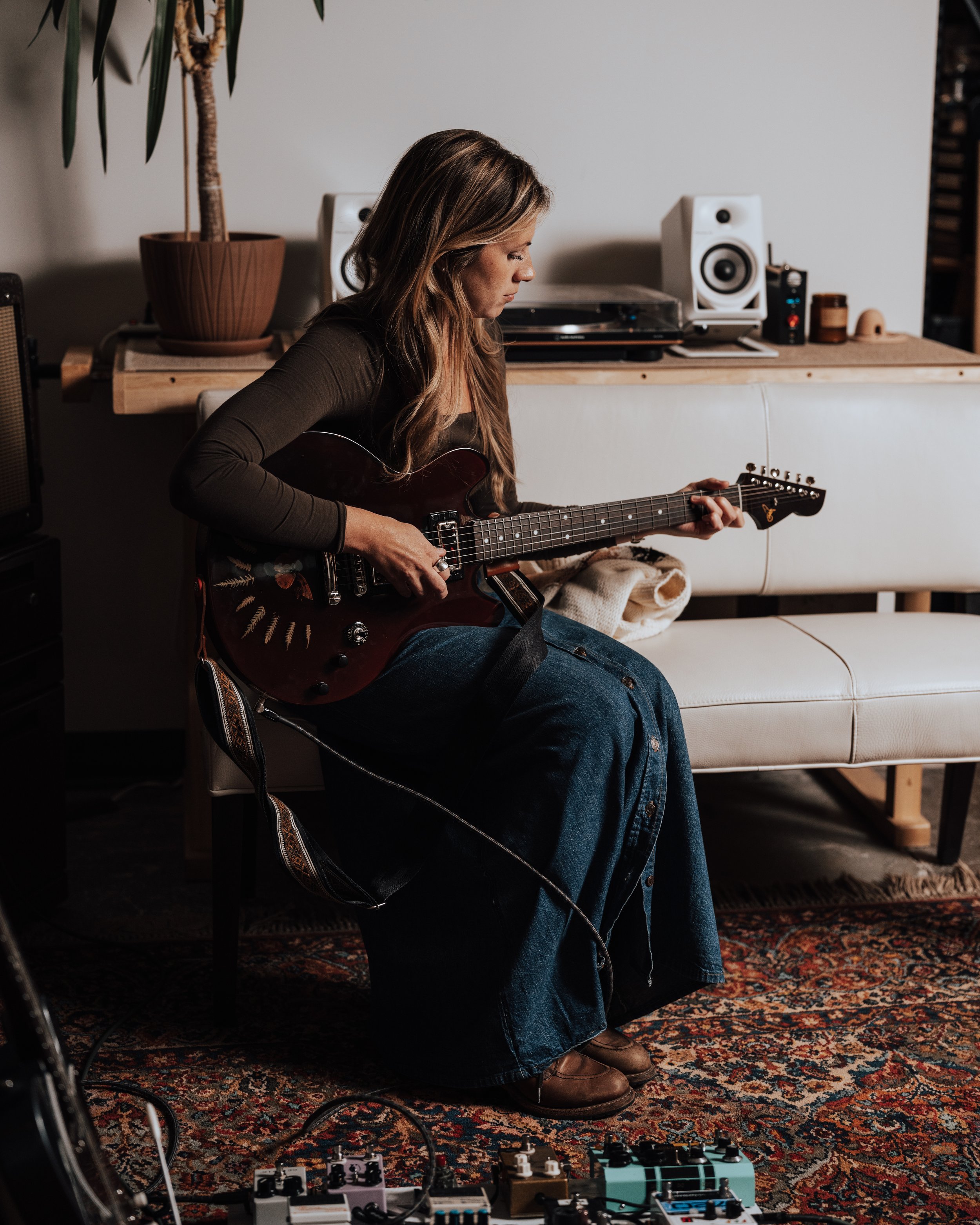
The FM (Found Materials) guitar tells a different story. With its epoxy cap and translucent surface revealing intricate moth and fern inlays beneath, it looks almost ceremonial. But here, sustainability matters. There’s a water-based lacquer instead. Since it’s a prototype, the wood choices lean less into tradition and more into experimentation.
With the electronics in each guitar, Overman knows every decision made show up in the long haul of that instrument. They wanted something that aesthetically looks great on the FM because of its inlays and clear top. They went with a Righteous Sound prototype pickup..
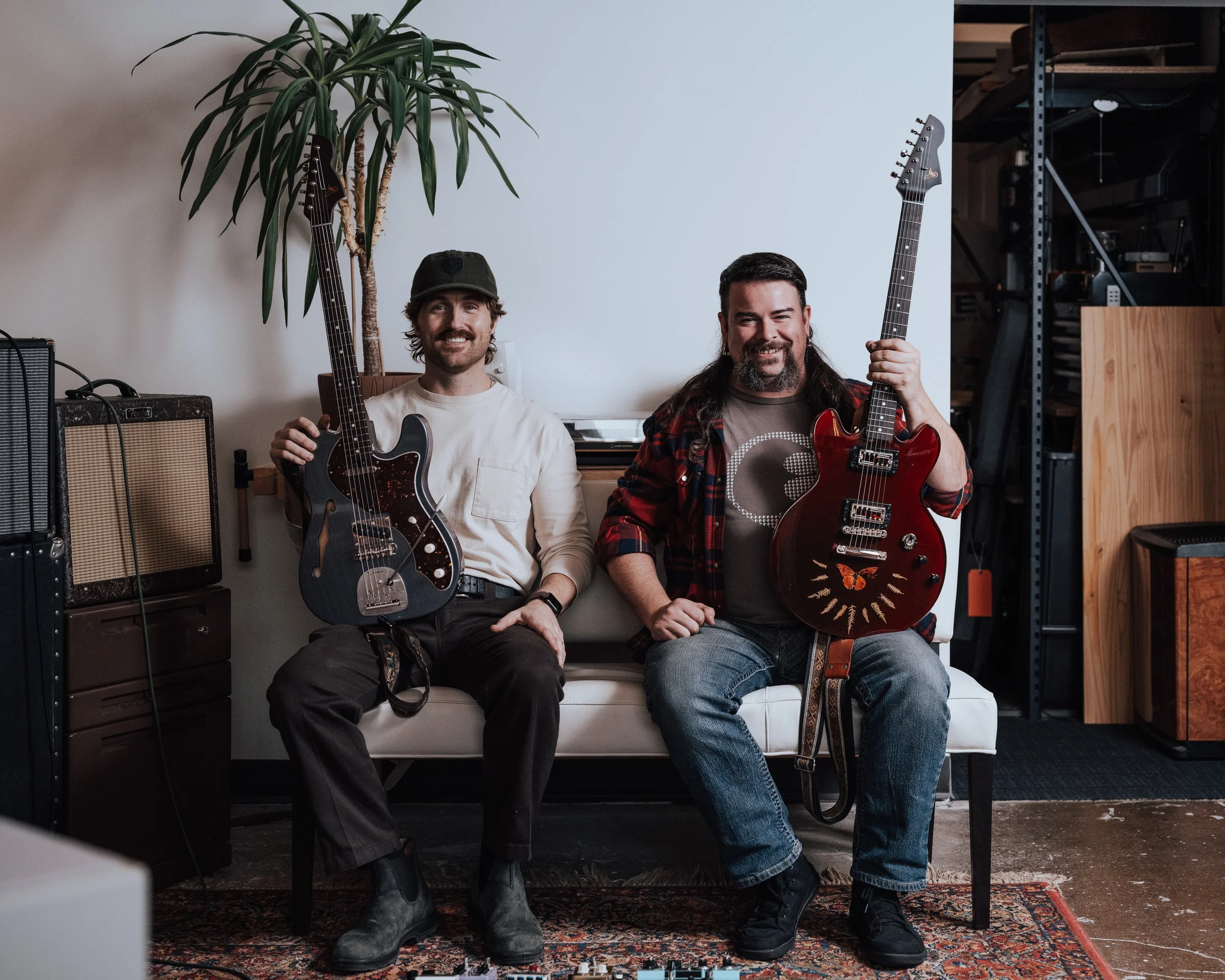
“The insert in there is a faux tortoise shell. Tortoise shell is a material that we use that has kind of a cool textured look and it kind of matches really nicely with the body. Then there’s a great filtertron style pickup, which gives a really nice unique bite. They're kind of snappy in their sound. It's kind of a classic style shape of guitar, but the sound is quite surprising. Typically in a guitar kind of like that shape, you would have a standard full size humbucker and these pickups sound quite a bit different from that. We did that intentionally to kind of set it apart.”
-Jonny Forsythe
The Paper Route pickups are more of a traditional telecaster sounding set, but designed by local builder Ted Vig, who works at Vig Guitars over on Snelling Ave. It’s more of a classic T pickups with the neck pickup specifically a lot brighter than that style normally is. That gives the guitar a little more range and dynamics to play with.
There’s another recurring obsession that Overman cares for: feel.
They spend serious time ensuring the backs of necks never feel sticky. Old finishes get stripped away. New ones get softened. Players bring in guitars they love aesthetically but can’t stand physically and Overman reintroduces them to their own instruments, removing those distractions.
“This is one of the most common complaints,” Jonny says. “Your hand just can’t move. And when that happens, creativity stops.”
All that intention put into their custom guitars, like the wood choices, lacquer, pickups, and finish are the heart of having mojo. But both put it bluntly, “There are three important things that every musician looks for in a guitar: what it looks like, what it looks like, and what it looks like.” Most musicians bond with an instrument first with their eyes. Only then do their hands and ears catch up.
Jeremy Messersmith and the Guitars With Songs Inside
Jeremy Messersmith picks up the FM guitar carefully, like he’s holding something alive. His first reaction surprises even him. “My initial thought was: I should probably spend more money on guitars,” he laughs. “I’ve been getting by on the cheap too long.”
Watching Jeremy navigate each guitar felt like a rite-of-passage moment. Using the looping pedal to build rhythms and long sustained notes, slowly fiddling to layer and test out melodies, Jeremy stretched the tone much like one would get a new car on the open road to slam on the gas. At one point ,he stops to pull out his phone and record a few snippets of ideas that the Overman guitars inspired in him.
“It is very different from going to Guitar Center and playing guitars where there's guitars by a handful of manufacturers, and they all kind of look and feel the same. With these, there's all sorts of very thoughtful, lovable little design quirks about them from the shape of the headstock to just the bodies of the guitars themselves. I mean, the one inlaid with fern leaves and a moth. It's badass. It's great. So what it says to me is that somebody has spent a lot of time making this, and I have maybe a bit of a reverential attitude towards the makers of this. I would love to be worthy of an instrument this nice,” shares Jeremy Messersmith
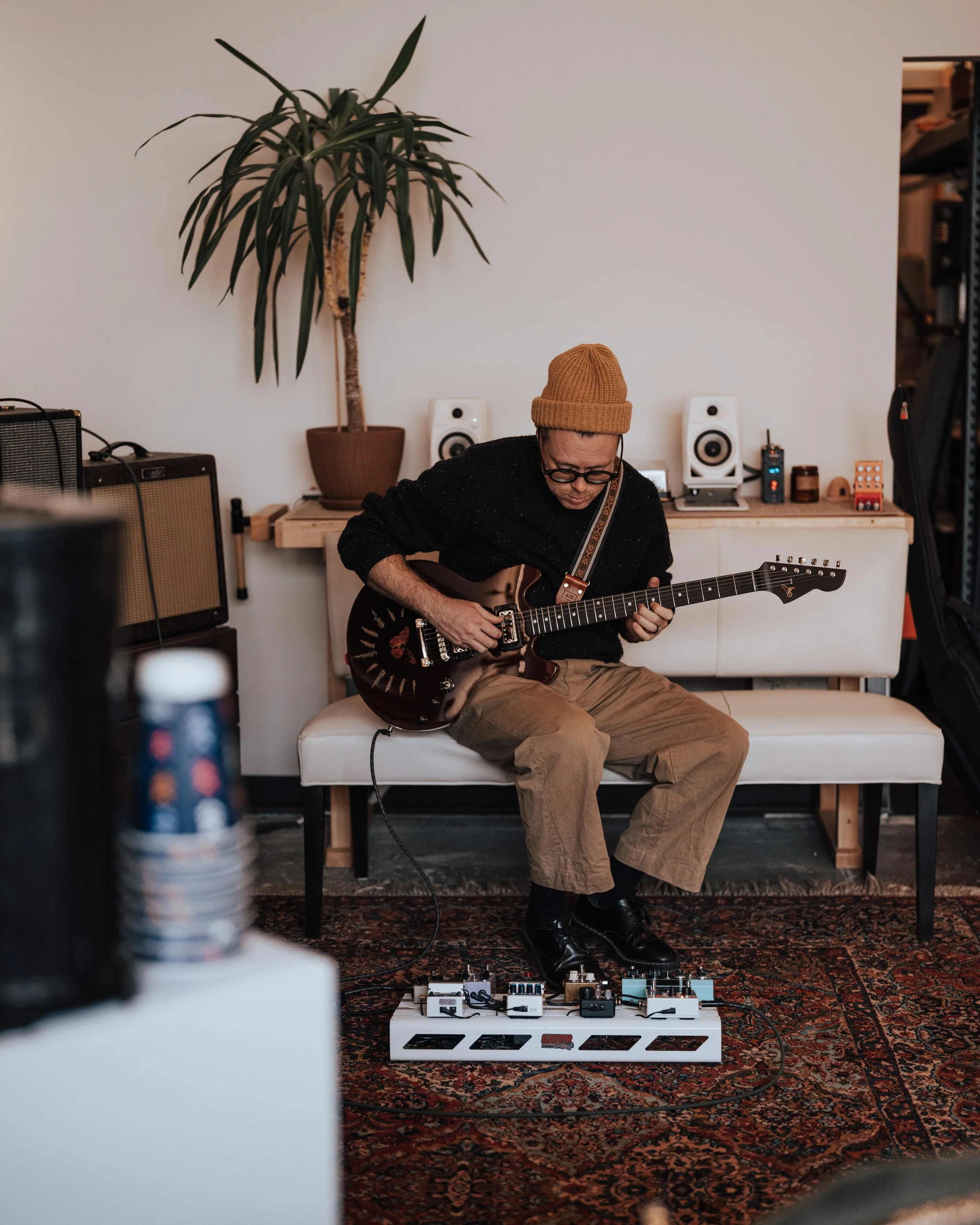
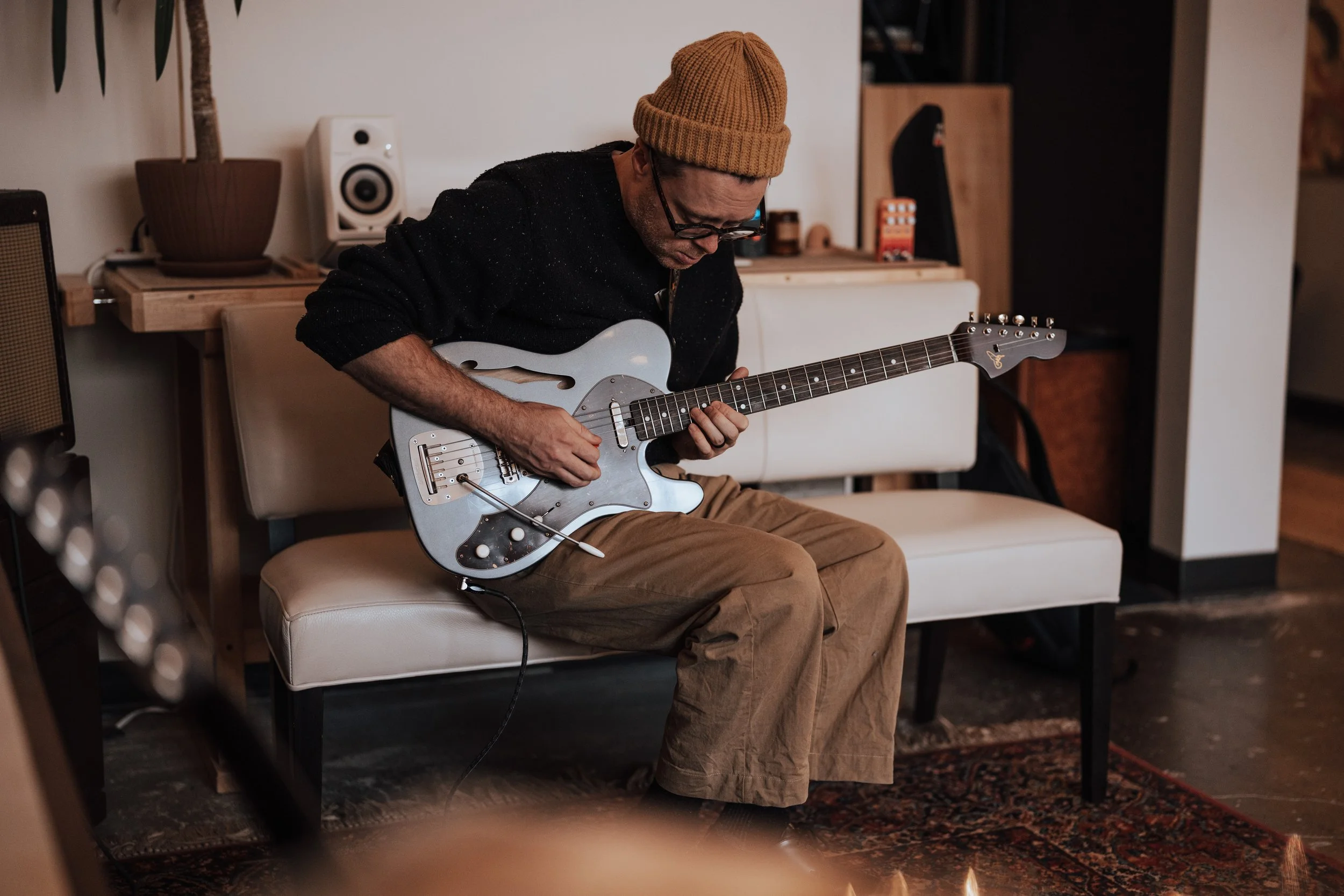
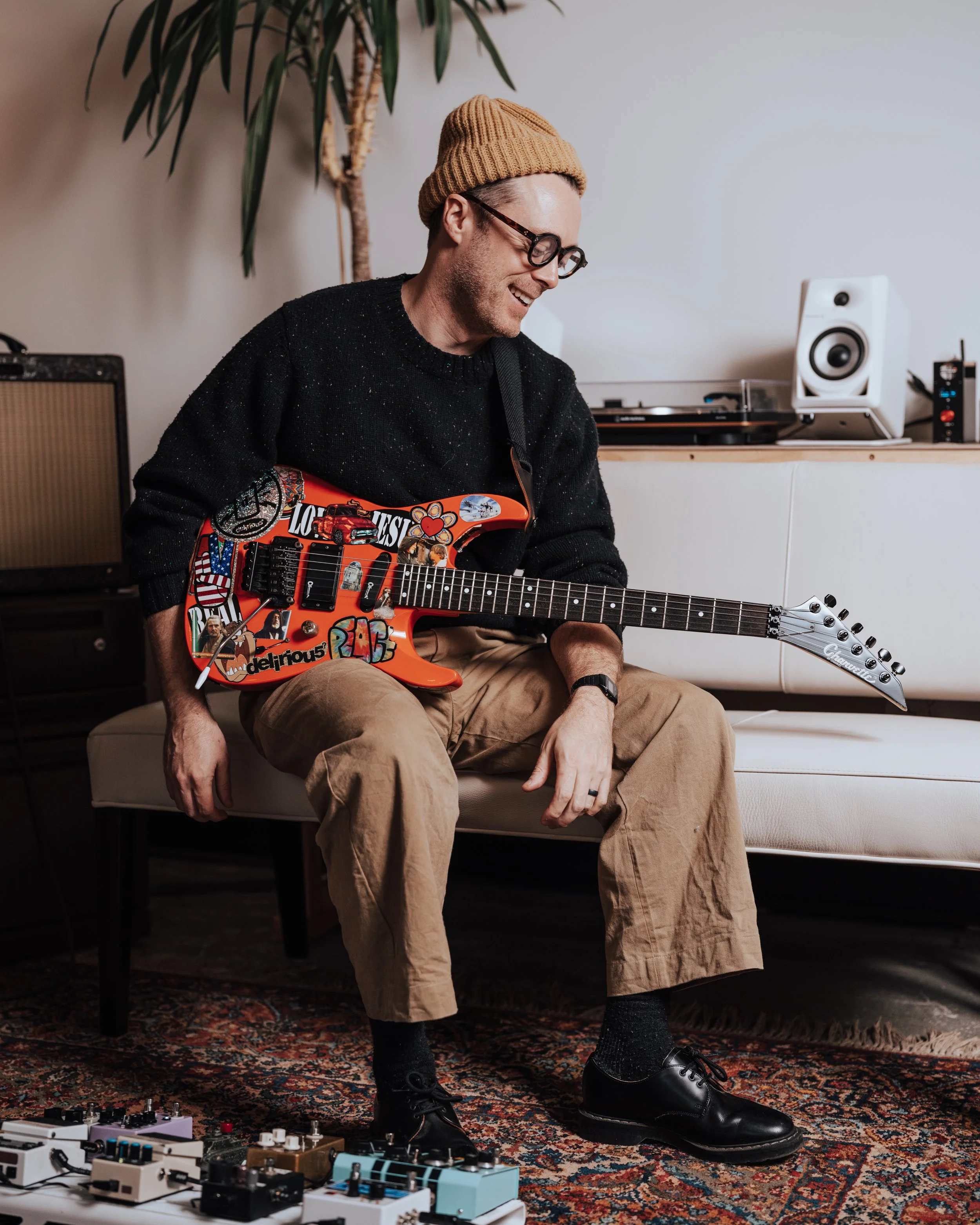

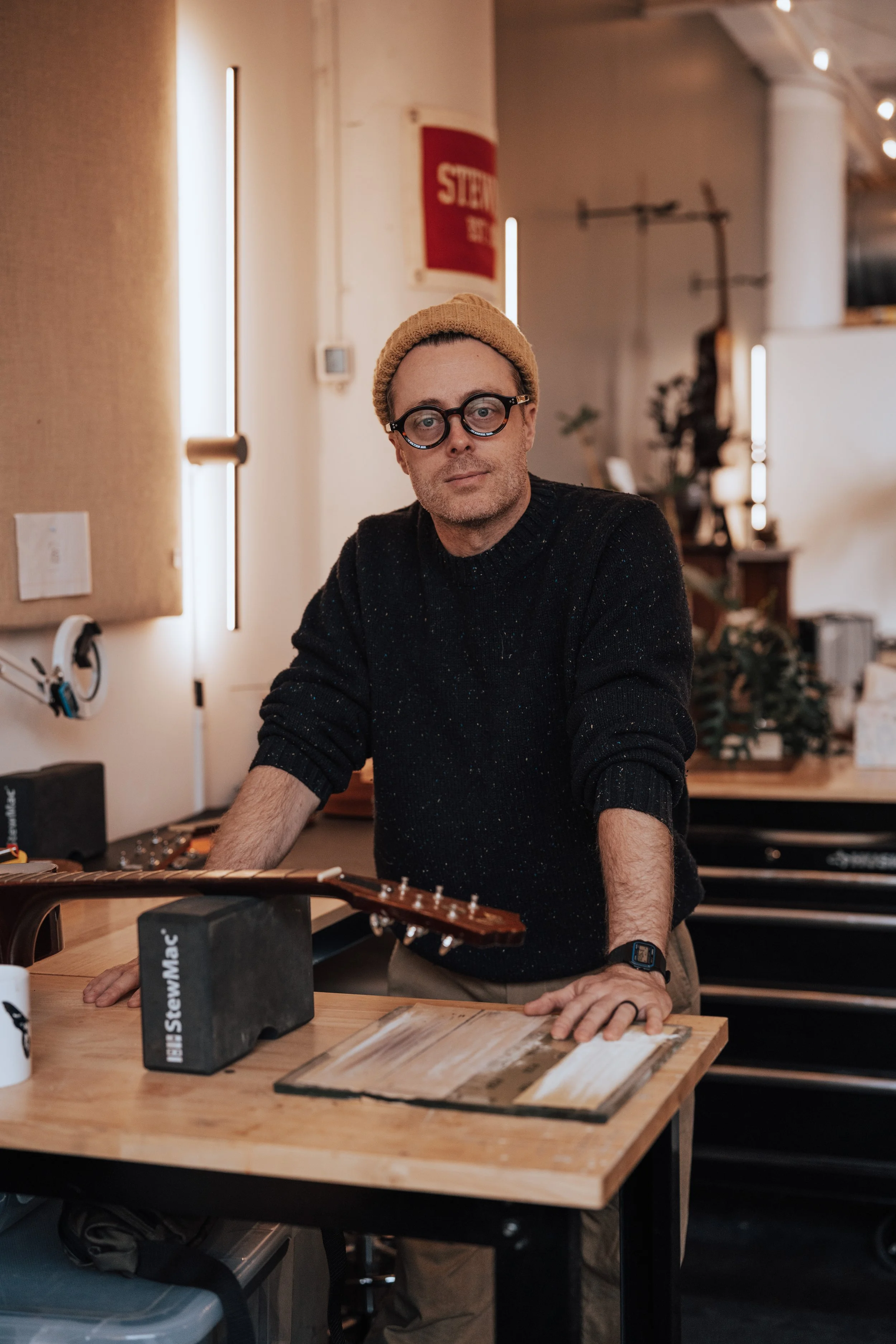
It’s apparent the action is smooth for him and the intonation flawless as he fidgets with each knob and lever. Describing it afterward, Jeremy is quick to reinforce that it didn’t feel like you had to work in playing the guitars, there was nothing interrupting the creative circuit.
That word—interrupt—feels crucial. Jeremy doesn’t identify as a gearhead. He thinks of guitars as tools, but he knows when one carries more than function. Some guitars arrive hollow. Others arrive full and are already holding something inside them. That awareness goes back to his beginning.
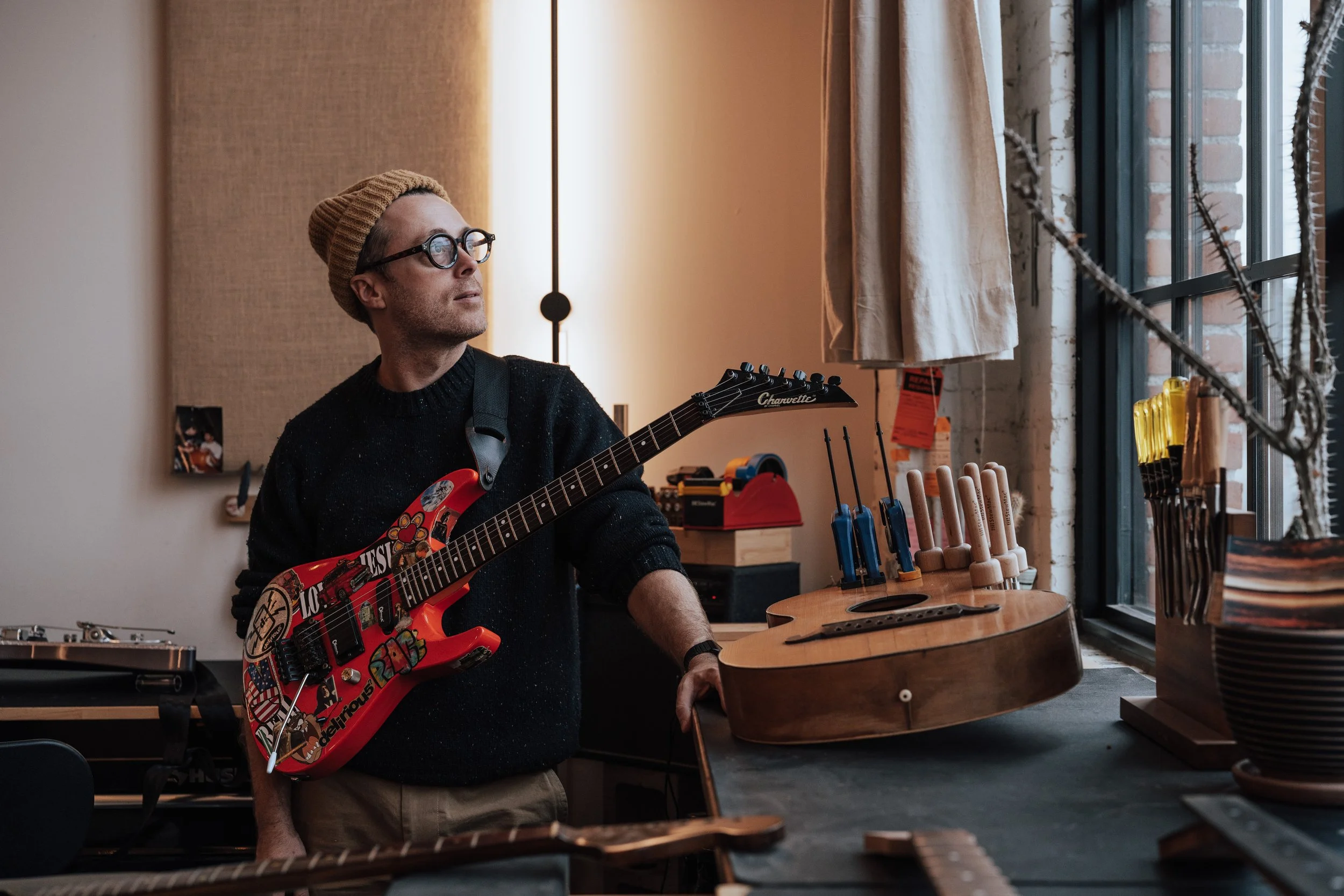
Jeremy’s first guitar wasn’t glamorous. It was his dad’s Alvarez 12-string, mostly living in a hallway closet. He broke a string immediately and gave up…temporarily. The first guitar he bought himself was a pawn-shop Charvel that is red, loud, chaotic, and equipped with a Floyd Rose tremolo system and a locking nut that made tuning absurdly complicated. Taught in a basement by a friend using “Nothing Else Matters” by Metallica, that guitar absorbed everything from his teenage worship bands, Tooth & Nail records, MXPX riffs, and grocery-store sticker machines featuring the upcoming prequel Star Wars movie that definitely didn’t age as expected.
“I can’t take them off,” he says. “It’s a time capsule.”
When Overman worked on restoring the Chavel, the result reopened something. Suddenly this “embarrassing” guitar made perfect sense again. It inspired him to want to play rock and roll and bad power chords again. He carried it back onstage for his annual Halloween show for a night of AC/DC covers. That emotional response is what Jeremy listens for when choosing instruments now as brand doesn’t matter as much anymore.
He chooses guitars to fill sonic roles, like fingerpicking instruments, strummers that break up just right with distortion, or that acoustic guitar that cuts through in just the perfect way. He’s learned that the number one trait is how if it feels good in your hands. Jeremy also confesses that there are moments, for whatever reasons we can’t explain, when you pick something up and play it and receive a spark that the guitar has songs in it. The little combination of wood and steel suddenly can stir something inside that tells him there is pending inspiration waiting for him to bring out of it. This can be very painful when you cannot afford that guitar.
In the spirit of mojo, Jeremy admits fashion matters too. It can be easy to think that it’s all about the music, but that changes when you step onstage and people are looking at you. It’s helpful for him to feel put together and know what he’s trying to do visually to communicate as well. This means having instruments that aesthetically match his intention and decide on what to wear based on what guitar he’s planning to play. His style lineage aligns with Buddy Holly, Elvis Costello is proof there’s room in rock and roll for glasses, intention, and looking put together.
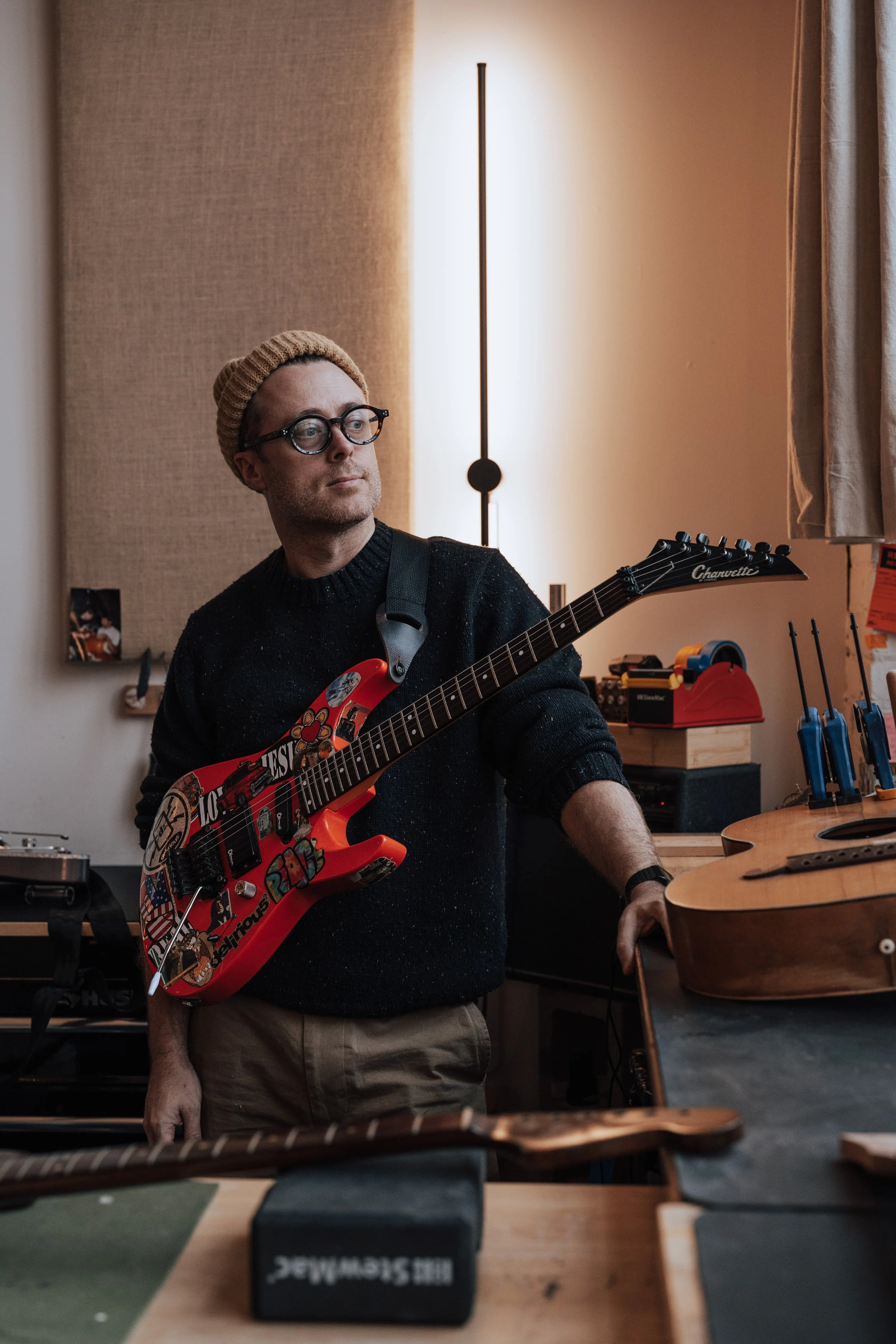
“Narrative is so important just because it makes me feel like I have something special. I have a 1969 Gibson Folksinger guitar that I got at Willie's Guitar, almost 20 years ago. The little story about it was I went in and I played all of those guitars and I really loved it. I've played it on so many of my albums and stuff, but the joke was that apparently Jeff Tweedy was in town the week before and they had two Folksingers and he bought the other one. For some reason it's always been a very approachable guitar, but it was like the lesser of the Folksingers, like Jeff Tweedy got the other one. So I can goof off on this one. It doesn't have to be the special one.”
-Jeremy Messersmith
Mike Kota and the Wand That Chooses You
Mike Kota is quick to admit that choosing a guitar is more superficial than she’d like to confess.
“It makes me look cool,” she says, matter-of-factly. “And if I look cool and feel cool, that translates onstage.”
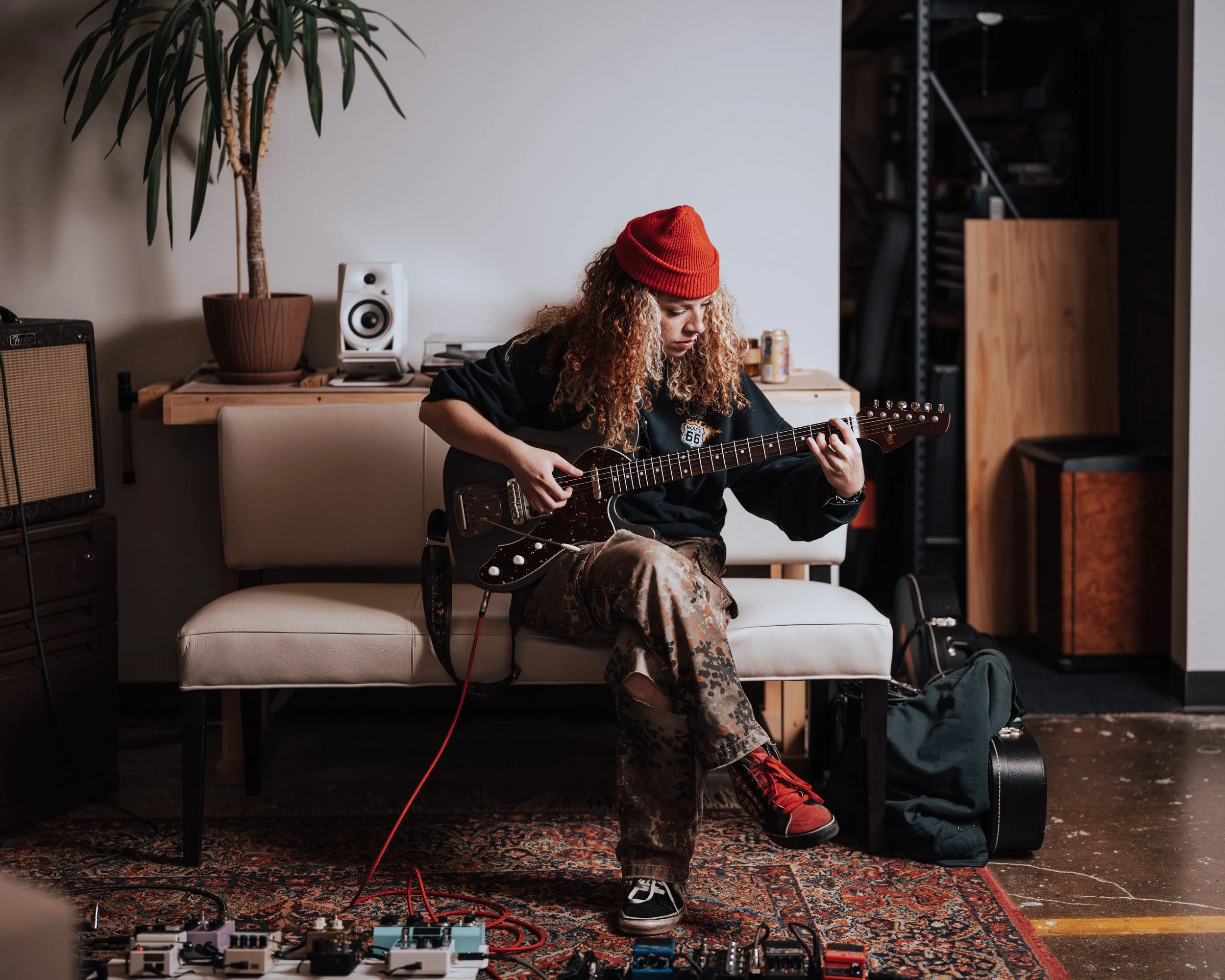
Mike picks up the Paper Route first and immediately notices the weight, or lack of it. Surprisingly light and easy to play, she notices the warmth and fuller tones. Plugging into her own pedal board and amp, Mike takes it for a spin, running it through the bases. A thin smile runs across the face as the layers and volume increase. A few adjustments of the pedals, a tweak on each knob on the guitar, and there’s a resonance that fills the room.
The FM guitar surprises her even more. Its range, how drastically she can shape the sound from low-end rumble to sharp harmonics, opens even more creative doors. Within minutes, she’s experimenting with looping harmonics and bass lines, building entire little arrangements from a single instrument.
“I was surprised by how different I could make it sound from going from something super bassy to something super high end and be able to cut out a lot, but that it's still super clear. I've been messing around with looping harmonics, and so I tried to put it as high as possible and loop the harmonics and then put it as low as possible, and then play a progression of bass guitar with this bed of really high stuff. So that's cool that it has so much, you can really change a lot in the tunnel,” shares Mike Kota.



Her guitar journey began with a hand-me-down acoustic that she still owns. She has continued to play it over the past 10 years, wearing it down because of the amount of warmth it still delivers. There’s an affinity and love Mike has for the things that have grown with her.
Then came the moment. She was sixteen years old, intimidated at Guitar Center, and a special edition Fender Olympic White Jaguar called her name. She started playing it and immediately the sound stood out. It wasn’t twangy and had plenty of bass. It was the first guitar she ever purchased.
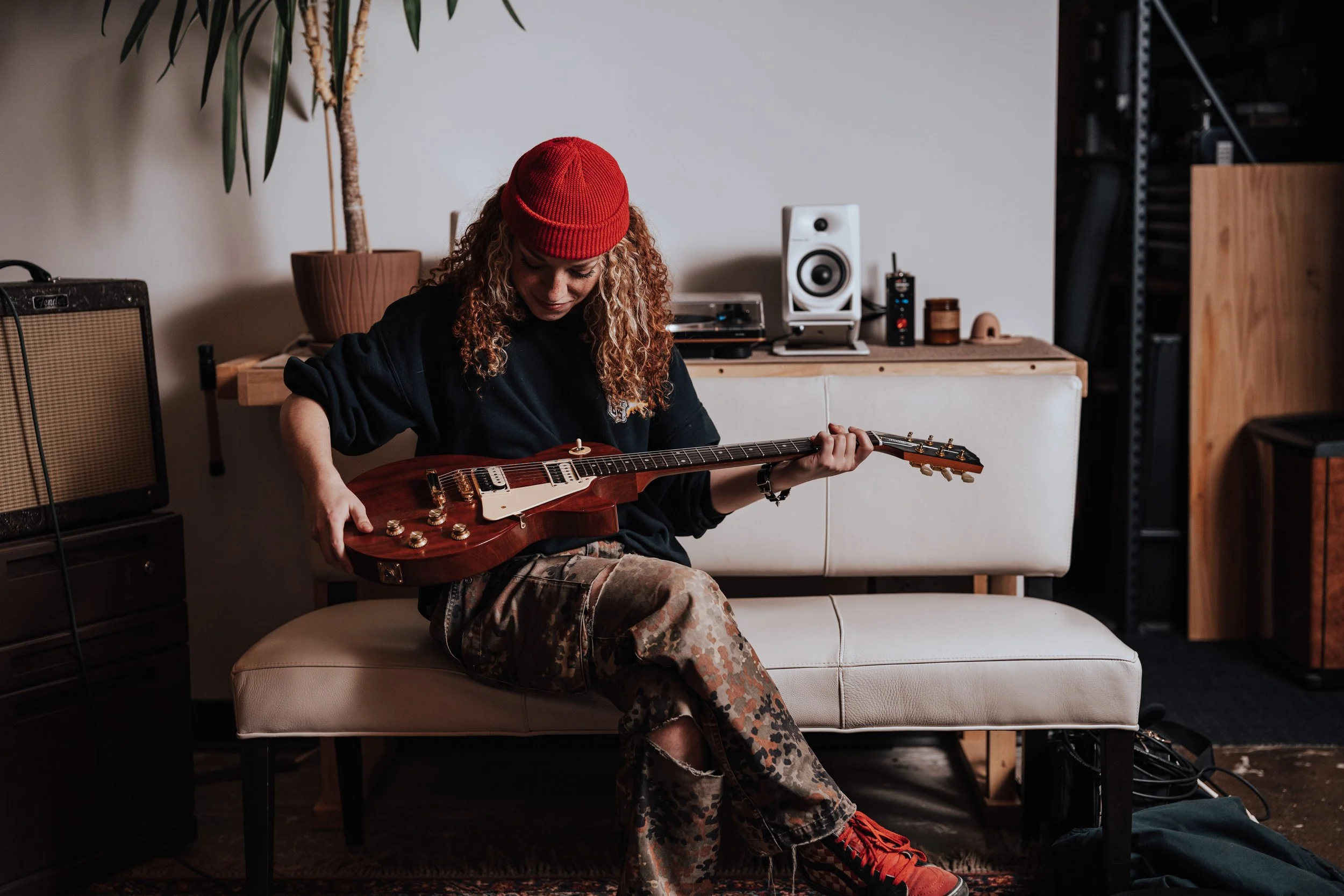
Six years later came her second purchased guitar. Instantly pulling it off the wall and admiring how beautiful it was, she strummed it and without even plugging it in, knew something was special. It felt so good to play and although it was heavy, she knew it had to be hers. The Gibson was her second ever purchased guitar. The bonus is that the store had a matching retro amp with the gold hardware that came with it.
Mike treats guitars as part of a larger visual system. Her white Jaguar guitar stands out on stage, providing that bright pop of color, while the Gibson guitar and matching amp blend back a bit, giving a more put-together aesthetic to the stage. It’s taken years to find what she gravitates to in her own look, understanding what she feels best in. From the mismatched checkerboard Vans, to the camo pants, and beanie hat, she has distilled down a look that is easily recognizable as her ‘Mike Kota starter pack’.
“If I feel protected and cool,” she says, “I can be as vulnerable as I want in the music.”
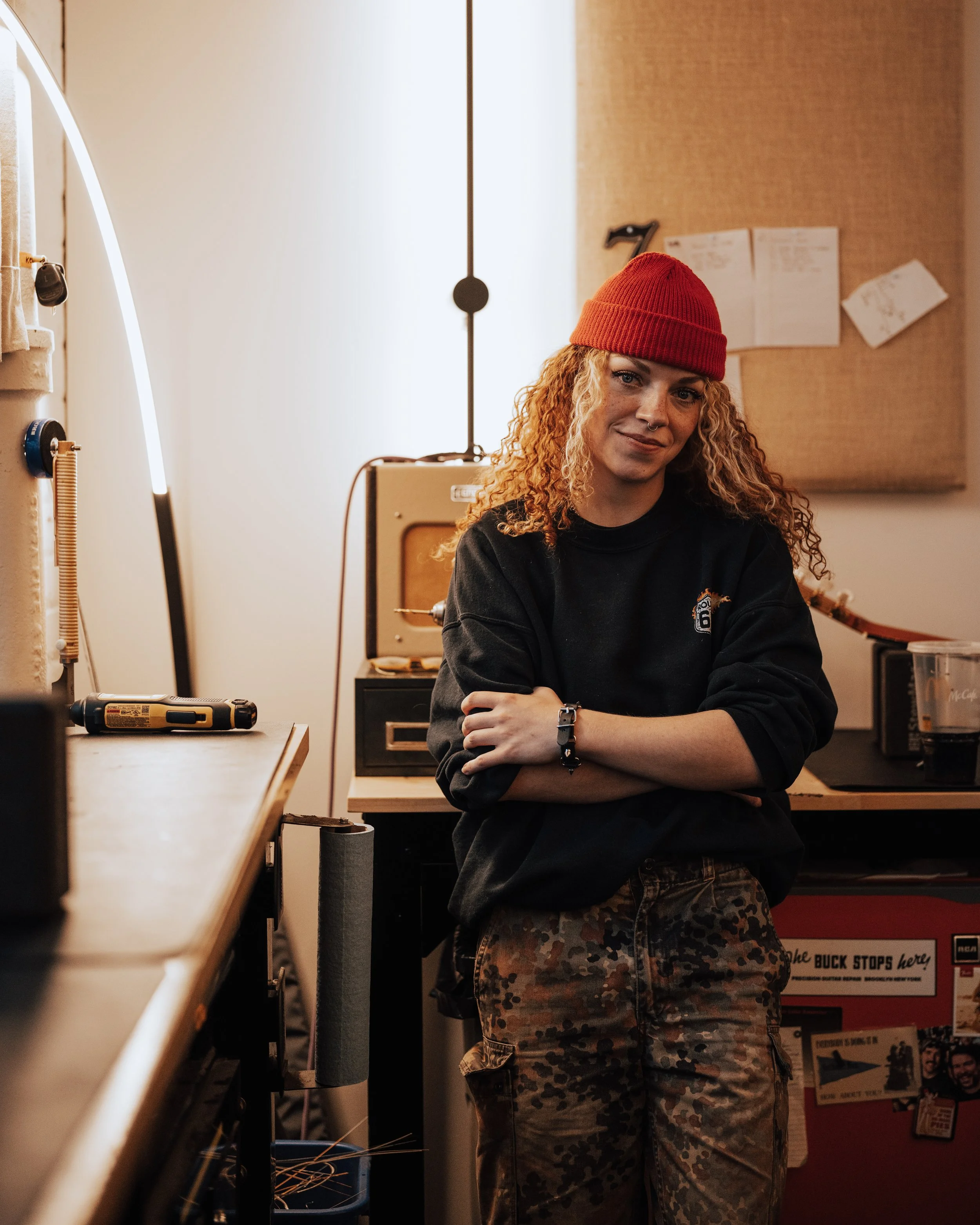
“I think it almost feels to me, maybe other people don't feel like this, but it's like Harry Potter wands. I've played other guitars and stuff, and they're awesome guitars. They're beautiful, but they're not mine in the way that it hit me, specifically with this Gibson, I felt like it was my wand.”
-Mike Kota
Savannah Smith and the Guitars That Find You
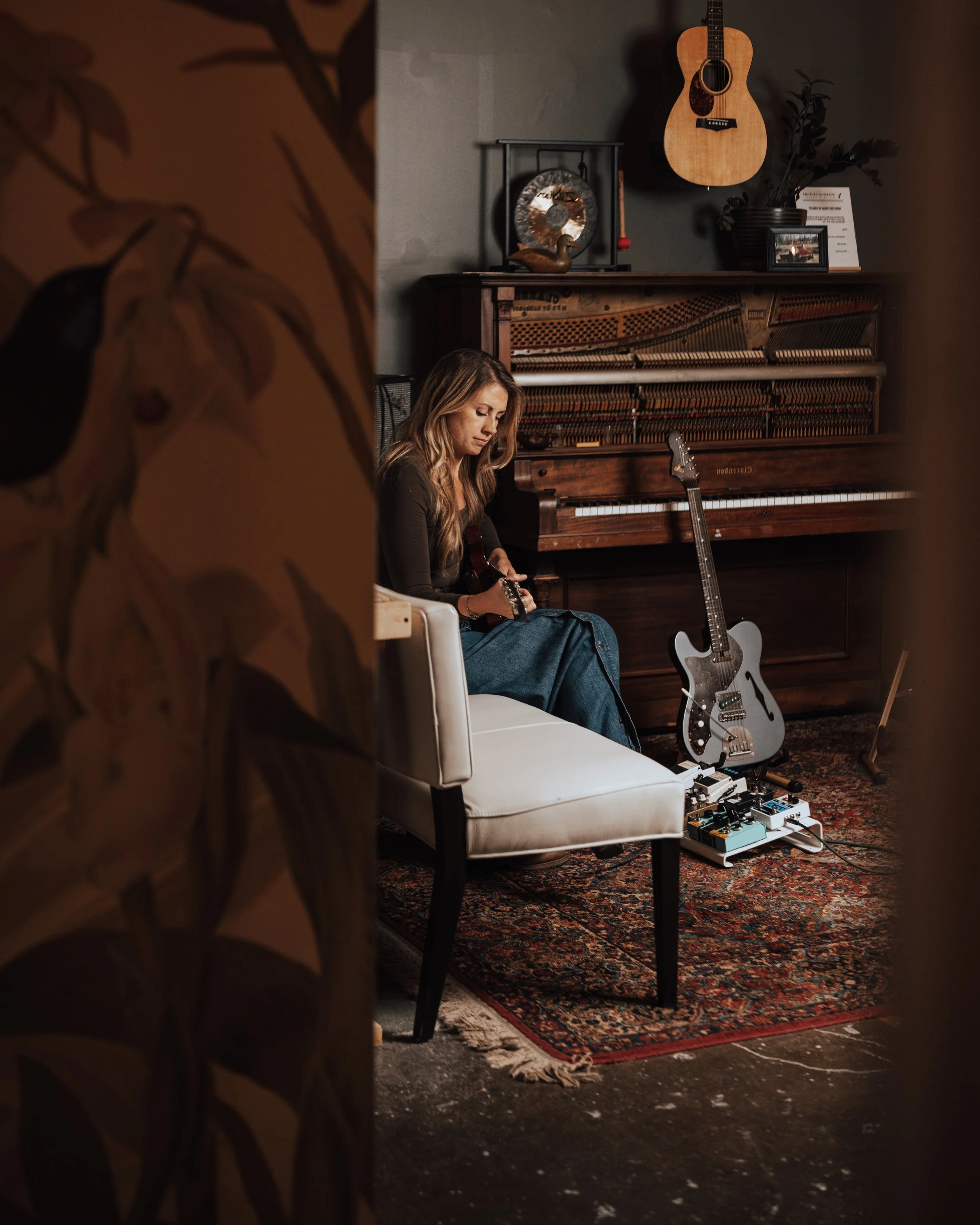
Savannah Smith’s connection to the FM guitar is immediate and deeply personal. When she sees the butterfly inlay, she lights up. She collects insects and this feels obvious. Of course a guitar could look like this. There was a bit of timidness in her navigation of the guitar. Sans pedals, Savannah focused on the movement of playing chords, going from each one to see how smooth those transitions felt.
“It's gorgeous. When Wyatt showed me it the first time I was obsessed. I have a huge entomology collection in my house of pinned butterflies, so immediately I was like, this is so cool. Why haven't I seen that before? Once you see somebody do something so creative, it's like, well, that makes perfect sense. Of course, there should be a butterfly and a guitar, right? Beyond that, it's very easy to play, which is a key factor for me.”
Savannah talks openly about stage anxiety, especially when playing solo, and how it affects her motor skills. To be able to find a guitar that’s easy to play and can help carry the tune without a ton of help from her is important to find. Ease of playing comes down to how effortless it is to press down on the strings, how the notes carry a little longer, and even just as much as getting your arm up and over the body. The FM guitar checked all the boxes on giving her that effortless playability with a lush sound that commands attention.
Guitars have tended to find her rather the other way around. Her first guitar was a forest-green Christmas gift from her parents at 16. She played the crap out of it and still owns it. Her next guitar, a telecaster, came from her grandpa. At the time she was enamoured with Grace by Jeff Buckley, which is very telecaster heavy and finally had that sound. Opening for Laura Stevenson at the Triple Rock, she witnessed Laura whip out a similar telecaster and play it solo. It was inspirational for her and pushed her to write more on the instrument.
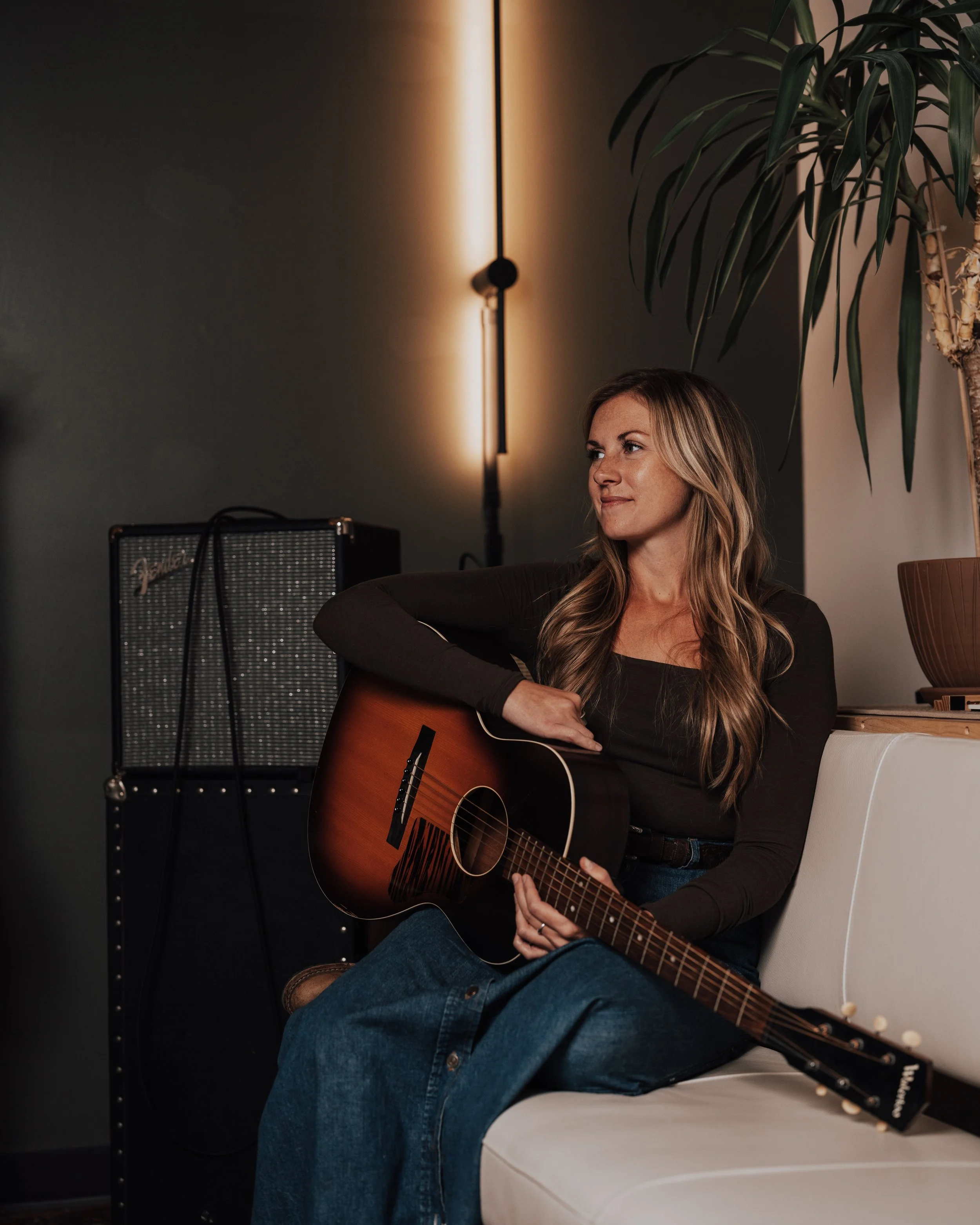
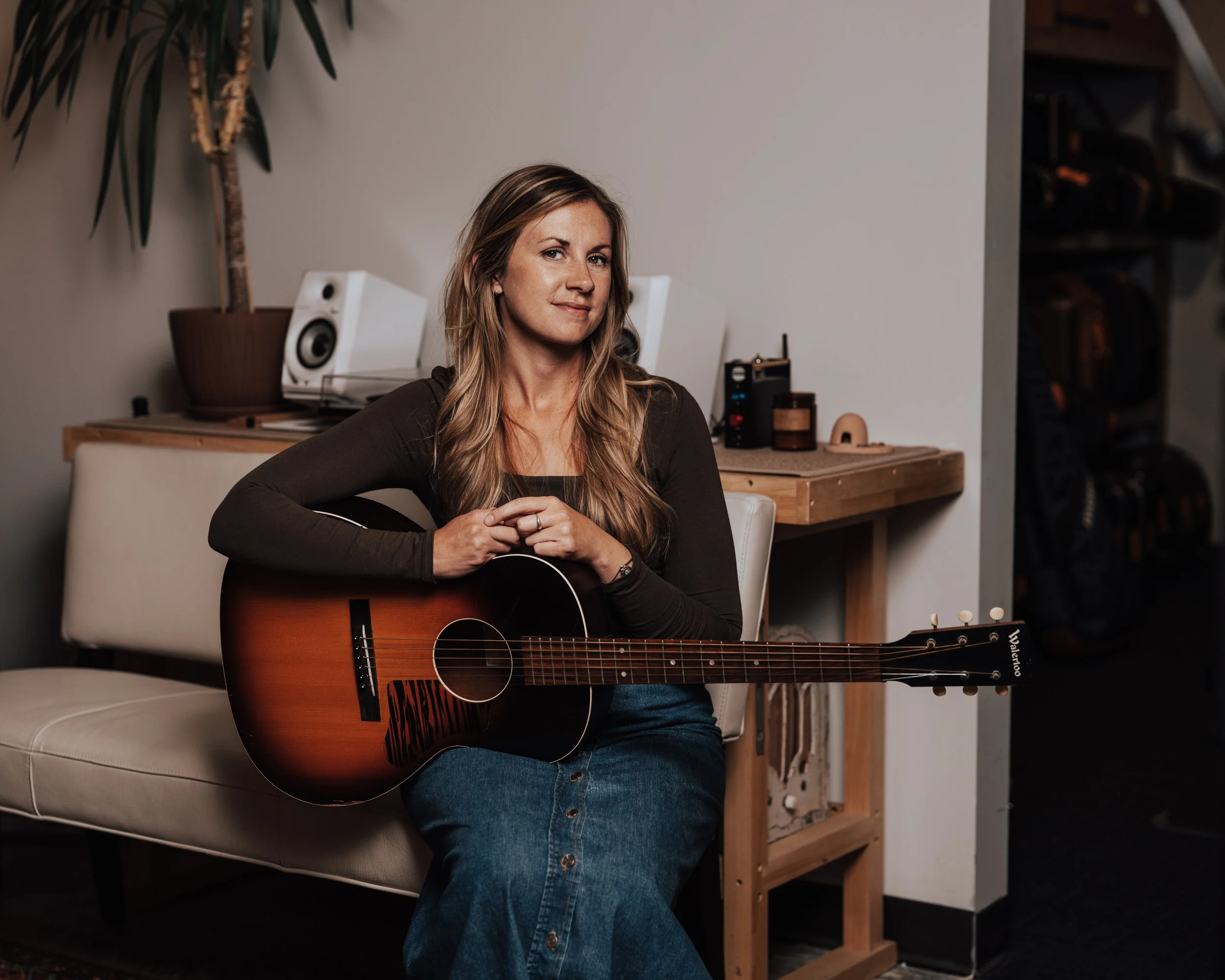
Her most recent acquisition is a little Waterloo acoustic, small-bodied, bright, with a sassy tiger-strip pickguard that came from Turn Turn Turn bandmate Adam Levy. She was able to try it out for a while and fell in love with it.
For an artist that plays both solo and with a band, Savannah knows the benefits of utilizing the right guitar for the moment. While drawn to the telecaster when playing solo because it fills the space more, whereas when playing with Turn Turn Turn she’s more rhythm. The Waterloo guitar fits perfectly in that environment because it cuts through more and keep the pace.
Fashion threads through her story too. Always drawn to vintage prairie dresses, handmade clothes, and garments with history, her mother would take her antiquing on the weekends to treasure hunt. It’s led to a continually interesting closet and owner of Seven Suns Vintage in Eau Claire, Wisconsin.
It was right around her 2019 solo release Leo that she had a revelation on having a platform to wear whatever the hell she wanted. She started wearing long prairie dresses and grandiose vintage dresses that you can’t wear everyday. Music was her excuse and kept her thrifting. “I don’t have anywhere to wear this. Those words don’t live in my vocabulary.”
Clothes, guitars, and songs—they’re all tools for the same purpose. I’ve always seen my instrument as a tool to get my words out, which is a beautiful thing.”
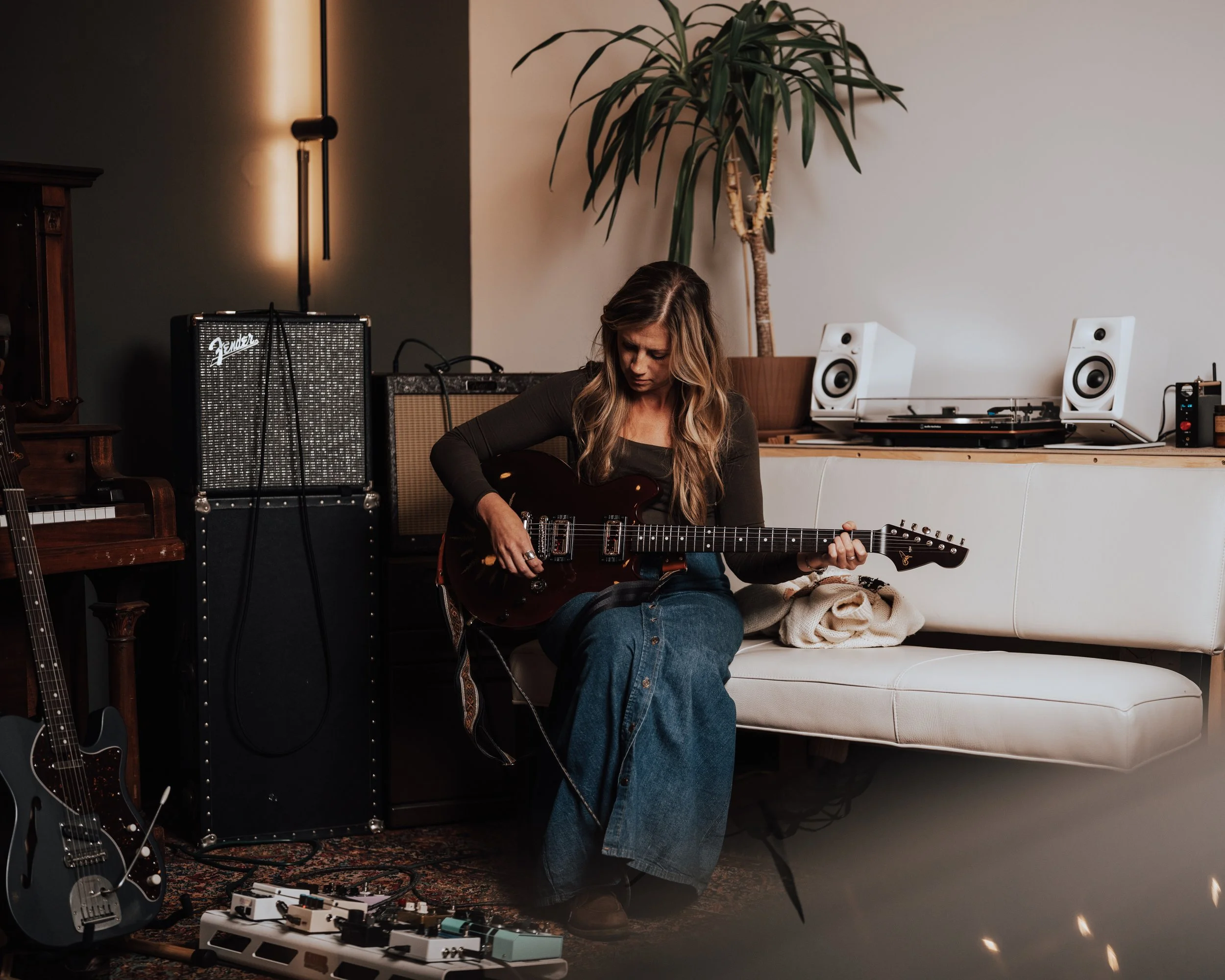
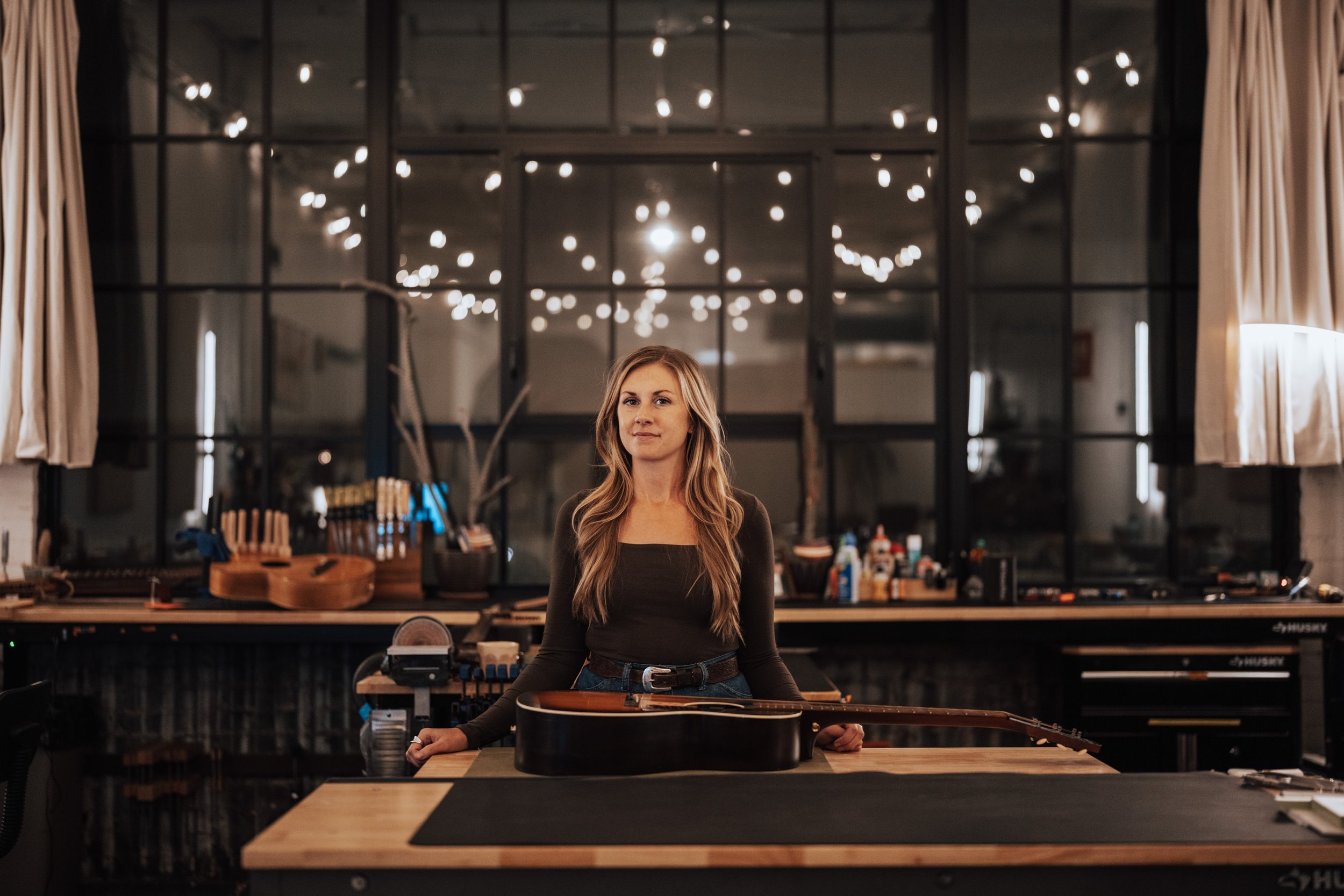

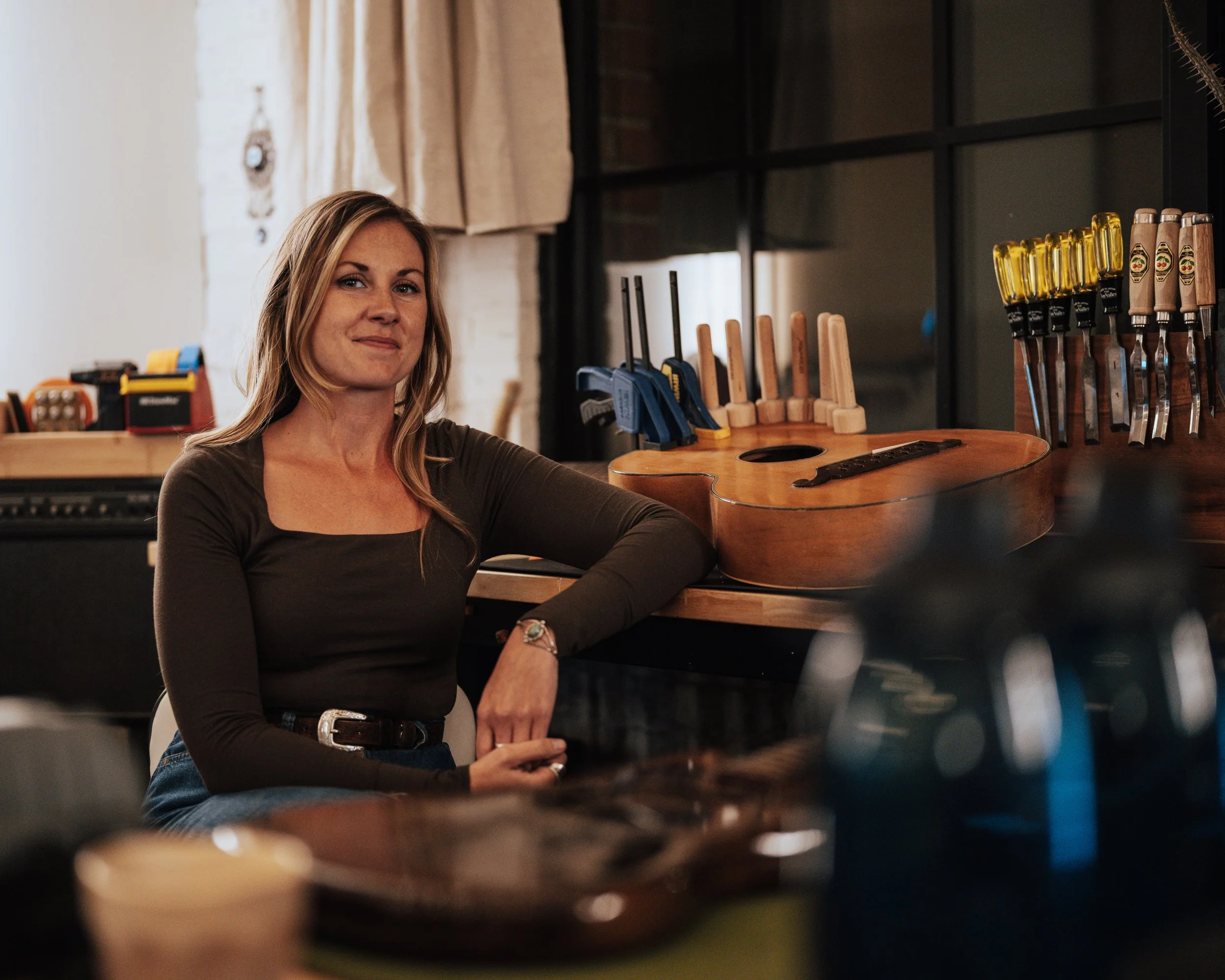
“It was right around when Leo came out, my solo record, when I had this revelation that I have this platform to wear whatever the hell I want to, and so I started reaching for the long prairie dresses and the really grandiose vintage outfits that I can't wear every day, and I'm like, I have an excuse. When I'm thrifting and I find something and I'm like, I don't have anywhere to wear this. Those words don't live in my vocabulary.”
-Savannah Smith
In the end, Overman Guitars is less a shop and more a living conversation between makers, players, and the instruments that bridge them. Every guitar that passes through Wyatt and Jonny’s hands carries a story that is sometimes born from tradition, sometimes from experimentation, but always from intention. And as Jeremy Messersmith, Mike Kota, and Savannah Smith each discovered, the right instrument doesn’t just sound good, it unlocks something; confidence, nostalgia, courage, or inspiration. At Overman, guitars aren’t manufactured, they emerge. They find their people. And in doing so, they help make the music alive.
Check out the links below for ways to follow all the artists featured in this article and all the things mentioned above.
Overman Guitars - Jeremy Messersmith - Mike Kota - Savannah Smith - Righteous Sounds Pickups - Vig Guitar - Seven Suns Vintage